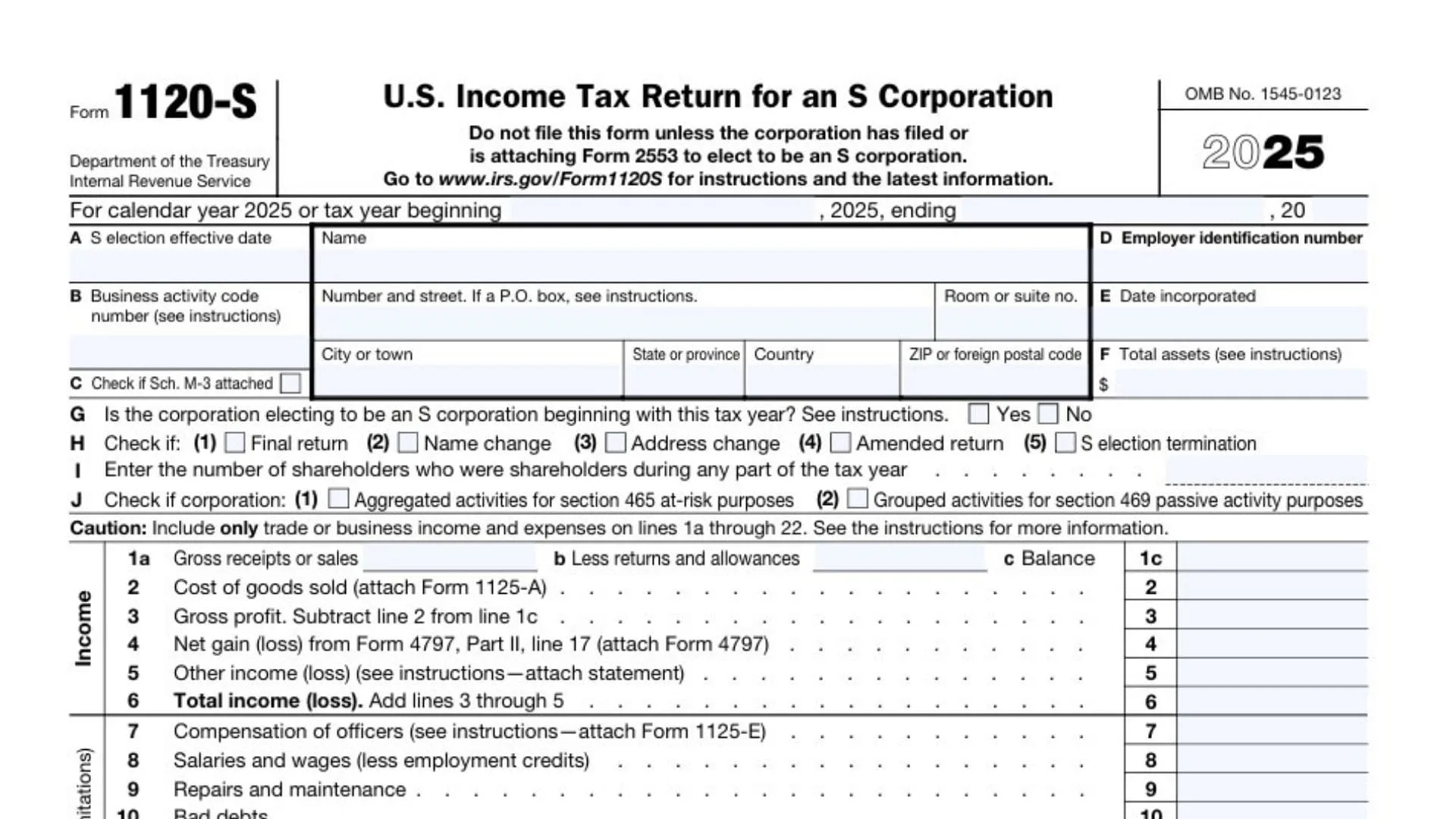
The 1120S Form is a tax form that plays a key role in filing taxes for S corporations in the United States. If you’re the owner of an S corporation, you’re probably already familiar with this form. But for those who aren’t, the 1120S Form is used to report income, deductions, and credits for S corporations, which are unique because they’re pass-through entities. This means that the corporation’s income passes through to its shareholders, who report the income on their individual tax returns. Filing the 1120S Form correctly is crucial for ensuring compliance with IRS regulations, and it’s an essential part of maintaining the tax status of an S corporation. In this article, we’ll go over the ins and outs of the 1120S Form, including its purpose, filing requirements, and common mistakes to avoid, making it easy for you to get the hang of it and file with confidence!
What Is the 1120S Form?
The 1120S Form is a tax document specifically for S corporations, which are a unique type of corporation that allows income, deductions, and credits to flow through to the shareholders. Unlike a traditional corporation (C corp), which pays corporate taxes, an S corporation itself does not pay federal income taxes. Instead, shareholders report the income on their individual tax returns. The purpose of the 1120S Form is to provide the IRS with information about the corporation’s income, expenses, and other financial activities, helping the agency determine the proper tax obligations for each shareholder.
Filing the 1120S Form is an annual requirement for all S corporations that wish to maintain their S corporation status. It’s important to understand that failing to file or filing incorrectly can lead to penalties or the loss of S corporation status.
Who Needs to File the 1120S Form?
If your business is an S corporation or has elected to become one, you’ll need to file the 1120S Form. This form is essential for both active and inactive S corporations, as it provides the IRS with details of the company’s financial activities. While the 1120S Form itself does not calculate the corporation’s tax liability, it is used to report income, deductions, and credits that shareholders must then use to determine their tax obligations on individual returns.
You might also be required to file the 1120S Form if your S corporation has made distributions to shareholders or has had any changes to its business structure, such as mergers or acquisitions. It’s always a good idea to consult with a tax professional to ensure that your form is filed accurately and on time.
Key Components of the 1120S Form
The 1120S Form consists of several sections that need to be filled out carefully. These sections include:
Income Section
In this section, the corporation reports its gross income, including revenue from sales, services, and any other sources of income. The net income or loss will flow through to the shareholders’ individual returns.
Deductions
S corporations are allowed to deduct certain expenses, such as operating costs, employee wages, and rent. These deductions reduce the corporation’s taxable income, which directly impacts the amount of income passed through to shareholders.
Tax and Payments
This section covers any taxes paid by the corporation itself, including employment taxes. Although S corporations generally don’t pay income taxes, they may still be subject to certain taxes depending on their activities.
Shareholder Information
The 1120S Form also requires the corporation to provide detailed information about its shareholders, including the number of shares each one holds, and any distributions made to them during the tax year.
Common Mistakes to Avoid When Filing the 1120S Form
When it comes to the 1120S Form, accuracy is key. Here are some common mistakes to watch out for:
- Failing to File On Time: S corporations must file their 1120S Form by the 15th day of the third month after the end of their tax year. Missing this deadline can lead to penalties.
- Incorrect Shareholder Information: Make sure the information about shareholders, including their share of income and distributions, is accurate. Errors can lead to incorrect tax filings.
- Forgetting to Include Supporting Documents: The 1120S Form often requires supporting documentation, such as financial statements, which should be submitted along with the form.
- Not Keeping Detailed Records: Keeping thorough and up-to-date records of the corporation’s income, deductions, and other financial transactions is essential for accurate reporting.
How to File the 1120S Form
The 1120S Form can be filed electronically or by mail. If you’re filing electronically, the IRS offers e-filing services through approved providers. If you prefer to file by mail, you’ll need to send the form to the appropriate address based on the corporation’s location.
When preparing to file the form, gather all necessary financial documents, including income statements, balance sheets, and any other records that reflect the corporation’s financial activities. Make sure all numbers are accurate, as discrepancies can delay the filing process.

FAQs
What is the 1120S Form?
The 1120S Form is a tax form used by S corporations to report income, deductions, and shareholder information to the IRS.
Who needs to file the 1120S Form?
S corporations need to file the 1120S Form annually to report their income and deductions, ensuring compliance with IRS regulations.
When is the deadline for filing the 1120S Form?
The 1120S Form must be filed by the 15th day of the third month following the end of the S corporation’s tax year.