If you’ve been Googling “SBA 7(a) loans for small businesses” at 2 a.m. while wondering how anyone ever gets approved, this guide is for you—because the 7(a) program is basically the SBA’s flagship loan option that helps banks say “yes” more often by guaranteeing a portion of the loan. In plain English, you don’t usually borrow money directly from the SBA; you apply through an SBA-approved lender, the lender underwrites your deal, and if it fits program rules, the SBA provides a guarantee that reduces the lender’s risk. The result is a small business loan that can be used for practical, growth-driving stuff like working capital, buying equipment, refinancing certain business debt, purchasing or improving commercial real estate, or even buying a business (changes of ownership). If you’re looking for longer repayment terms than many online lenders offer, more flexible “use of proceeds” than some traditional bank products, and a structured path to financing when you can’t get “reasonable terms” elsewhere, the SBA 7(a) loan is often the first program to understand.
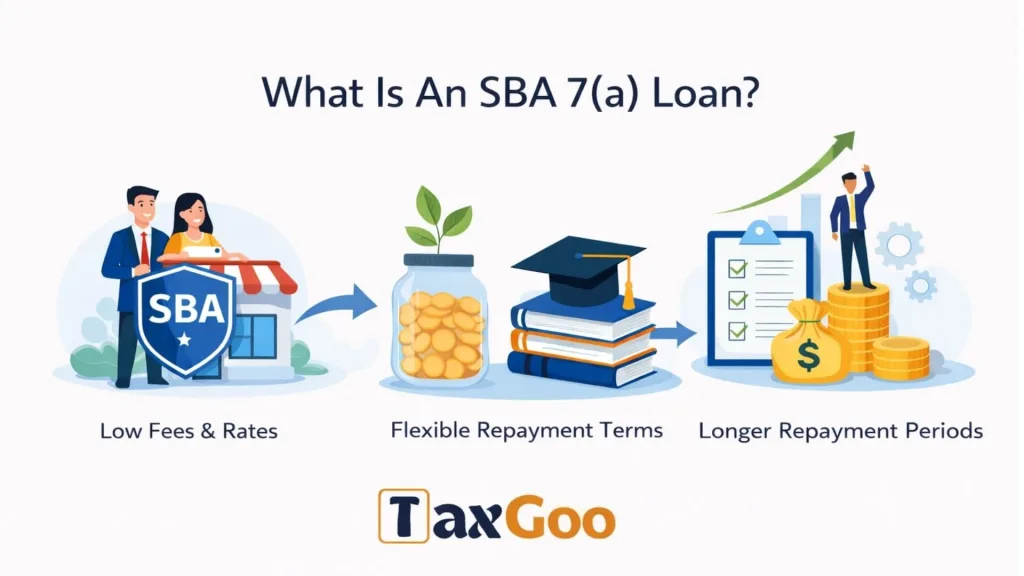
What Is An SBA 7(a) Loan?
The 7(a) Loan Program is the SBA’s primary business loan program, and its whole purpose is to make it easier for eligible small businesses to access financing through participating lenders by offering a federal guarantee on part of the loan. Think of the SBA as the rule-setter and risk-sharing partner: it sets guidelines, defines what “eligible” looks like, and guarantees a percentage of the lender’s loan—while the bank (or other approved lender) still makes the credit decision and services the loan.
What makes 7(a) loans so popular is the versatility. Depending on the deal and lender, 7(a) funds can support short- and long-term working capital (the “keep the lights on and buy inventory” money), machinery and equipment purchases and installation, furniture/fixtures/supplies, refinancing certain existing business debt, and real estate acquisition or improvement. It’s also commonly used for business acquisition—so if you’re buying an existing company, purchasing a partner out, or transferring ownership, the 7(a) framework is often in the conversation.
Key Benefits (And Tradeoffs) To Know
7(a) loans can feel like “adult financing” in the best way: bigger amounts, longer timelines, and terms that match what you’re actually buying (for example, longer terms for real estate than for working capital). Another win is predictability—rates are negotiated with the lender but capped by SBA maximums, which helps keep pricing within a defined range.
The tradeoffs: underwriting is more documentation-heavy than many fast online loans, the lender will expect clean financials and a credible repayment story, and owners often must sign personal guarantees (commonly for 20%+ owners). Also, collateral can matter—especially as loan size increases—though a lack of collateral alone shouldn’t automatically be the only reason a lender declines under program rules.
Eligibility Basics (Program-Level)
While details vary by lender, the program-level rules generally expect that your business:
- Operates for profit and is actively operating
- Is located in the U.S. or U.S. territories
- Meets SBA “small business” size standards
- Is not in an ineligible business category
- Cannot obtain the desired credit on reasonable terms from non-federal, non-state, and non-local sources
- Is creditworthy and shows a reasonable ability to repay
Lenders can add their own overlays (minimum credit score, time in business, revenue floors), so “SBA-eligible” doesn’t always mean “this lender will approve,” but it’s the starting gate.

What You Can Use A 7(a) Loan For
7(a) proceeds are flexible, and common approved uses include:
- Working capital (short- and long-term)
- Equipment and machinery (purchase and installation)
- Real estate (acquire, refinance, improve buildings)
- Refinance certain existing business debt
- Furniture, fixtures, and supplies
- Change of ownership (partial or complete)
- Multi-purpose loans that combine several of the above
If your planned use is vague (“general business stuff”), expect the lender to push you to get specific fast—clarity is part of approval.
Loan Amounts, Guarantees, And Terms (Big Picture)
At a high level, the SBA publishes a maximum 7(a) loan amount of up to $5,000,000. The SBA guarantee is commonly up to 85% for loans of $150,000 or less and up to 75% for loans above $150,000. Interest rates are negotiated but subject to SBA maximums (caps vary by loan size).
Even if you’re not chasing a multi-million-dollar loan, these limits matter because they shape what lenders are willing to do and how they price risk.
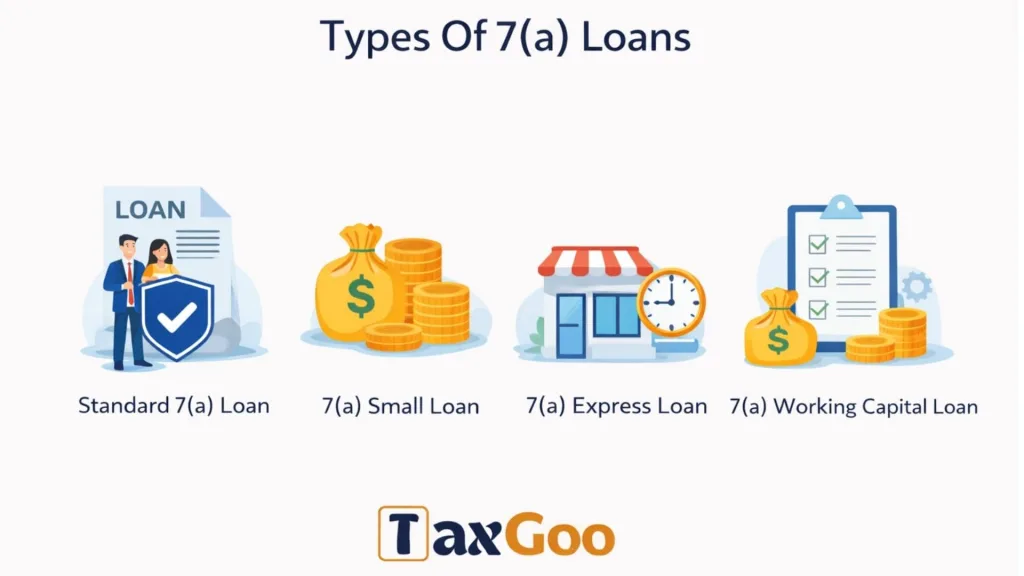
Types Of 7(a) Loans (Which One Fits?)
The “7(a) loan” label is a family of options. Common types you’ll hear about include:
- Standard 7(a): the classic option for many general business purposes
- 7(a) Small: typically structured for smaller loan needs
- SBA Express: often positioned as faster decisions with lower SBA guarantee percentages
- Export Express / other export-focused variants: tailored to export-related financing needs
- CAPLines: lines of credit designed for specific working-capital cycles
You don’t always need to pick the type upfront—many lenders will recommend the best fit once they understand your use of funds, amount needed, and timeline.
How To Apply (Step-By-Step)
- Define the exact loan purpose and how you’ll spend the funds (a simple budget is fine, but make it concrete).
- Estimate how much you need and what payment you can realistically afford from cash flow.
- Gather your key documents (see checklist below).
- Find an SBA-approved lender (or start with your existing bank if they do SBA lending).
- Submit the application and respond quickly to follow-up requests (speed = less back-and-forth = less stalling).
- Be ready for underwriting: cash flow review, credit review, debt schedule, ownership details, and sometimes collateral discussion.
- Close the loan and set up repayment; follow any post-close requirements (insurance, reporting, autopay).
Application Checklist (What Lenders Commonly Ask For)
Have these ready to reduce the “please resend” loop:
- Business and personal tax returns (often 2–3 years)
- Year-to-date P&L and balance sheet
- Debt schedule (all business loans, payments, rates, maturity)
- Business bank statements
- Ownership breakdown (who owns what %)
- Personal financial statement(s) for key owners
- Business plan and/or projections (especially for startups, acquisitions, or expansions)
- Purchase agreements (if buying a business or real estate)
- How funds will be used (a simple use-of-proceeds table)
Approval Tips That Actually Move The Needle
- Tell a clean repayment story: “Here’s how the loan creates/keeps cash flow, and here’s how payments fit.”
- Fix obvious “paper cuts” first: unresolved tax issues, messy bookkeeping, unexplained deposits, outdated licenses.
- Don’t hide the why: lenders are more comfortable funding “growth with a plan” than “growth because vibes.”
- If you’re buying a business, show the transition plan—who runs what on Day 1, Day 30, Day 180.

FAQs
What Is The Main Advantage Of A 7(a) Loan?
A lender can offer financing more comfortably because the SBA guarantees a portion of the loan, and the program allows flexible uses like working capital, equipment, and real estate.
Do I Apply To The SBA Directly?
Usually no—you typically apply through an SBA-approved lender, and the SBA provides the guarantee if the loan meets program rules.
What Do Lenders Care About Most?
Your ability to repay: reliable cash flow, acceptable credit, a clear use of funds, and documentation that supports your story.
Can I Use A 7(a) Loan To Buy A Business?
Yes, 7(a) loans are commonly used for changes of ownership, including full or partial acquisitions.