
If you are searching for the Best Credit Card for College Students, the real answer is not just one card, but the one that fits your spending habits, income, credit history, and comfort level with managing money. The best student credit card usually offers no annual fee, simple rewards, a manageable credit limit, credit-building benefits, easy approval for limited credit history, and a clean mobile app that makes it easier to track spending, pay on time, and stay out of debt. Many students compare cashback student credit cards, starter credit cards, secured credit cards, and beginner-friendly rewards cards because they want something that helps build credit while still giving practical value on groceries, dining, gas, streaming, or everyday purchases. That is why choosing the Best Credit Card for College Students is really about finding a safe first step into personal finance, one that helps you build a credit score, learn responsible borrowing, and avoid high-interest trouble while still getting useful perks.
What Makes A Good Student Credit Card
A strong student credit card should be easy to manage and designed for beginners. Most college students do not need premium travel perks or complicated points systems. They need a card that is practical, affordable, and forgiving.
The most useful features usually include:
- No annual fee.
- Rewards on common student spending.
- A simple approval process for limited credit history.
- Free credit score access.
- Fraud alerts and account controls.
- An app that makes payments easy.
A student card should help you learn good habits, not tempt you into overspending.
Best Features To Look For
When comparing options, focus less on marketing language and more on everyday usefulness. A few details can make a huge difference over time.
Look for these features first:
- No annual fee, because you should not have to pay just to build credit.
- Low or reasonable penalty policies, especially if you are new to managing bills.
- Cashback rewards on categories like dining, groceries, gas, or online purchases.
- Automatic account alerts for due dates and unusual spending.
- A clear path to upgrading to a regular card later.
If a card feels confusing from the start, it may not be the best fit for a first-time cardholder.
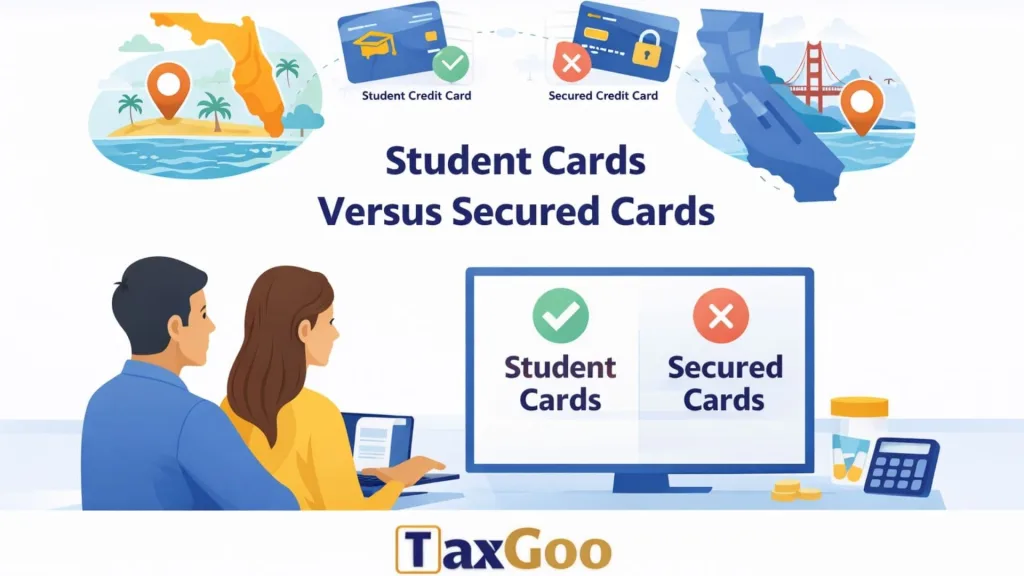
Student Cards Versus Secured Cards
Not every college student will qualify for a traditional student credit card. If that happens, a secured card can still be a smart option.
Here is the difference:
| Card Type | How It Works | Best For |
|---|---|---|
| Student Credit Card | Usually designed for limited credit history, may offer rewards and no annual fee | Students with some income and fair approval chances |
| Secured Credit Card | Requires a refundable deposit that usually becomes your credit limit | Students with no credit or very limited approval options |
A student card is often more appealing because of rewards and convenience. A secured card can still be a strong backup if your main goal is simply to start building credit.
Rewards That Actually Matter
It is easy to get distracted by big sign-up offers, but many college students benefit more from simple ongoing rewards. A small amount of cashback on purchases you already make can be more useful than a flashy bonus with a spending requirement that is hard to reach.
The best reward categories for students often include:
- Dining and takeout.
- Groceries.
- Gas or transit.
- Drugstores.
- Streaming or online subscriptions.
Choose a card that matches your real routine, not your idealized version of yourself.
Fees To Avoid
Fees can turn a beginner card into an expensive lesson. That is why fee structure matters almost as much as rewards.
Try to avoid cards with:
- Annual fees.
- High late fees.
- Foreign transaction fees, if you travel or study abroad.
- Overly confusing terms.
- Extra charges that do not give real value in return.
A simple no-annual-fee card is usually the safest starting point for most students.
Why Credit Building Matters In College
Using a credit card responsibly in college can help you long after graduation. Your credit history can affect apartment applications, car loans, insurance pricing in some places, and future credit card approvals.
The biggest credit-building habits are simple:
- Pay on time every month.
- Keep your balance low compared with your credit limit.
- Do not apply for too many cards at once.
- Check your statements regularly.
- Treat the card like a payment tool, not extra income.
Good credit starts with routine, not tricks.
Common Mistakes Students Make
A first credit card can be very helpful, but only if it is used carefully. A few early mistakes can become expensive fast.
Common problems include:
- Carrying a balance and paying interest every month.
- Missing due dates.
- Spending up to the full limit.
- Opening a card just for a sign-up bonus.
- Ignoring the interest rate.
- Using credit for wants instead of needs.
The easiest way to avoid these mistakes is to charge only what you can afford to pay off right away.
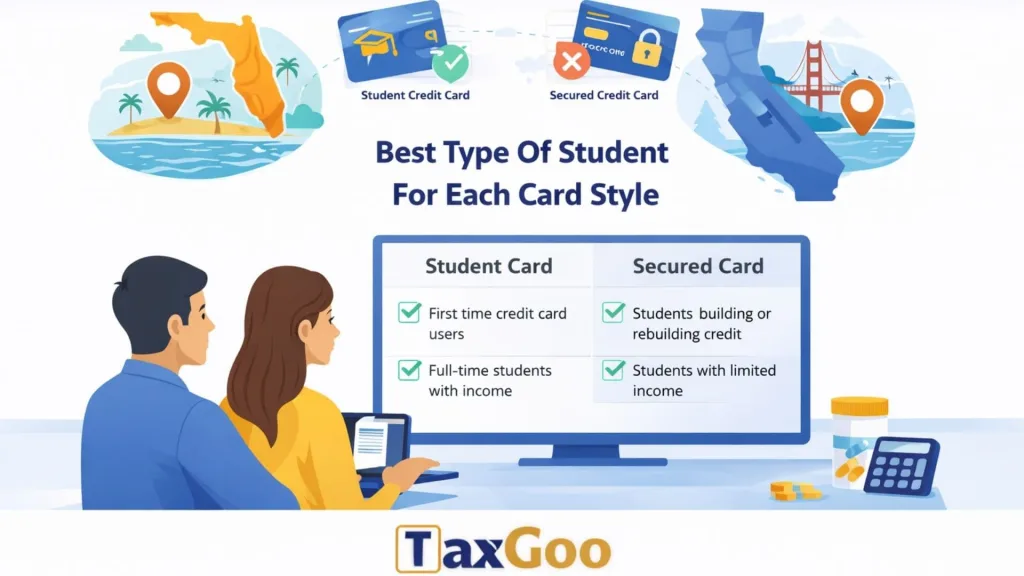
Best Type Of Student For Each Card Style
Different students need different types of cards. The right fit depends on your financial starting point.
A no-annual-fee cashback student card is often best for:
- Students with modest regular spending.
- People who want easy rewards.
- Beginners who want something simple.
A secured card is often best for:
- Students with no credit history.
- Applicants who were denied a student card.
- People focused only on building credit first.
A low-fee travel-friendly card may work for:
- International students.
- Students who study abroad.
- People who spend outside their home country.
The best card is the one you can use responsibly and keep long term.
How To Choose The Right One
You do not need to compare dozens of options to make a good choice. Start with your actual spending and your real approval chances.
Ask yourself:
- Do I want rewards or just credit building?
- Can I pay the full balance every month?
- Do I have enough income to qualify?
- Would a secured card be a better first step?
- Am I likely to benefit from dining, grocery, or transit rewards?
Once you answer those questions, the field gets much narrower and easier to manage.
Smart Habits After You Get Approved
Getting the card is only the beginning. The real benefit comes from how you use it month after month.
Good habits include:
- Setting up autopay for at least the minimum payment.
- Paying the full statement balance whenever possible.
- Turning on spending alerts.
- Keeping utilization low.
- Reviewing transactions weekly.
- Using the card for planned purchases only.
That combination builds confidence and helps you avoid the classic student credit trap.

FAQs
What Is The Best First Credit Card For A Student?
Usually, a no-annual-fee student card with simple cashback and easy account tools is a strong first choice.
Is A Secured Card Good For College Students?
Yes. It can be a solid option if you have no credit history or cannot qualify for a student card.
Should Students Carry A Balance?
No. Paying the full balance each month helps you avoid interest and build healthier habits.
Do Student Credit Cards Build Credit?
Yes. They can help build credit if you pay on time and keep balances low.