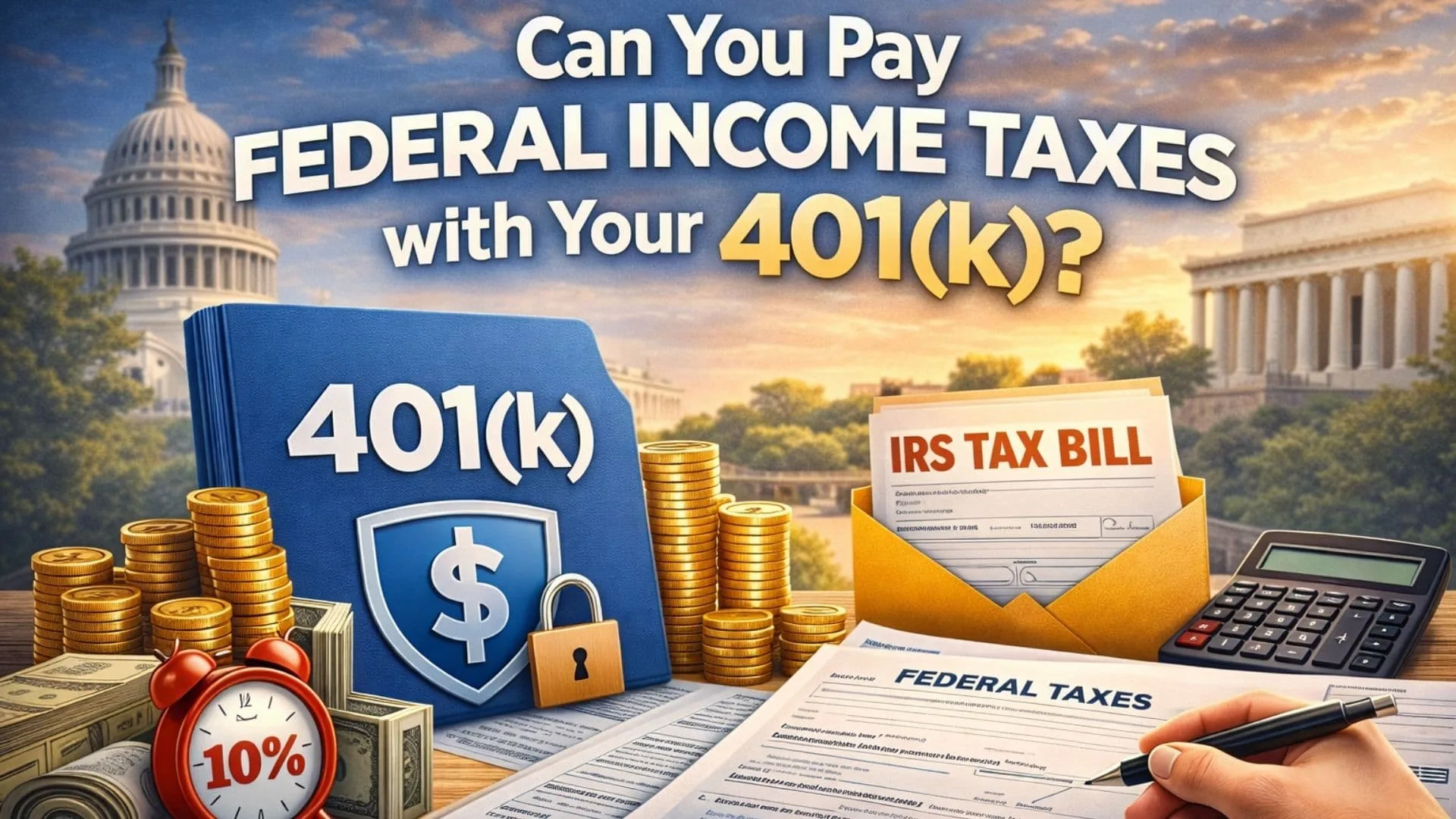
When it comes to managing your tax obligations, many taxpayers look for creative ways to ease the financial burden. One such question that often arises is: Can you pay federal income taxes with your 401(k)? While it may seem like a quick solution to cover your taxes, using your 401(k) to pay federal income taxes comes with specific considerations that you need to understand before making this decision. In this article, we’ll walk through the mechanics of using your 401(k) for paying taxes, potential penalties involved, and other important factors you should be aware of. We’ll also discuss alternative options for managing your tax payment without tapping into your retirement savings.
Understanding Your 401(k)
A 401(k) is a retirement savings plan offered by employers to help employees save for retirement. It allows employees to contribute a portion of their pre-tax income, reducing their taxable income for the year. In return, these contributions grow tax-deferred until retirement, at which point you’ll pay taxes on the money you withdraw.
However, using 401(k) funds before retirement can lead to significant consequences. Let’s dive into how this works when it comes to paying taxes.
Can You Use Your 401(k) to Pay Federal Income Taxes?
The short answer is yes, but it’s generally not recommended. You can take a distribution or loan from your 401(k) to pay federal income taxes, but there are several important factors to consider:
1. Taking a Distribution
If you withdraw money from your 401(k) to cover taxes, you are subject to income tax on the amount withdrawn. Since 401(k) contributions are made with pre-tax dollars, the IRS will tax your withdrawal at your current tax rate. So, if you pull out money from your 401(k) to pay your federal income tax, that money will count as taxable income for the year.
Additionally, if you’re under 59½, the IRS may impose a 10% early withdrawal penalty on top of the income tax you’ll owe on the distribution. This means that taking a withdrawal to pay taxes could lead to a substantial loss of retirement savings, both in terms of the immediate taxes you owe and the penalty charges.
2. Taking a Loan
Another option is to take a loan from your 401(k). Many 401(k) plans allow employees to borrow up to 50% of their vested balance or $50,000 (whichever is less). The loan must be paid back within five years, and if you don’t repay the loan, the amount owed will be considered a distribution and subject to income tax and possibly an early withdrawal penalty.
While loans from your 401(k) don’t incur immediate taxes or penalties (if paid back within the terms), borrowing from your 401(k) reduces the amount of money in your retirement account, which could hurt your long-term savings growth. Plus, if you leave your job, the loan will typically need to be paid back immediately.
3. Hardship Withdrawals
In some cases, you may qualify for a hardship withdrawal from your 401(k). Hardship withdrawals are allowed for certain financial hardships, including paying for medical expenses, purchasing a home, or covering education expenses. However, paying taxes is not a qualifying hardship for a 401(k) withdrawal, and this strategy is not available to cover federal income taxes.
The Penalties and Consequences
It’s important to understand the financial implications of using your 401(k) to pay federal income taxes. Here are some of the key consequences:
- Income Tax: Withdrawals from your 401(k) are subject to federal income tax, which means you will need to pay taxes on the full amount you withdraw.
- Early Withdrawal Penalty: If you’re under 59½, you’ll likely face a 10% penalty for early withdrawal, which can significantly reduce the amount you receive.
- Loss of Retirement Savings: The most significant consequence of withdrawing from your 401(k) is the potential loss of long-term retirement savings growth. The funds you withdraw won’t have the opportunity to grow, which could significantly affect your retirement nest egg.
Should You Use Your 401(k) to Pay Federal Income Taxes?
While you can use your 401(k) to pay your federal income taxes, it’s generally a last resort option. Here are a few reasons why you should avoid this strategy unless absolutely necessary:
- Reduced Retirement Savings: Withdrawing funds from your 401(k) depletes your retirement savings, which can have long-term consequences on your financial security in retirement.
- Penalties and Taxes: The added taxes and penalties can make this an expensive way to cover your tax bill. The 10% early withdrawal penalty, in particular, is a hefty cost to bear on top of regular income tax.
- Alternative Payment Methods: There are other ways to pay federal income taxes that don’t involve tapping into your retirement savings. For example, you can set up a payment plan with the IRS, apply for an extension, or use other forms of financing like personal loans or credit cards.
Alternative Ways to Pay Your Taxes
If you find yourself in a position where you can’t pay your federal income taxes in full, there are other options available that don’t require you to sacrifice your retirement savings:
- IRS Payment Plans: The IRS offers several options for setting up payment plans if you can’t afford to pay your taxes all at once. You can apply for a short-term payment plan (up to 120 days) or a long-term installment agreement (if you need more time).
- Credit Cards: If you have access to a credit card with a low interest rate, you might consider paying your taxes this way, although it’s essential to weigh the interest charges.
- Tax Extensions: While this doesn’t reduce your tax liability, filing for an extension gives you additional time to pay your taxes. Be aware that this does not extend the time to pay, only the time to file.
Conclusion
While it is technically possible to use your 401(k) to pay federal income taxes, it is generally not a recommended strategy. The potential penalties, taxes, and long-term consequences on your retirement savings make this an expensive option. Instead, consider other alternatives, such as setting up an IRS payment plan or using a credit card, to manage your tax payments. Your retirement savings should be a last resort for paying taxes, as it could ultimately impact your financial future.