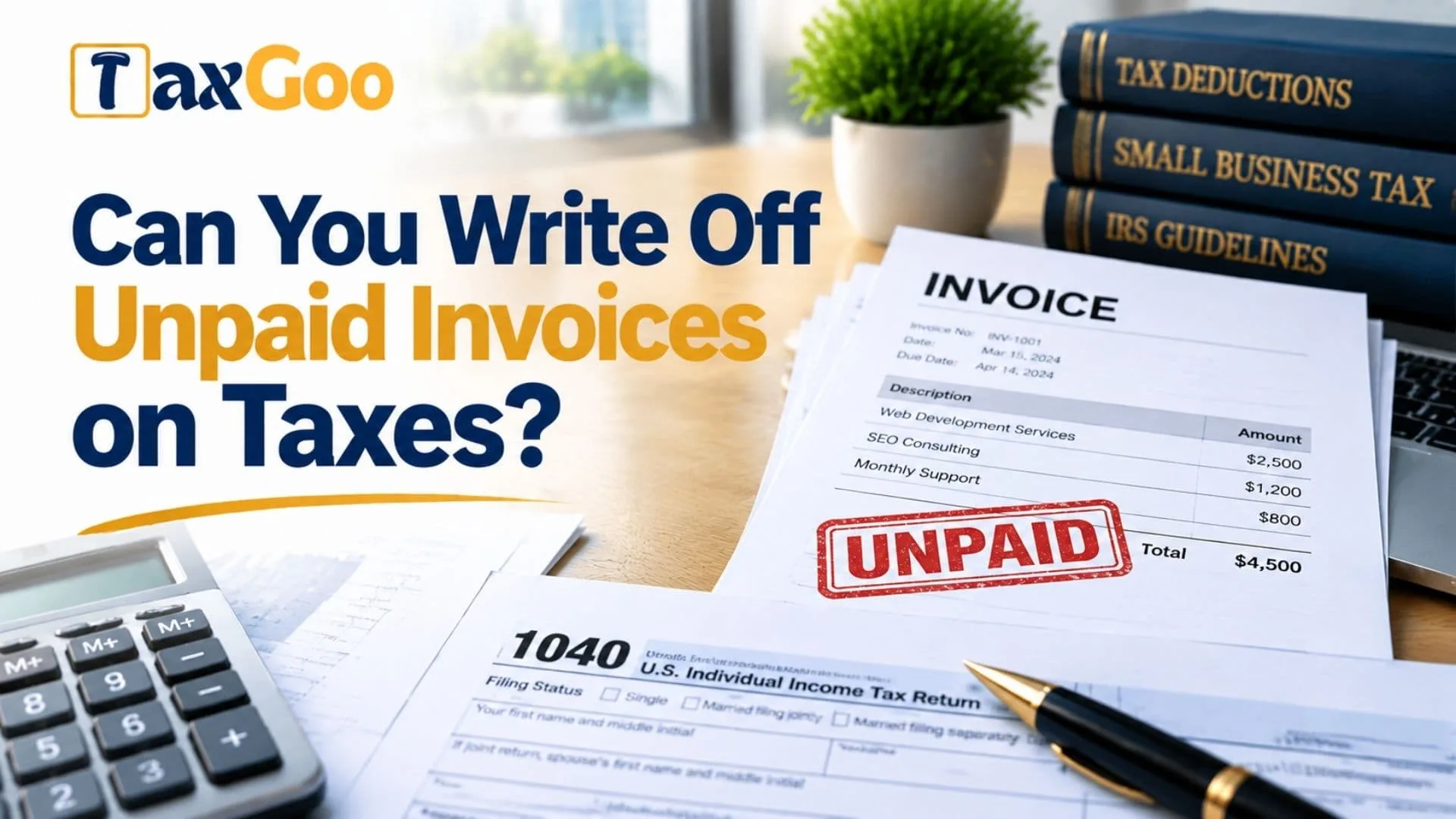
Running a business involves many financial risks, and unpaid customer invoices are one of the most common challenges companies face. Many business owners ask, Can You Write Off Unpaid Invoices On Taxes? The answer depends on several factors, including your accounting method, the type of business, and whether the unpaid amount qualifies as a legitimate bad debt. When a customer does not pay an invoice for goods or services already provided, the business may experience a financial loss. In some situations, this loss may be deductible as a bad debt expense on a tax return. Understanding how unpaid invoices, bad debts, and tax deductions work can help business owners maintain accurate financial records and make informed decisions. However, not every unpaid invoice automatically qualifies for a tax write-off. Proper documentation, accounting records, and proof that the debt is considered uncollectible are important parts of the process.
What Is An Unpaid Invoice?
An unpaid invoice is a bill issued by a business that has not been paid by the customer within the agreed payment period.
For example, a company may provide consulting services, complete a project, or deliver products and send an invoice to the customer. If the customer fails to pay after repeated collection attempts, the unpaid amount may become a financial loss for the business.
Businesses commonly experience unpaid invoices because of:
- Customer financial problems
- Disputes over services or products
- Forgotten payments
- Business closures
- Communication issues
While an unpaid invoice affects cash flow, the tax treatment depends on specific circumstances.
Can Unpaid Invoices Be Written Off On Taxes?
In some cases, businesses may be able to deduct unpaid invoices as bad debt expenses. However, the rules depend on how the business reports income.
Businesses using the accrual accounting method generally have more opportunities to claim bad debt deductions because income is recorded when earned, even if payment has not been received.
Businesses using the cash accounting method usually cannot deduct unpaid invoices because they typically do not report income until payment is received.
For this reason, understanding your accounting method is an important first step when determining whether an unpaid invoice can be written off.
What Is A Bad Debt Expense?
A bad debt expense occurs when a business determines that money owed by a customer is unlikely to be collected.
A valid bad debt usually involves:
- A real customer debt
- A completed transaction
- A reasonable effort to collect payment
- Evidence that the amount is no longer recoverable
Simply deciding not to collect an invoice does not automatically make it a deductible bad debt.
Requirements For Writing Off Unpaid Invoices
Before claiming an unpaid invoice as a tax deduction, businesses should review several important requirements.
The Debt Must Be Real
The invoice must come from an actual business transaction. Personal loans or expected payments without a completed transaction generally do not qualify as business bad debts.
The Debt Must Be Worthless
The business must have a reasonable belief that the customer will not pay the amount owed.
Examples may include:
- Customer bankruptcy
- Failed collection attempts
- Business closure
- Legal confirmation that payment is unlikely
Proper Records Must Be Maintained
Businesses should keep documentation showing:
- Original invoices
- Customer agreements
- Payment history
- Collection attempts
- Communication records
Good records support the deduction and help explain the situation if questions arise.
How To Write Off An Unpaid Invoice
The process usually involves reviewing the unpaid account, confirming that collection is unlikely, and recording the amount properly in business financial records.
Common steps include:
Review The Outstanding Invoice
Check the invoice details, payment terms, and customer history.
Attempt Collection
Businesses should make reasonable attempts to collect the payment before considering it a bad debt.
Collection efforts may include:
- Sending payment reminders
- Contacting the customer
- Offering payment arrangements
- Using collection services
Record The Bad Debt
Once the debt is considered uncollectible, the business can record the loss according to its accounting procedures.
Report The Deduction Correctly
The bad debt amount must be reported properly on the applicable tax return.
Common Mistakes When Writing Off Unpaid Invoices
Many business owners make mistakes when handling unpaid invoices.
Writing Off Every Late Payment
A late payment does not automatically mean the invoice is a bad debt. Businesses should determine whether the amount is truly uncollectible.
Not Keeping Documentation
Without records showing collection efforts and transaction details, supporting the deduction can become difficult.
Ignoring Accounting Method Rules
Cash and accrual accounting methods handle unpaid invoices differently, so businesses should understand which rules apply to them.
How Businesses Can Reduce Unpaid Invoices
Preventing unpaid invoices is often easier than dealing with them later.
Helpful strategies include:
- Creating clear payment terms
- Sending invoices quickly
- Following up on overdue payments
- Checking customer payment reliability
- Requesting deposits for larger projects
- Using online payment systems
Strong payment processes can improve cash flow and reduce financial losses.
Frequently Asked Questions
Can A Business Write Off Unpaid Invoices?
A business may be able to write off unpaid invoices if they qualify as legitimate bad debts under tax rules.
Are All Unpaid Invoices Tax Deductible?
No, not every unpaid invoice qualifies for a tax deduction. Eligibility depends on specific requirements.
What Is A Bad Debt Expense?
A bad debt expense is a financial loss from money owed to a business that is considered uncollectible.
Does Accounting Method Affect Unpaid Invoice Write-Offs?
Yes, accounting method can affect whether unpaid invoices can be deducted for tax purposes.