
A Credit Score is one of the most important numbers in your financial life, especially when you want to borrow money, qualify for a credit card, purchase a home, or finance a vehicle in the United States. Your credit score represents your creditworthiness and helps lenders understand how responsibly you have managed borrowed money in the past. Most commonly used consumer credit scores range from 300 to 850, with higher numbers generally indicating lower credit risk. However, understanding your credit score involves more than simply knowing whether your number is good or bad. Factors such as payment history, credit utilization, outstanding debt, length of credit history, new credit applications, and credit account types can all influence your results. Major credit reporting agencies, including Equifax, Experian, and TransUnion, collect information about your financial activities and use it to create credit reports that scoring models evaluate. Whether you are building credit for the first time, recovering from financial difficulties, or trying to qualify for better loan terms, learning how credit scores work can help you make smarter financial decisions and avoid common mistakes.
What Is a Credit Score?
A credit score is a three-digit number that estimates how likely you are to repay borrowed money according to the agreed terms.
Banks, credit card companies, mortgage lenders, and other financial institutions use credit scores to evaluate potential borrowers.
Your score is calculated using information from your credit report, which contains details about your credit accounts, payment history, outstanding balances, and other financial activities.
It is important to understand that a credit score and a credit report are not the same thing. A credit report contains your credit history, while a credit score summarizes relevant information using a mathematical scoring model.
What Is a Good Credit Score?
Most commonly used FICO credit scores range from 300 to 850. A higher score generally indicates stronger credit management and may help you qualify for better borrowing terms.
Here is a general breakdown of FICO credit score ranges:
| Credit Score | Rating |
|---|---|
| 300–579 | Poor |
| 580–669 | Fair |
| 670–739 | Good |
| 740–799 | Very Good |
| 800–850 | Exceptional |
A score of 670 or higher is generally considered good under the standard FICO scoring categories.
However, different lenders may have different approval requirements. Your income, existing debts, loan amount, and other financial information may also influence lending decisions.
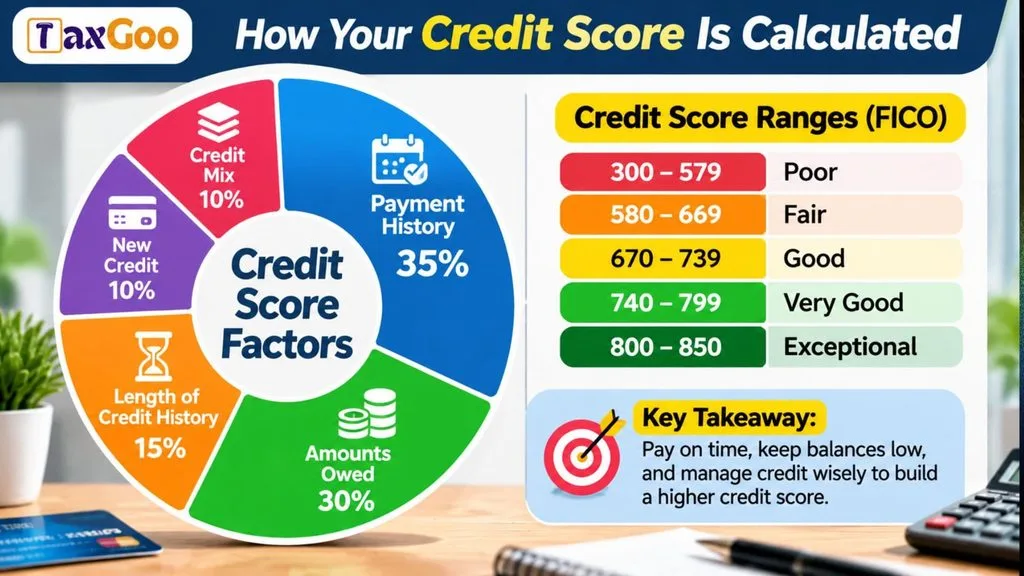
How Is Your Credit Score Calculated?
Credit scoring companies evaluate several aspects of your credit history. FICO uses five major categories when calculating its widely used base credit scores.
1. Payment History (35%)
Payment history is the most influential factor in a standard FICO score.
It considers whether you pay your credit cards, loans, and other reported credit obligations on time.
Late payments, missed payments, collections, and other negative information can affect your credit score.
Making payments by their due dates consistently is one of the most effective ways to establish a positive credit history.
2. Amounts Owed (30%)
This category examines how much debt you currently have and how much of your available revolving credit you use.
Credit utilization is particularly important for credit card users.
For example, if your credit card limit is $10,000 and your reported balance is $2,000, your credit utilization ratio is 20%.
Generally, lower credit utilization is better for your credit profile.
3. Length of Credit History (15%)
Your credit history shows how long you have been using credit.
Scoring models may consider:
- The age of your oldest credit account.
- The age of your newest account.
- The average age of your accounts.
- How long specific accounts have been active.
A longer history of responsible credit management can help demonstrate financial reliability.
4. New Credit (10%)
Opening several new credit accounts within a short period may indicate increased borrowing risk.
When you apply for a credit card or loan, lenders may request a hard inquiry on your credit report. Multiple recent applications can negatively affect your score.
5. Credit Mix (10%)
Credit mix refers to the different types of credit accounts in your financial history.
Examples include credit cards, personal loans, mortgages, and auto loans.
Having experience managing different credit types can contribute positively to a FICO score. However, you do not need to open unnecessary accounts just to improve your credit mix.
Note: These percentages describe the general FICO scoring framework. Other credit scoring models may evaluate information differently.
Why Is Your Credit Score Important?
Your credit score can influence several financial opportunities.
Loan Approval: Lenders use credit scores when evaluating applications for mortgages, personal loans, auto loans, and other financing products.
Interest Rates: A stronger credit profile may help you qualify for lower interest rates, reducing the total cost of borrowing.
Credit Card Approval: Credit card issuers may use your score to determine whether you qualify for a particular card.
Credit Limits: Your credit history and score can influence how much credit a lender is willing to offer.
Rental Applications: Some landlords and property management companies review credit information when evaluating prospective tenants.
A credit score is not the only factor in these decisions, but maintaining a healthy credit profile can create more financial opportunities.
How to Check Your Credit Score for Free
You do not always need to purchase a subscription to understand your credit situation.
Here are some ways to access your credit information:
- Visit your credit card company’s website or mobile application to see whether it provides free credit score access.
- Check whether your bank offers complimentary credit monitoring.
- Visit AnnualCreditReport.com to request your credit reports.
- Review reports from Equifax, Experian, and TransUnion.
- Look for incorrect account information, unfamiliar transactions, or inaccurate payment records.
Under the current free weekly access program, consumers can request free credit reports from all three major credit bureaus through AnnualCreditReport.com.
Remember that a free credit report does not necessarily include a free credit score. These are separate financial products.
How to Improve Your Credit Score
Improving your credit score takes consistent effort. Although results vary depending on your credit history, several responsible habits can help.
- Pay Bills on Time: Set up automatic payments or reminders to avoid missed due dates.
- Reduce Credit Card Balances: Keep your credit utilization relatively low instead of approaching your credit limits.
- Avoid Unnecessary Applications: Apply for new credit only when you genuinely need it.
- Review Your Credit Reports: Identify and dispute inaccurate information.
- Build a Longer Credit History: Maintain responsible account management over time.
- Manage Existing Debt: Make a realistic repayment plan and avoid taking on debt you cannot comfortably afford.
You do not need to carry a credit card balance or pay interest to build a good credit score. Paying your statement balance in full when possible can help control interest costs while maintaining responsible payment habits.
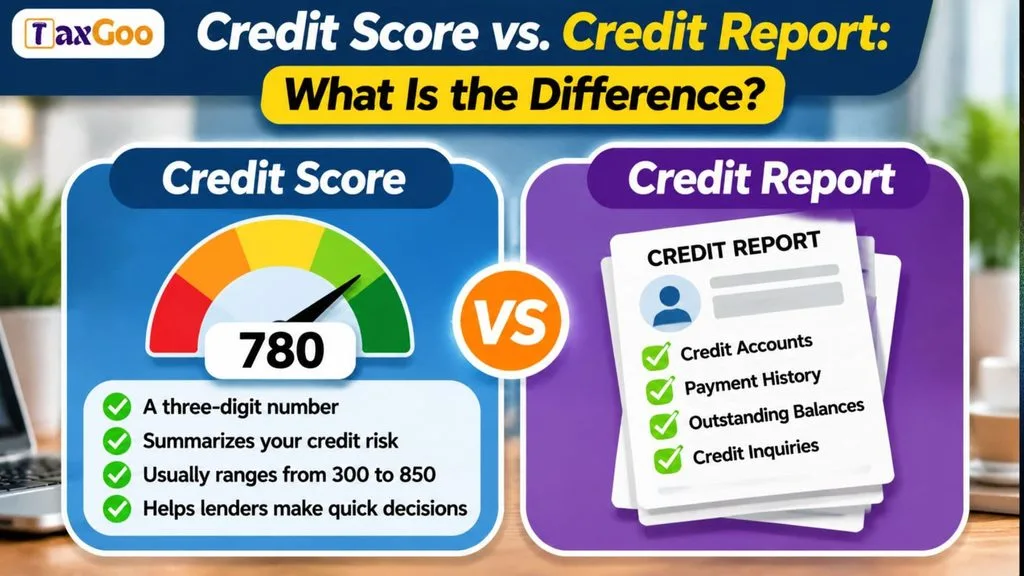
Credit Score vs. Credit Report: What Is the Difference?
Although these terms are closely related, they serve different purposes.
| Credit Score | Credit Report |
|---|---|
| A numerical assessment of credit risk | A detailed record of credit activity |
| Usually presented as a three-digit number | Contains account and payment information |
| Calculated using a scoring model | Compiled by credit reporting agencies |
| Helps lenders evaluate borrowers | Provides information used to calculate scores |
| Can change when reported data changes | Updated as creditors report new information |
Understanding both is important because incorrect information in your credit report can affect your credit score.
Common Credit Score Myths to Avoid
Some common misunderstandings can lead to poor financial decisions.
- Checking Your Own Score Lowers It: Checking your own credit score or requesting your own report generally does not affect your score.
- You Need Credit Card Debt to Build Credit: Carrying a balance and paying interest are not necessary to establish good credit.
- Everyone Has Only One Credit Score: Different scoring models and credit reporting agencies can produce different scores.
- A High Score Guarantees Loan Approval: Lenders consider several financial factors beyond credit scores.
Understanding these facts can help you make more informed decisions about credit management.
Final Thoughts
Your credit score plays an important role in your financial opportunities. Whether you are applying for a mortgage, financing a vehicle, or looking for a new credit card, understanding how credit scoring works can help you prepare more effectively.
Focus on paying bills on time, maintaining manageable credit card balances, checking your credit reports, and avoiding unnecessary borrowing. Building a strong credit profile takes time, but consistent financial habits can help you move toward better credit health.
Frequently Asked Questions
1. What Is a Good Credit Score?
A FICO score between 670 and 739 is generally considered good. Scores of 800 or higher are exceptional.
2. What Is the Highest Possible Credit Score?
The highest standard base FICO credit score is 850.
3. How Can I Check My Credit Score for Free?
Some banks and credit card companies provide free credit score access through their websites or mobile applications.
4. Does Checking My Credit Score Lower It?
No. Checking your own credit score generally involves a soft inquiry, which does not lower your score.
5. How Long Does It Take to Improve a Credit Score?
It depends on your credit history, existing debt, and reported account activity. Some changes may appear relatively quickly, while rebuilding damaged credit can take considerably longer.
6. Does Paying Credit Cards on Time Improve Credit?
Yes. Consistent on-time payments help establish positive payment history, an important factor in FICO scoring.
7. Can I Have Different Credit Scores?
Yes. Different scoring models, credit bureaus, and reporting dates can produce different credit scores.
8. Where Can I Get My Free Credit Report?
Visit AnnualCreditReport.com to request free weekly credit reports from Equifax, Experian, and TransUnion.