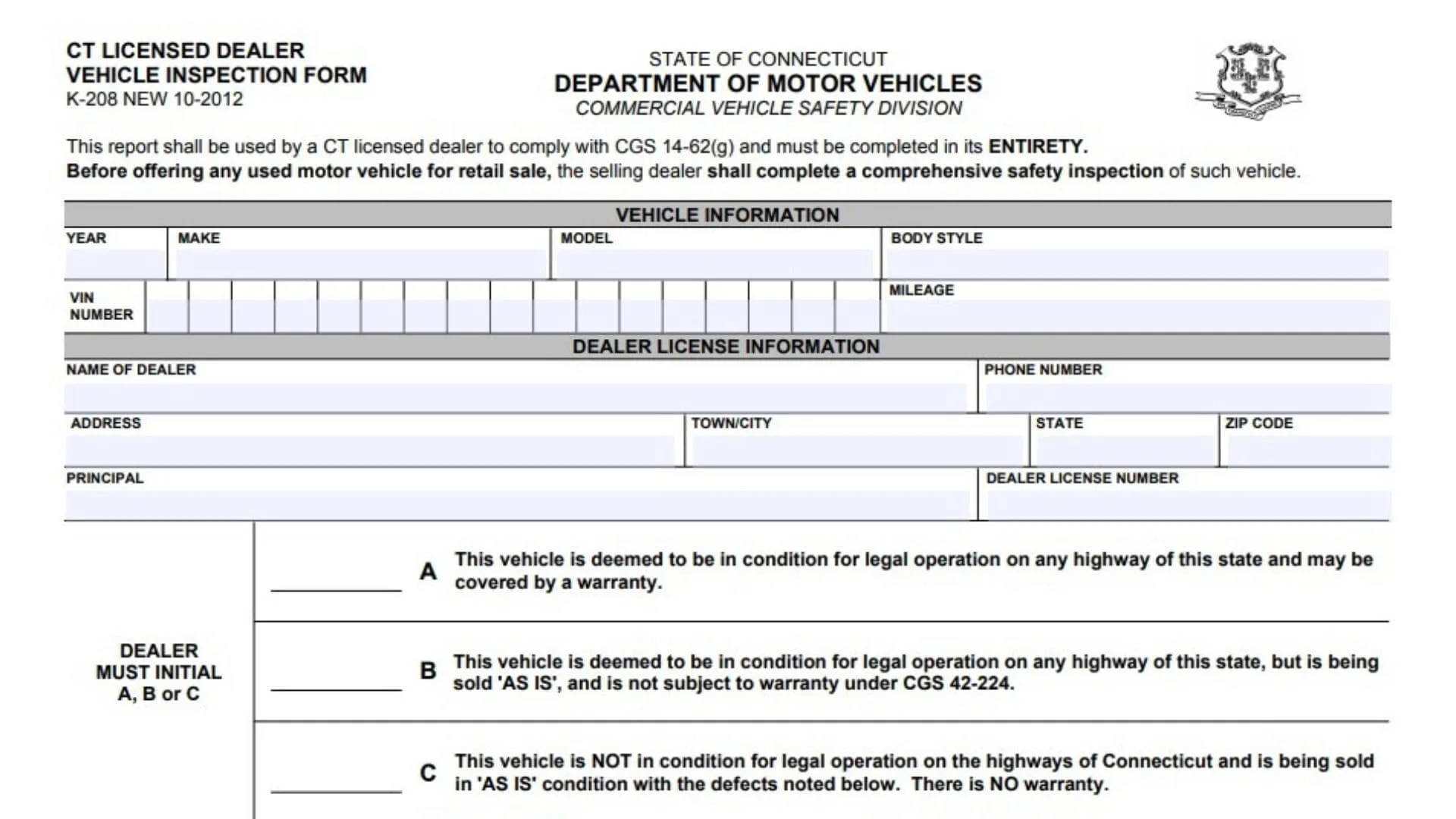
The CT K208 Licensed Dealer Vehicle Inspection Form is an official document used by licensed motor vehicle dealers in Connecticut to certify that a used vehicle has undergone a thorough safety inspection before being offered for sale. This form ensures that vehicles meet minimum safety standards required for legal operation on public roads, while also providing transparency to buyers about the condition of the vehicle. It covers essential inspection categories such as brakes, tires, steering, lights, and emissions, along with dealer and vehicle identification details. By completing this form accurately, dealers confirm compliance with state regulations and protect both themselves and the buyer by documenting the vehicle’s condition, any defects, and whether the vehicle is sold with or without warranty. It also serves as a legal statement, meaning any false information may lead to penalties, making accuracy and completeness extremely important.
How To File CT K208 Form
To file the CT K208 form, the licensed dealer must complete every section during or after performing the vehicle inspection. Once filled out, the form must be signed by the licensee to certify the accuracy of the inspection results. The dealer must then provide a copy of the completed form to the buyer at the time of sale. It should also be retained by the dealership for recordkeeping purposes. Filing is considered complete when all inspection items are evaluated, results are clearly marked, and required signatures are present.

How To Complete CT K208 Form Line By Line
Line 1 (Vehicle Year): Enter the model year of the vehicle being inspected.
Line 2 (Make): Write the manufacturer of the vehicle.
Line 3 (Model): Specify the vehicle model.
Line 4 (Body Style): Indicate the type of vehicle body, such as sedan, SUV, or truck.
Line 5 (VIN Number): Record the full Vehicle Identification Number accurately.
Line 6 (Mileage): Enter the current mileage shown on the vehicle’s odometer.
Line 7 (Dealer Name): Provide the full name of the licensed dealership.
Line 8 (Dealer Phone Number): Enter a valid contact number for the dealership.
Line 9 (Dealer Address): Write the street address of the dealership.
Line 10 (Town Or City): Enter the city where the dealership is located.
Line 11 (State): Indicate the state abbreviation.
Line 12 (ZIP Code): Enter the postal ZIP code.
Line 13 (Principal Dealer License Number): Provide the official dealer license number issued by the state.
Inspection Items Section
For each of the following items, check whether the component passes or fails inspection. If any item fails, clearly explain the defect or repair needed in the provided space.
Line 14 (Service Brakes): Evaluate the condition and functionality of the main braking system.
Line 15 (Parking Brake): Check that the parking brake holds the vehicle properly.
Line 16 (Tires And Wheels): Inspect tread depth, wear, and wheel condition.
Line 17 (Steering System): Ensure steering operates correctly without excessive play or issues.
Line 18 (Suspension): Review shocks, struts, and overall suspension integrity.
Line 19 (Frame Or Chassis): Inspect structural components for damage or corrosion.
Line 20 (Exhaust): Check for leaks, damage, or improper emissions flow.
Line 21 (Fuel System): Ensure there are no leaks or hazards in the fuel system.
Line 22 (Headlights): Confirm proper operation and alignment of headlights.
Line 23 (Stop And Turn Lights): Verify brake lights and turn signals function correctly.
Line 24 (Miscellaneous Lights): Inspect all other lighting components on the vehicle.
Line 25 (Wipers And Washer): Ensure windshield wipers and washer system work properly.
Line 26 (Windshield And Tint): Check for cracks, visibility issues, or illegal tint.
Line 27 (Horn): Confirm the horn functions as intended.
Line 28 (VIN Verified): Verify that the VIN on the vehicle matches documentation.
Line 29 (Mirrors): Inspect all mirrors for proper condition and visibility.
Line 30 (Seat Belts): Check that seat belts are present and operational.
Line 31 (Air Bags): Ensure airbag systems are intact and functional.
Line 32 (Emissions): Confirm compliance with emissions requirements.
Inspection Certification Section
Line 33 (Licensee Statement): Read the certification statement carefully, confirming that all information provided is true and accurate.
Line 34 (Licensee Signature And Printed Name): The licensed dealer signs and prints their name to certify the inspection.
Line 35 (Date): Enter the date the form is signed.
Inspection Results Section
The dealer must select one of the following conditions and initial the appropriate option.
Line 36 (Option A): Indicates the vehicle is safe to operate and may include a warranty.
Line 37 (Option B): Indicates the vehicle is safe to operate but is sold as is without warranty.
Line 38 (Option C): Indicates the vehicle is not safe for operation and is sold as is with known defects.
Line 39 (Dealer Initials): The dealer must initial next to the selected option.
Buyer Information Section
Line 40 (Buyer Name): Print the buyer’s full name.
Line 41 (Buyer Signature And Date): The buyer signs and dates the form acknowledging the inspection results.
Travel And Compliance Notes Section
Line 42 (Emissions Compliance Statement): Confirm that the vehicle meets required emissions standards before sale.