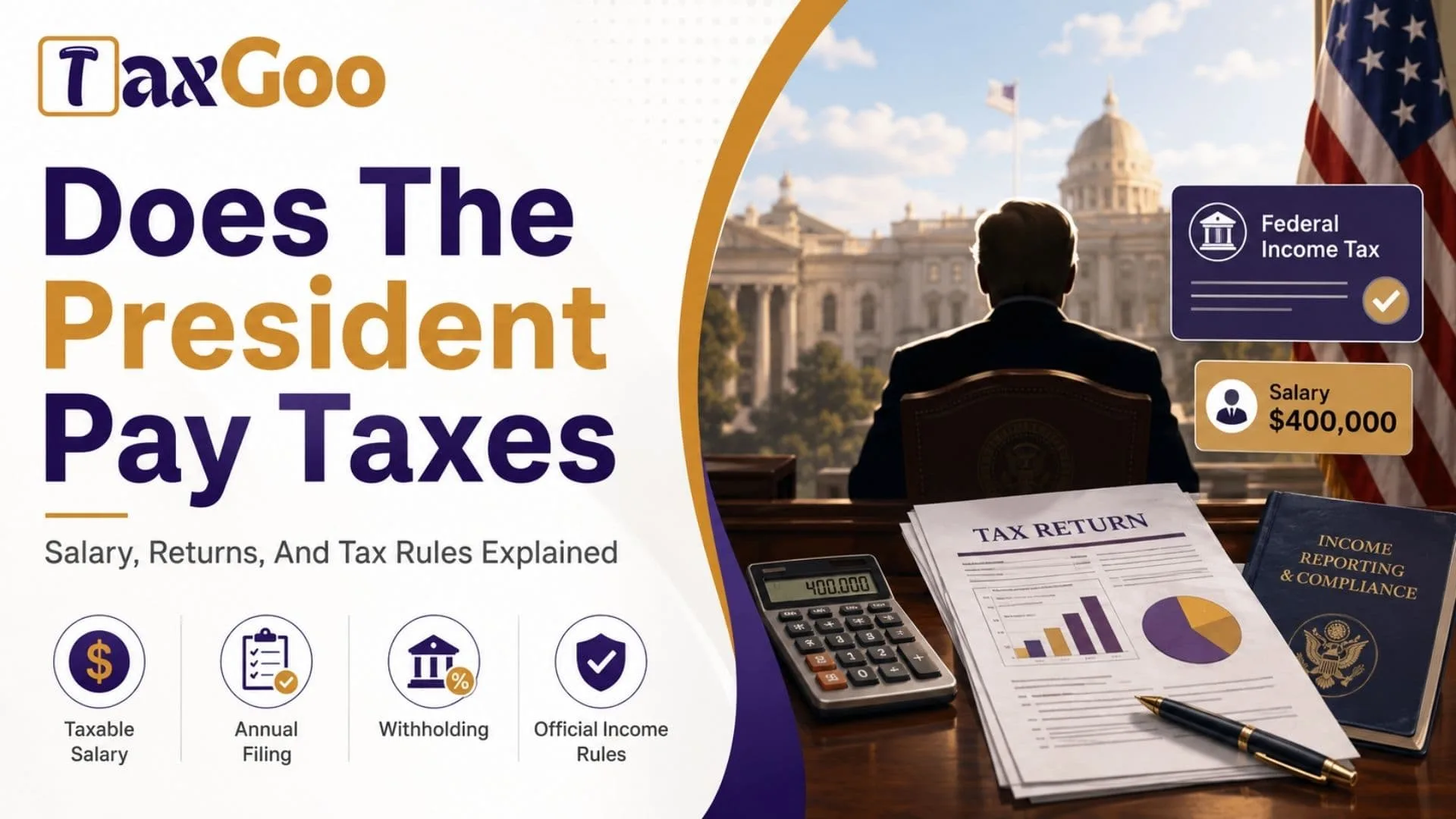
The answer to does the president pay taxes is yes, the President of the United States is generally subject to federal income tax rules and does not receive a broad personal tax exemption simply because of holding office. Presidential salary, investment income, business earnings, capital gains, interest, dividends, royalties, and other taxable income must be considered when preparing a federal income tax return, just as they would be for another taxpayer. The Internal Revenue Service specifically identifies the president and vice president as public officials who are generally treated as government employees for income tax withholding purposes. The government withholds applicable taxes from employment compensation and provides the required wage documentation. However, the amount a president ultimately owes cannot be calculated from the official salary alone because deductions, credits, filing status, investments, business activity, losses, charitable donations, and other financial circumstances can affect the final tax bill.
Does The President Pay Federal Income Tax?
Yes. The president’s position does not automatically place the officeholder outside the federal income tax system.
The IRS explains that public officials are usually government employees. Their government employer is responsible for withholding federal income tax and, when applicable, Social Security and Medicare taxes. The IRS includes the president among its examples of public officers covered by these rules.
Tax withholding during the year is not necessarily the president’s final tax obligation. When the annual return is prepared, taxable income, withholding, deductions, credits, estimated payments, and other factors are combined to determine whether additional tax is owed or a refund is due.
How Much Is The President’s Salary?
Federal law currently provides the president with annual compensation of $400,000, paid monthly. The law also provides a separate annual expense allowance of $50,000 for costs connected with official duties.
The regular presidential salary is compensation for services. IRS guidance states that salaries, wages, fees, and most other compensation for personal services are generally included in gross income unless a specific law excludes them.
The president’s taxable income may be much higher than the official salary. A president could also receive income from investments, book royalties, property, pensions, businesses, trusts, or other legal sources.
Does The President Pay Social Security And Medicare Taxes?
The IRS states that government entities generally withhold federal income tax, Social Security tax, and Medicare tax for public officials treated as employees. Its guidance specifically lists the president and vice president as examples of public officers.
The exact payroll calculation can depend on applicable wage limits, additional Medicare tax rules, and the officeholder’s total compensation. These payroll taxes are separate from the federal income tax calculated on the annual return.
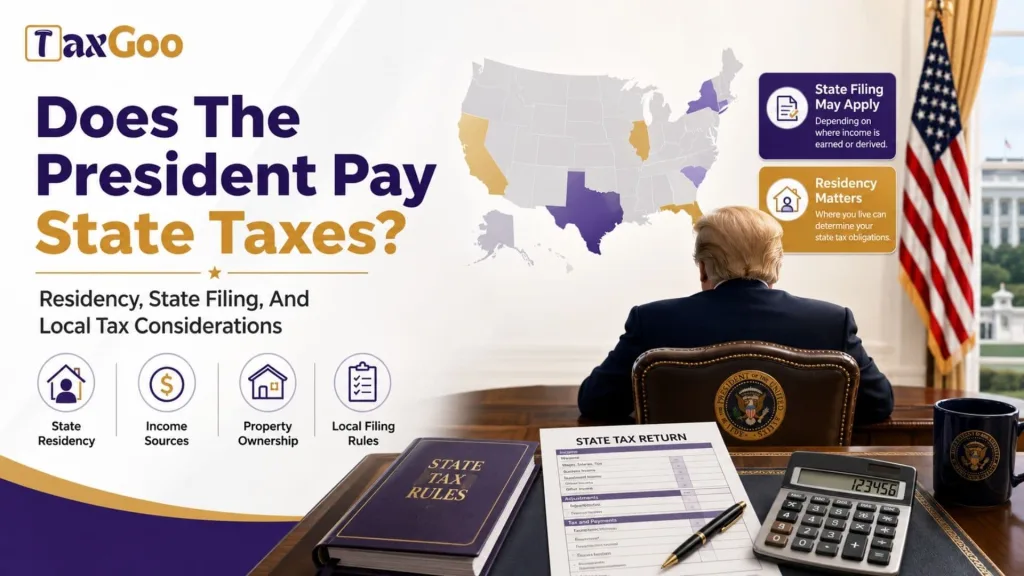
Does The President Pay State Taxes?
A president may have state or local filing responsibilities depending on legal residence, income sources, property ownership, business activity, and the tax laws of the relevant jurisdictions.
Serving in Washington, D.C., does not by itself provide a universal exemption from every state tax obligation. State residency and domicile rules can be complicated, especially when someone owns homes or earns income in several places.
Is All Presidential Income Taxable?
Not every payment, benefit, reimbursement, or official resource is automatically treated as personal taxable income. Tax law distinguishes between salary, personal income, properly documented official expenses, employer-provided benefits, reimbursements, and items specifically excluded by law.
The general IRS rule is that income is taxable unless a law provides an exclusion. Employee compensation and fringe benefits are ordinarily included in income unless the recipient pays fair market value or a specific tax provision excludes the benefit.
For example, government spending on official security, presidential travel, staffing, communications, and White House operations should not simply be added together and called the president’s personal taxable income. Those costs support the office and must be evaluated under the rules applying to official government expenses.
Can The President Claim Tax Deductions?
A president may claim deductions and credits that are legally available based on the facts reported on the return. Holding office does not automatically eliminate ordinary tax provisions, but every deduction must meet the same documentation and eligibility requirements that apply under federal law.
Possible items may involve charitable contributions, investment activity, business expenses, capital losses, state and local taxes, or other qualifying expenses. Eligibility depends on the tax year and the taxpayer’s individual circumstances.
A large deduction does not automatically mean that someone avoided taxes improperly. It may represent an expense or loss specifically recognized by the tax code. The important question is whether the amount was reported correctly and supported by records.
Are Presidential Tax Returns Public?
A president’s personal federal tax information is generally protected by taxpayer confidentiality rules. Internal Revenue Code Section 6103 usually prohibits IRS employees from releasing a taxpayer’s return information unless a legal exception or valid authorization applies.
A president may choose to release tax returns or authorize access, but the IRS cannot ordinarily publish them simply because the taxpayer holds public office. Confidentiality does not mean the return avoids IRS processing, review, or enforcement. It means the personal information cannot be freely disclosed to the public by tax officials.
What Happens If A President Owes Taxes?
A president remains responsible for properly reporting taxable income and paying the amount legally due. The normal tax system can include withholding, estimated payments, return processing, examinations, interest, penalties, collection procedures, and disputes over how the law applies.
Presidential authority does not turn inaccurate income into tax-free income. The IRS states that taxable amounts must be reported unless they are specifically exempted by law.

Frequently Asked Questions
Does The President File A Tax Return?
Yes. Presidential income generally exceeds federal filing thresholds, and taxable income must be reported.
Is The President’s Salary Tax-Free?
No. The $400,000 salary is compensation for presidential services and is generally taxable.
Are Presidential Tax Returns Automatically Public?
No. Federal tax returns are generally confidential unless disclosure is legally authorized.
Can A President Receive A Tax Refund?
Yes. A refund may result when payments and withholding exceed the final tax liability.
Does Living In The White House Eliminate Taxes?
No. Living and working at the White House does not create a broad personal income tax exemption.