
Dry cleaning expenses: tax deductible or not? That’s the million-dollar question for professionals wearing suits, uniforms, or work-specific attire, as this full guide reveals when those steaming hangers full of pressed blazers, wrinkle-free dress shirts, and polished shoes can legitimately reduce your taxable income instead of just collecting dust in your closet. Freelancers, salespeople, nurses, and executives often wonder if routine trips to the dry cleaner transform into valuable dry cleaning tax deductions during tax season, particularly when clothing serves as a mandatory part of client-facing roles or safety requirements, but the IRS draws strict lines between personal wardrobe maintenance and legitimate business expenses that pass the “ordinary and necessary” test. Understanding is dry cleaning tax deductible rules means differentiating everyday outfits from protective gear like chef whites, theatrical costumes, or branded uniforms, while maintaining meticulous records of receipts, work schedules, and laundry frequency to withstand potential audits.
The IRS “Ordinary and Necessary” Test Explained
Dry cleaning qualifies only when clothing is required for your job AND not suitable for everyday wear. A standard black suit? No deduction. Branded company polo with logo? Yes. Firefighter bunker gear? Absolutely. The test asks: Would a reasonable person in your profession incur this expense?
Who Can Claim Dry Cleaning Deductions?
Eligible Professions:
- Sales Representatives wearing client-facing suits
- Restaurant Staff in uniforms not worn home
- Healthcare Workers in scrubs (employer doesn’t launder)
- Performers in costumes/wardrobe
- Flight Attendants in airline uniforms
- Casino Dealers in required vests/tuxedos
Ineligible: Lawyers buying off-rack suits, teachers in business casual, anyone wearing work clothes socially.
Uniforms vs. Regular Clothing: The Critical Difference
Deductible Uniforms:
- Company logo/branding
- Specific colors required by employer
- Safety gear (lab coats, aprons)
- Costumes for performances
Non-Deductible:
- Mix-and-match business attire
- Clothes adaptable for personal use
- “Dress code” professional wear
IRS Example: Nurse scrubs = YES. Doctor white coat over street clothes = YES. Receptionist black dress = NO.

W-2 Employees vs. Self-Employed: Major Rule Differences
Self-Employed (Schedule C) can deduct unreimbursed work clothing if it meets uniform criteria.
W-2 Employees face the 2% AGI floor—total miscellaneous deductions must exceed 2% of adjusted gross income. Post-2018 TCJA eliminated most employee deductions through 2025.
Strategy: Form LLC if heavy dry cleaning costs exceed reimbursement.
How to Calculate Your Dry Cleaning Deduction
Method 1: Direct Expense
Dry cleaning cost × business use percentage
Method 2: Laundry Percentage
Total laundry bill × (work clothes ÷ total clothes cleaned)
Example: $1,200 annual dry cleaning, 70% work suits = $840 deduction
Pro Tip: Separate work/personal cleaning days for clean audit trail.
Record-Keeping Requirements That Pass IRS Scrutiny
Minimum Documentation:
- Receipts showing date, amount, vendor
- Work Calendar proving uniform usage frequency
- Photos of qualifying garments showing logos/specifications
- Employer Policy (written dress code if possible)
- Mileage Log to dry cleaner (business travel deduction)
Digital Solution: Shoeboxed app scans receipts → categorizes → IRS-ready PDF reports.
Common Dry Cleaning Expenses That Qualify
- Protective Clothing: Chef jackets, lab coats, mechanic uniforms
- Branded Apparel: Company polos, name tags, embroidered shirts
- Performance Costumes: Theater, band uniforms, mascot suits
- Safety Gear: High-visibility vests, steel-toe boots (cleaning only)
- Formal Uniforms: Military, security guard, hotel staff tuxedos
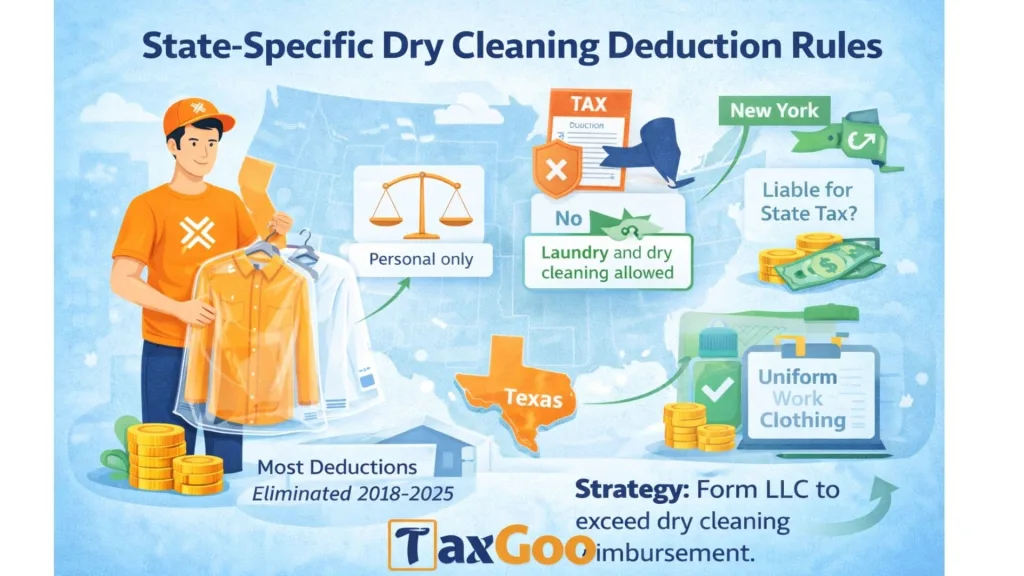
State-Specific Dry Cleaning Deduction Rules
Generous States:
- Texas: Full business deduction
- Florida: No state income tax = federal rules only
- New York: Conforms to federal
Strict States:
- California: Requires state-specific substantiation
- Illinois: 2% floor applies to state returns
Audit Triggers and How to Avoid Them
Red Flags:
- 100% clothing deductions without uniforms
- Round number estimates ($1,200 exactly)
- No receipts for multi-year claims
- Personal photos showing work clothes at parties
Protection Strategy: Claim conservative percentages (60-80%) with bulletproof documentation.
Maximizing Your Clothing Deduction Strategy
- Separate Accounts: Work vs personal dry cleaning cards
- Annual Review: Employer dress code changes = deduction eligibility
- Bulk Prepayment: Pay next year’s cleaning upfront (if cash basis)
- LLC Formation: Bypass employee deduction limits
- Cost Segregation: Separate qualifying vs non-qualifying items on receipts
Special Situations and Edge Cases
Seasonal Workers: Prorate based on work months (Jan-May tax preparer suits = 40% annual deduction).
Multiple Jobs: Allocate cleaning costs proportionally (60% consulting suits, 40% teaching blazers).
Spouse Working Same Field: Separate receipts, combined Schedule C if joint LLC.
Remote Workers: Home dry cleaning of client Zoom attire generally doesn’t qualify.
Alternative Tax Strategies When Dry Cleaning Doesn’t Qualify
- Mileage to work where dress code requires suits
- Business gifts of branded client apparel
- Advertising expense for logoed promotional items
- Home office wardrobe maintenance (small %)
Year-Round Dry Cleaning Tax Planning
January: Review prior year receipts, categorize work vs personal
April: File with conservative estimates + documentation
July: Employer dress code changes = new deduction opportunities
December: Prepay qualifying 2026 cleaning, accelerate deductions
Professional vs. Self-Help Tax Prep Options
TurboTax Premium: Guides uniform deduction questions
H&R Block Deluxe: Employee 2% floor calculations
CPA Firms: LLC formation + audit protection ($300-800)
SEO-Friendly Related Keywords
- Is dry cleaning tax deductible 2026
- Uniform cleaning tax write-off
- Work clothes Schedule C deduction
- Employee unreimbursed clothing expenses
- IRS business attire deduction rules
- Self-employed dry cleaning write-off
- Chef uniform tax deduction guide

Frequently Asked Questions
Can I deduct cleaning my regular business suits?
No—must be unsuitable for everyday wear or have company logo/required colors.
What if my employer reimburses dry cleaning?
Non-taxable if under accountable plan; excess becomes personal expense.
Do athletic clothes for gym promotion qualify?
Yes if branded and required for client fitness business.
How do I prove business use percentage to IRS?
Receipts + calendar showing workdays + photos of qualifying garments.
Can I deduct dry cleaning for my spouse’s work clothes?
Only if they work in your business (joint Schedule C).