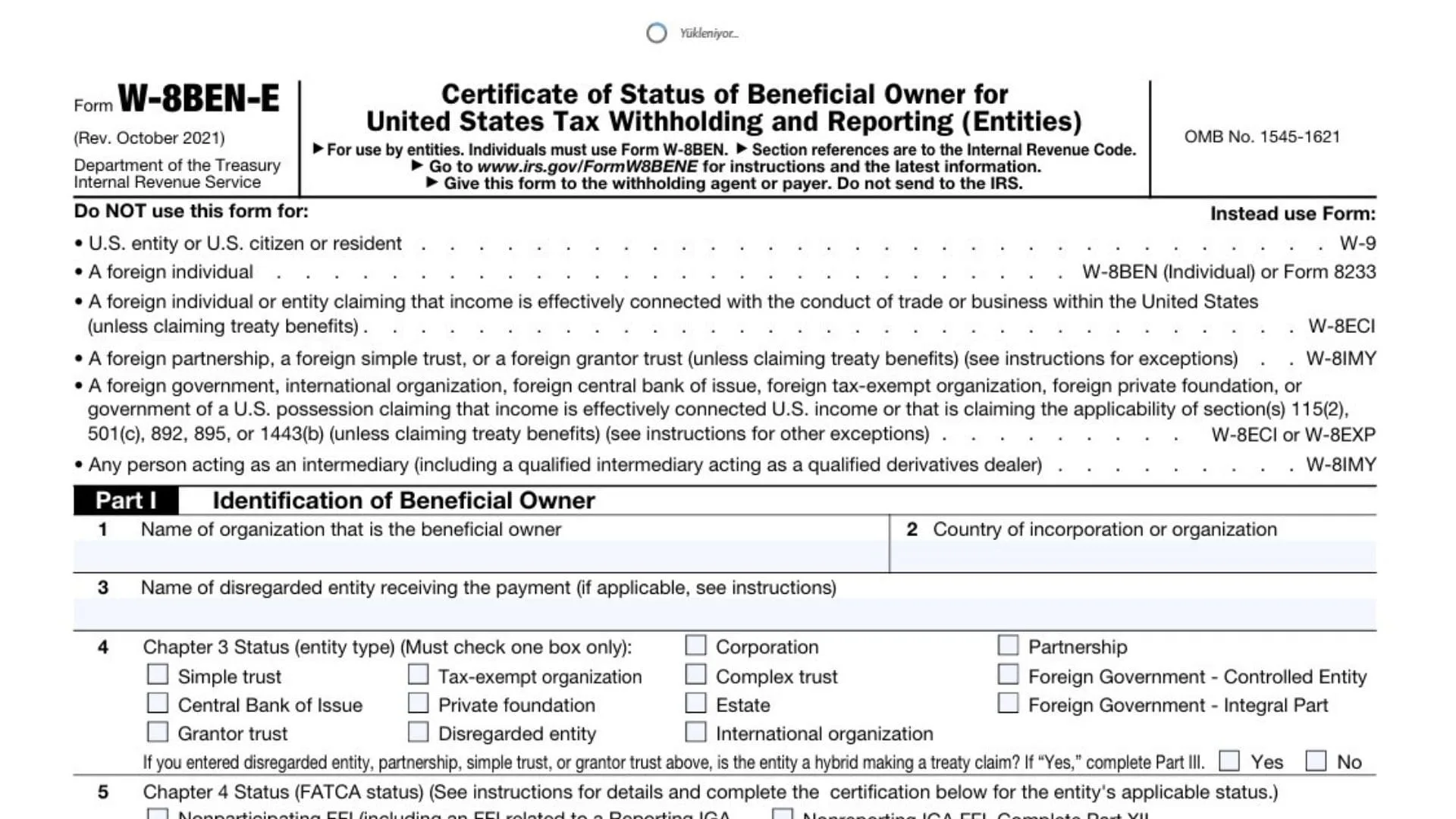
If you are searching for Form W-8BEN-E for foreign owned LLC disregarded entity, chances are you are trying to understand how a foreign-owned single-member LLC is treated for US tax purposes, what IRS withholding forms may apply, and whether a disregarded entity should submit Form W-8BEN-E, Form W-8BEN, or another document entirely. This topic causes a lot of confusion because a foreign owned LLC disregarded entity can exist under US state law as a limited liability company while being ignored for certain federal income tax classification purposes, which leads many owners to ask who is actually considered the beneficial owner, which form should be given to a withholding agent, how Chapter 3 and Chapter 4 withholding rules may apply, and whether the LLC itself or its foreign owner must provide the certification. The issue becomes even more important when the business has US-source income, works with US marketplaces, receives payments through platforms, opens a bank or merchant account, or needs to document foreign status for compliance purposes. Because the rules depend on the type of income, the entity classification, whether the payment is effectively connected income, and whether the LLC is acting as the beneficial owner or merely as a flow-through structure, understanding Form W-8BEN-E for foreign owned LLC disregarded entity requires careful attention to IRS definitions rather than assumptions based on the LLC name alone. For many foreign entrepreneurs, online sellers, agency owners, consultants, and international founders using a US LLC, the central question is simple: when a single-member LLC is disregarded, can that LLC use Form W-8BEN-E, or does the foreign individual or foreign parent entity need to furnish a different tax form instead?
Why This Topic Confuses So Many People
The confusion starts with the phrase “disregarded entity.” Many people assume it means the LLC does not matter at all. That is not exactly true.
A disregarded entity can still exist legally, sign contracts, open accounts, and operate as a business. But for certain federal tax classification rules, the IRS may look through the entity and treat the owner as the relevant taxpayer. That distinction is where form selection becomes tricky.
Form names do not help much either. People see “LLC” and assume the business should file a business form. In practice, the right IRS form often depends less on the LLC label and more on who the beneficial owner is for the payment being documented.
What A Foreign Owned LLC Disregarded Entity Means
A foreign-owned LLC disregarded entity usually refers to a US LLC with one owner, where that owner is a non-US person and the LLC has not elected to be taxed as a corporation.
In that setup, the LLC is generally disregarded as separate from its owner for federal income tax purposes, unless a specific rule requires otherwise. This means the owner, not the LLC, is often treated as the person receiving the income for documentation purposes.
That is the key idea. A business can be an LLC under state law while still being transparent for certain federal tax rules.
Common examples include:
- A nonresident individual who forms a single-member US LLC for consulting or e-commerce.
- A foreign corporation that owns a single-member US LLC.
- An overseas founder using a US LLC to invoice clients or receive marketplace payments.

What Form W-8BEN-E Is Generally Used For
Form W-8BEN-E is generally used by foreign entities, not foreign individuals, to certify their status for US withholding and reporting purposes.
This form is commonly used when the beneficial owner of the income is a foreign corporation, foreign partnership, foreign trust, or another non-US entity that needs to document its classification. It can also be used in FATCA-related documentation contexts, depending on the circumstances.
That leads to the most important practical point in this article: a disregarded LLC itself is often not the beneficial owner. If the LLC is ignored for tax purposes, the IRS may expect the owner to provide the form, not the LLC.
Can A Disregarded LLC Use Form W-8BEN-E?
Sometimes people phrase the question as if the LLC always chooses the form. In reality, the answer depends on who owns the disregarded entity.
If the owner is a foreign corporation or another foreign entity that is the beneficial owner of the income, then Form W-8BEN-E may be the correct form, but it is generally being provided based on the owner’s status, not because the disregarded LLC itself is independently classified as the beneficial owner.
If the owner is a foreign individual, then Form W-8BEN is often the more relevant form instead of Form W-8BEN-E.
So the short version is:
- A foreign-owned disregarded LLC does not automatically use Form W-8BEN-E.
- The correct form usually depends on whether the owner is a foreign individual or a foreign entity.
- The beneficial owner matters more than the LLC label.
Foreign Individual Owner Vs Foreign Entity Owner
This is where many filing mistakes begin.
If a foreign individual owns the single-member disregarded LLC, then the owner is often the relevant person for withholding documentation. In many cases, that points to Form W-8BEN rather than Form W-8BEN-E.
If a foreign entity, such as a foreign corporation, owns the disregarded LLC, then the owner may need to use Form W-8BEN-E, assuming that form fits the payment type and the owner’s classification.
This distinction is simple in theory but easy to miss in real life because platforms, banks, and payers often ask for tax forms using generic onboarding language. A foreign entrepreneur may think, “My business is an LLC, so I must need the entity version.” The IRS framework does not work that way.
Beneficial Owner Rules Matter
The term “beneficial owner” drives much of this analysis. For withholding purposes, the beneficial owner is usually the person or entity required under US tax principles to include the income in its gross income tax return, assuming a return is required.
A disregarded entity often does not meet that role by itself. If it is ignored, the owner is the one the IRS looks to.
That is why the beneficial owner question should come before the form question. Once you know whether the relevant owner is an individual or an entity, the form decision becomes easier.
When Form W-8BEN-E May Apply
Form W-8BEN-E may apply in situations such as these:
- A foreign corporation owns the disregarded LLC.
- The foreign entity is the beneficial owner of the income.
- A withholding agent requests documentation for chapter 3 or chapter 4 purposes.
- The income is not being documented by a foreign individual.
For example, imagine a company in the United Kingdom owns a single-member US LLC that receives certain payments from a US payer. If the LLC is disregarded and the UK company is treated as the beneficial owner, the documentation may point toward Form W-8BEN-E from the foreign company.
That example shows why ownership structure matters more than the existence of the LLC itself.
When Form W-8BEN May Apply Instead
A nonresident individual who owns a single-member US LLC often ends up looking at Form W-8BEN instead.
This is common for:
- Freelancers and consultants.
- E-commerce operators.
- Service providers with a US LLC.
- Digital business owners receiving platform or client payments.
If the individual is the beneficial owner and the LLC is disregarded, then Form W-8BEN may be the more appropriate withholding certificate. This surprises many founders who assume the company must always submit an entity form.
Where People Get Tripped Up
One frequent problem is mixing up tax classification with legal structure. An LLC is a legal entity type under state law, but the IRS can classify it differently for federal tax purposes.
Another issue is relying on platform instructions that are too broad. Some payment processors and account providers simplify tax interviews for operational reasons. That can lead users to select forms that seem to match the business name but do not match the beneficial owner rules.
People also confuse Form W-8BEN-E with:
- Form W-8BEN.
- Form W-8ECI.
- Form W-9.
- Form 8832.
- Form 5472 filing obligations for foreign-owned disregarded entities.
Those forms serve different purposes, and choosing the wrong one can create delays, incorrect withholding treatment, or account verification problems.
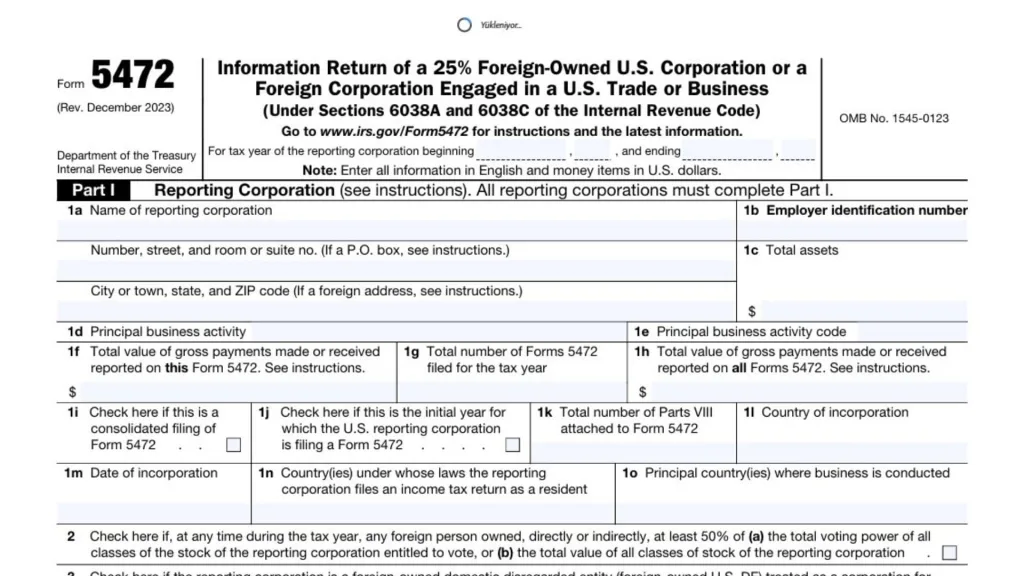
The Role Of Form 5472 And Compliance
A foreign-owned US disregarded entity may also have separate reporting obligations that are not the same as furnishing a W-8 form.
This is where Form 5472 often enters the conversation. A foreign-owned US disregarded entity can have a filing requirement when it has reportable transactions, and that requirement exists independently from whether a withholding certificate is needed for a payer or platform.
That matters because some business owners think one form solves everything. It does not. A W-8 form documents foreign status and withholding-related information for a payer or withholding agent. Form 5472 is a different compliance matter, with different consequences if missed.
Why Banks, Marketplaces, And Payers Ask For These Forms
Most institutions are not asking for these forms to make life difficult. They need documentation to determine how to treat your account or payment under tax and reporting rules.
They may want to know:
- Whether you are a US or foreign person.
- Whether backup withholding might apply.
- Whether chapter 3 withholding rules are relevant.
- Whether FATCA classification information is needed.
- Whether treaty claims are being made.
The problem is that their intake systems do not always explain the legal nuance around disregarded entities very well. So the burden falls on the business owner to understand the ownership structure and form purpose before submitting anything.
Common Practical Scenarios
A foreign individual owns a single-member US LLC and offers marketing services to US clients. In many cases, the LLC is disregarded, and the individual may need to provide Form W-8BEN if the client requests withholding documentation.
A foreign company owns a single-member US LLC used for operations or billing. In that case, the foreign company may be the beneficial owner for documentation purposes, which can make Form W-8BEN-E relevant.
An online seller opens a payment processor account under a US LLC name and is asked to complete tax certification. The right response depends on who owns the LLC, how the income is characterized, and what exactly the platform is requesting.
These examples all look similar on the surface. The tax form answer can still be different.
What Business Owners Should Check First
Before filling out any withholding form, it helps to verify a few basics:
- Who owns the LLC, a foreign individual or a foreign entity.
- Whether the LLC is still disregarded for federal tax purposes.
- Who is the beneficial owner of the payment.
- What type of income is being received.
- Whether the payer is requesting a withholding certificate, entity classification form, or another tax document.
- Whether there are separate reporting obligations beyond the W-8 form.
This simple checklist can prevent a lot of expensive confusion.
A Good Rule Of Thumb
If the foreign-owned LLC is disregarded, do not assume the LLC itself should always submit Form W-8BEN-E just because it is a company.
Instead, ask who the IRS treats as the beneficial owner of the income. If that owner is a foreign individual, Form W-8BEN may be the relevant form. If that owner is a foreign entity, Form W-8BEN-E may be the better fit.
That does not replace professional advice, especially when income types, treaty claims, or business structures get more complex. But it is a much better starting point than choosing a form based only on the letters “LLC.”

FAQs
Does A Foreign Owned Disregarded LLC Always Use Form W-8BEN-E?
No. It often depends on whether the owner is a foreign individual or a foreign entity.
If The Owner Is A Foreign Individual, Which Form Is Often Relevant?
Form W-8BEN is often the more relevant form.
What If The Owner Is A Foreign Corporation?
Form W-8BEN-E may apply if the foreign corporation is the beneficial owner.
Is Form 5472 The Same As Form W-8BEN-E?
No. Form 5472 is a separate reporting requirement and serves a different purpose.
Would you like me to turn this into a more authoritative blog version with a meta title, meta description, URL slug, and internal link anchor suggestions too?