
A Health Reimbursement Arrangement is an employer-funded health benefit that helps employees get reimbursed for qualified medical expenses, health insurance premiums, deductibles, copays, coinsurance, and other eligible health care costs. Also called an HRA or health reimbursement account, this type of employee health benefit gives businesses a flexible way to support health care expenses without offering the same traditional group health insurance plan to everyone. In simple terms, the employer sets aside a fixed dollar amount, employees pay for approved medical costs, then they submit proof of the expense for reimbursement. According to HealthCare.gov, HRAs are employer-funded group health plans that reimburse employees tax-free for qualified medical expenses up to a fixed yearly amount, and unused amounts may roll over depending on the plan design.
What Is A Health Reimbursement Arrangement?
A Health Reimbursement Arrangement is not a regular savings account that employees own. It is a benefit owned and funded by the employer. Employees do not put money into it from their paycheck. Instead, the employer decides how much money is available and what types of expenses may qualify under the plan.
The idea is simple. An employee has a medical expense, such as a doctor visit, prescription, insurance premium, or eligible out-of-pocket cost. The employee submits documentation. If the expense fits the rules, the employer reimburses the employee, usually tax-free.
How Does An HRA Work?
An HRA works like a reimbursement system. The employer creates the plan, sets the allowance, explains the rules, and manages claims. Employees use their own money first, then request repayment for eligible expenses.
For example, imagine an employer gives each employee $300 per month through an HRA. An employee pays $250 for an individual health insurance premium and $40 for a prescription. After submitting proof, the employee may be reimbursed for those approved expenses, as long as the plan allows them.
This setup can help employers control costs because they only reimburse actual claims. If an employee does not use the full allowance, the employer keeps the unused funds unless the plan allows rollover.
Common Types Of HRAs
There are several types of HRAs, but the most common ones include traditional HRAs, Individual Coverage HRAs, Qualified Small Employer HRAs, and Excepted Benefit HRAs.
An Individual Coverage HRA, often called an ICHRA, allows employers to reimburse employees for qualified medical expenses, including monthly premiums and out-of-pocket costs, without offering traditional group health coverage. Employees must have individual health insurance coverage, such as a Marketplace plan, to use the benefit.
A Qualified Small Employer HRA, often called a QSEHRA, is designed for eligible small employers. For 2026, HealthCare.gov lists the QSEHRA annual maximum at $6,450 for employee-only coverage and $13,100 for employees with household coverage.
An Excepted Benefit HRA is usually used alongside a traditional group health plan. It may help pay for certain out-of-pocket costs, but it is not meant to replace full health insurance.
What Expenses Can An HRA Cover?
An HRA may cover a wide range of qualified medical expenses. These can include doctor visits, hospital bills, prescriptions, lab work, medical equipment, dental care, vision care, and certain insurance premiums. The exact list depends on the plan rules.
Employers can choose to limit what the HRA will reimburse. One company may allow premium reimbursement. Another may only reimburse deductibles and copays. That is why employees should always read the plan documents before assuming an expense is covered.
Benefits For Employers
HRAs can be helpful for businesses that want to offer health benefits but need predictable costs. Instead of paying a large fixed premium for every employee, employers can set a monthly or yearly reimbursement allowance.
This can be especially useful for small businesses, startups, and growing teams. It gives employers more control while still helping employees pay for real health care needs.
HRAs may also help employers compete for talent. A company that cannot afford a full group health plan may still offer a meaningful benefit through a reimbursement arrangement.
Benefits For Employees
For employees, the biggest benefit is simple: help with health care costs. Medical bills can sneak up like surprise guests at dinner, and an HRA can make those costs easier to manage.
Employees may use the benefit for approved expenses and receive reimbursements without having that money treated as taxable income in many cases. This can make the benefit more valuable than a regular bonus of the same amount.
An HRA can also give employees more choice, especially with an Individual Coverage HRA. Instead of joining one company-selected group plan, employees may shop for individual coverage that better fits their needs.
Important Rules To Know
HRAs come with rules. Employers must create proper plan documents, follow reimbursement procedures, and keep employee medical information private. Employees usually need to provide proof of expenses before they can be reimbursed.
For an Individual Coverage HRA, employers can generally decide the contribution amount, and HealthCare.gov states there are no annual minimum or maximum contribution requirements for that type of HRA.
Affordability also matters. For 2026 plans, HealthCare.gov says an Individual Coverage HRA is considered affordable if the employee’s monthly cost for the self-only lowest cost Silver plan in their area, after the HRA reimbursement, is less than 9.96% of one-twelfth of the employee’s yearly household income.
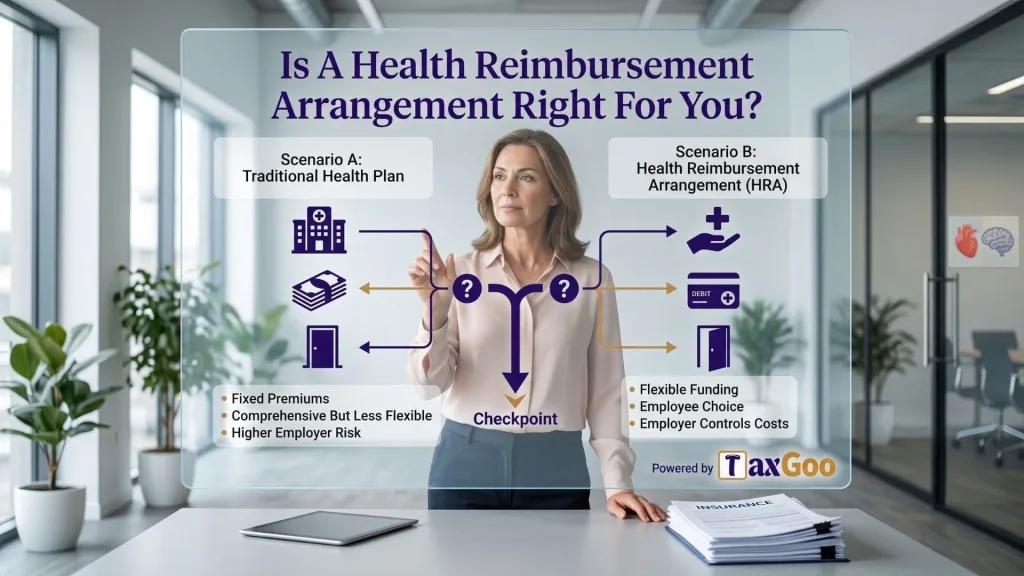
Is A Health Reimbursement Arrangement Right For You?
A Health Reimbursement Arrangement can be a smart option for employers that want flexible health benefits and employees who want help paying medical costs. It is not the right fit for every business, but it can be a practical middle ground between offering no health benefit and managing a full traditional group plan.
Employers should compare HRA types, budget limits, employee needs, and compliance requirements before setting one up. Employees should check which expenses qualify, how to submit claims, and whether accepting an HRA affects Marketplace savings.
Final Thoughts
A Health Reimbursement Arrangement is a flexible way for employers to help employees pay for health care without using a one-size-fits-all benefits model. When designed well, it can support employee wellness, control business costs, and make health benefits feel a little less confusing.
Before starting or choosing an HRA, it is wise to speak with a licensed benefits advisor, tax professional, or health insurance expert. The rules can be detailed, but the goal is refreshingly simple: help people pay for health care in a smarter way.
Related Keywords
Health Reimbursement Arrangement, HRA health insurance, health reimbursement account, employer-funded health benefits, qualified medical expenses, employee health benefits, individual coverage HRA, ICHRA, QSEHRA, small business health benefits, medical expense reimbursement, tax-free health reimbursement, health insurance premium reimbursement, HRA vs HSA, HRA vs FSA
FAQs
What Does HRA Stand For?
HRA stands for Health Reimbursement Arrangement. It is an employer-funded benefit used to reimburse eligible medical expenses.
Who Owns The HRA Money?
The employer owns the HRA funds. Employees can receive reimbursements only for approved expenses under the plan.
Can Employees Add Money To An HRA?
No. An HRA is funded by the employer. Employees do not contribute money from their paycheck.
Can An HRA Pay For Health Insurance Premiums?
Yes, some HRAs can reimburse health insurance premiums. The exact rules depend on the type of HRA and the employer’s plan design.
Is An HRA The Same As An HSA?
No. An HRA is employer-funded and employer-owned. An HSA is owned by the individual and can receive contributions from the employee, employer, or both.