How Do Farmers File Taxes? is a question that touches on everything from choosing the right IRS forms (like Schedule F for farm income and expenses), understanding agricultural tax deductions, navigating depreciation rules for tractors and equipment, handling self-employment tax, and deciding between cash method versus accrual accounting—all while keeping track of what counts as farm income, what qualifies as a deductible farm expense, and how to stay compliant if you’re a small farm, hobby farm, or full-scale agricultural business. Whether you’re growing crops, raising livestock, running a family farm, or managing a side agricultural venture alongside another job, the tax filing process for farmers has unique rules around timing, income reporting, estimated payments, and specialized deductions that can significantly reduce what you owe if you know how to use them correctly. In the sections below, you’ll learn the core steps farmers take when filing taxes, which forms and schedules are most common, how to distinguish business farming from hobby activity (a distinction the IRS watches closely), what expenses you can write off, how depreciation works for farm assets, and practical tips to avoid common mistakes that trigger audits or missed savings.
The Core Tax Forms Farmers Use
Most farmers file taxes using Schedule F (Form 1040), titled “Profit or Loss From Farming.” Schedule F is where you report your farm’s gross income and deductible expenses to calculate net farm profit or loss, which then flows to your main Form 1040.
If you operate your farm as a sole proprietorship (the most common structure for small and family farms), Schedule F is your primary tool. If you’re set up as a partnership, LLC, or corporation, you may use different forms (like Form 1065 for partnerships or Form 1120 for corporations), but the underlying concepts—tracking income, expenses, and deductions—remain similar.
Cash Vs. Accrual Accounting For Farms
Farmers can generally choose between two accounting methods: cash basis or accrual basis. The cash method records income when you actually receive it and expenses when you pay them, making it simpler and more intuitive for many small operations. The accrual method records income when earned and expenses when incurred, regardless of cash timing, which can provide a more accurate long-term financial picture but adds complexity.
Most small farmers use the cash method because it’s easier to track and aligns with how they naturally manage money. However, if your farm has significant inventory (like unsold grain or livestock held for sale), accrual accounting may be required or recommended, so it’s worth confirming your situation with a tax professional if your operation is growing.
What Counts As Farm Income
Farm income includes the money you make from your agricultural activities. Common examples include:
- Sales of crops, livestock, and produce
- Income from boarding or breeding animals
- Agricultural program payments (like certain USDA subsidies)
- Crop insurance proceeds
- Custom hire income (when you use your equipment to work other people’s land)
If you sell products at farmers markets, through CSAs (community-supported agriculture), or direct to consumers, all of that revenue counts as farm income and should be reported on Schedule F.
Deductible Farm Expenses (The Big Ones)
The IRS allows farmers to deduct ordinary and necessary expenses related to farming. These deductions reduce your taxable farm income, which lowers what you owe. Common deductible expenses include:
- Seeds, plants, fertilizer, and soil amendments
- Feed for livestock
- Veterinary fees and livestock care
- Fuel, oil, and maintenance for farm equipment
- Repairs to farm buildings, fences, and infrastructure
- Labor costs (wages paid to farmhands or seasonal workers)
- Rent paid for farmland or pasture
- Property taxes on farm property
- Farm insurance premiums
- Utilities used for farm operations
Keep receipts and records organized by category. If you’re audited, documentation is your best defense, and good bookkeeping makes filing easier every year.
Depreciation On Farm Equipment And Property
Large purchases like tractors, combines, barns, irrigation systems, and breeding livestock can’t always be deducted in full the year you buy them. Instead, you typically depreciate them over several years using IRS-approved schedules and methods.
However, farmers often benefit from accelerated depreciation options like Section 179 expensing (which lets you deduct the full cost of qualifying equipment in the year you buy it, up to limits) and bonus depreciation (which allows additional first-year deductions). These rules change periodically, so it’s worth checking current limits and phaseouts for the tax year you’re filing.
Depreciation can be one of the biggest tax savers for farms that invest in equipment, so don’t skip this section or leave money on the table by guessing.

Self-Employment Tax For Farmers
If your farm generates a profit, you generally owe self-employment tax (covering Social Security and Medicare) on your net farm income. This is in addition to regular income tax, and it can catch new farmers by surprise if they’re used to W-2 employment where those taxes are withheld automatically.
The self-employment tax rate is roughly 15.3% on net earnings (though you can deduct half of it on your income tax return, which softens the blow slightly). If your farm income is significant, plan for this tax when estimating what you’ll owe.
Estimated Tax Payments And How To Avoid Surprises
Because farm income doesn’t come with automatic withholding, farmers often need to make quarterly estimated tax payments to the IRS throughout the year. If you don’t, you may face an underpayment penalty when you file, even if you pay your full balance by the deadline.
A practical approach: estimate your annual farm profit, calculate the tax (including self-employment tax), and divide by four. Pay those installments by the IRS quarterly deadlines. If your income is seasonal or unpredictable, you can adjust payments using the annualized income method, which lets you match payments to when you actually earned the money.
Hobby Farm Vs. Business Farm (Why It Matters)
The IRS distinguishes between farming as a business (where profit is the goal and losses are deductible) and farming as a hobby (where losses can’t offset other income). If your farm consistently loses money year after year, the IRS may reclassify it as a hobby, disallowing your deductions and potentially triggering back taxes and penalties.
To defend your farm as a legitimate business, maintain professional records, show genuine profit intent, invest time and effort, and adapt your methods to improve profitability. Even if you’re small or part-time, running your farm like a business (with a business plan, separate accounting, and clear operational goals) strengthens your case.
Special Rules For Livestock And Crop Sales
Farmers who raise livestock or crops often deal with special timing rules. For example, livestock held for breeding, dairy, or draft purposes may be treated as capital assets (not inventory), which can affect how you report sales and gains.
Similarly, if you receive crop insurance or disaster payments, timing and classification rules may apply. These situations can get technical fast, so if you have large or unusual transactions, a tax advisor with farm experience can prevent costly missteps.
How To Handle Cost Of Goods Sold (COGS) For Farms
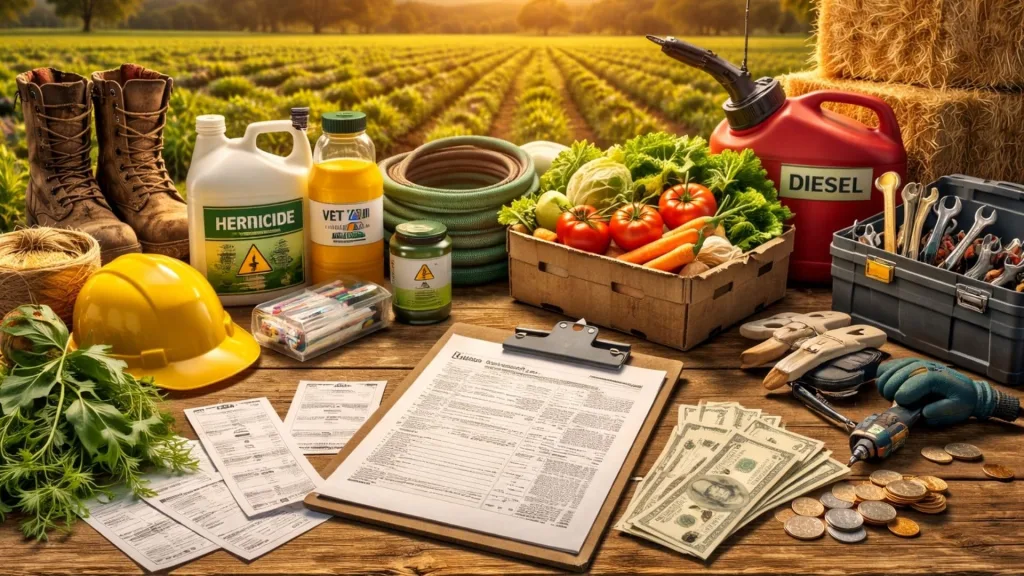
If you maintain inventory (like unsold grain, livestock held for sale, or nursery stock), you may need to calculate Cost of Goods Sold (COGS), which reduces your gross farm income. COGS includes the direct costs of producing the products you sold, such as seeds, feed, and direct labor tied to those products.
COGS can be complex for farms with mixed production, so if your operation involves significant inventory, work with a bookkeeper or accountant familiar with agricultural accounting to ensure you’re calculating it correctly.
Common Mistakes Farmers Make When Filing Taxes
A few frequent issues that cause headaches:
- Mixing personal and farm expenses without clear separation
- Missing depreciation deductions because they’re intimidated by the forms
- Filing as cash basis but not understanding what that means for timing
- Forgetting to pay estimated taxes, then facing penalties
- Treating capital purchases as immediate expenses (or vice versa)
- Not keeping mileage logs for farm-related vehicle use
- Claiming losses year after year without documentation of profit intent
Most of these are avoidable with basic recordkeeping and a clear understanding of which method and rules you’re following.
When To Hire A Tax Professional
Consider getting professional help if:
- Your farm revenue or asset base is growing significantly
- You’re transitioning from a hobby to a business (or you’re borderline)
- You’re adding new revenue streams (agritourism, value-added products, etc.)
- You’ve made large equipment purchases and need depreciation guidance
- You received disaster payments, crop insurance, or USDA program funds
- You’re facing an audit or notice from the IRS
A CPA or enrolled agent with farm clients can often pay for themselves in saved taxes and avoided mistakes, especially in years with big changes.
Practical Tips For Easier Farm Tax Filing
Build a system that makes next year’s filing smoother:
- Use farm accounting software or at least a dedicated spreadsheet for income and expenses
- Keep receipts digitally (photos work) and organize by category monthly
- Track mileage for any vehicle used partly for farm business
- Reconcile your records to bank statements regularly
- Set aside a percentage of farm income for taxes in a separate account
- File estimated payments on time to avoid underpayment penalties
- Review depreciation schedules annually and update for new purchases
- Keep a simple log of hours worked and operational goals to defend business intent
Even small improvements in recordkeeping can cut your tax prep time in half and reduce stress.

FAQs
What Tax Form Do Farmers Use?
Most sole proprietor farmers use Schedule F (Form 1040) to report farm income and expenses, which flows into their personal tax return.
Do Farmers Pay Self-Employment Tax?
Yes, farmers with net farm profit generally owe self-employment tax (around 15.3%) in addition to income tax.
Can I Deduct My Tractor Purchase?
Large equipment like tractors is typically depreciated over time, but you may qualify for Section 179 expensing or bonus depreciation to deduct more upfront.
What’s The Difference Between A Hobby Farm And A Business Farm For Taxes?
A business farm is run for profit and allows you to deduct losses, while a hobby farm doesn’t allow loss deductions and may trigger IRS scrutiny if you claim it as a business.