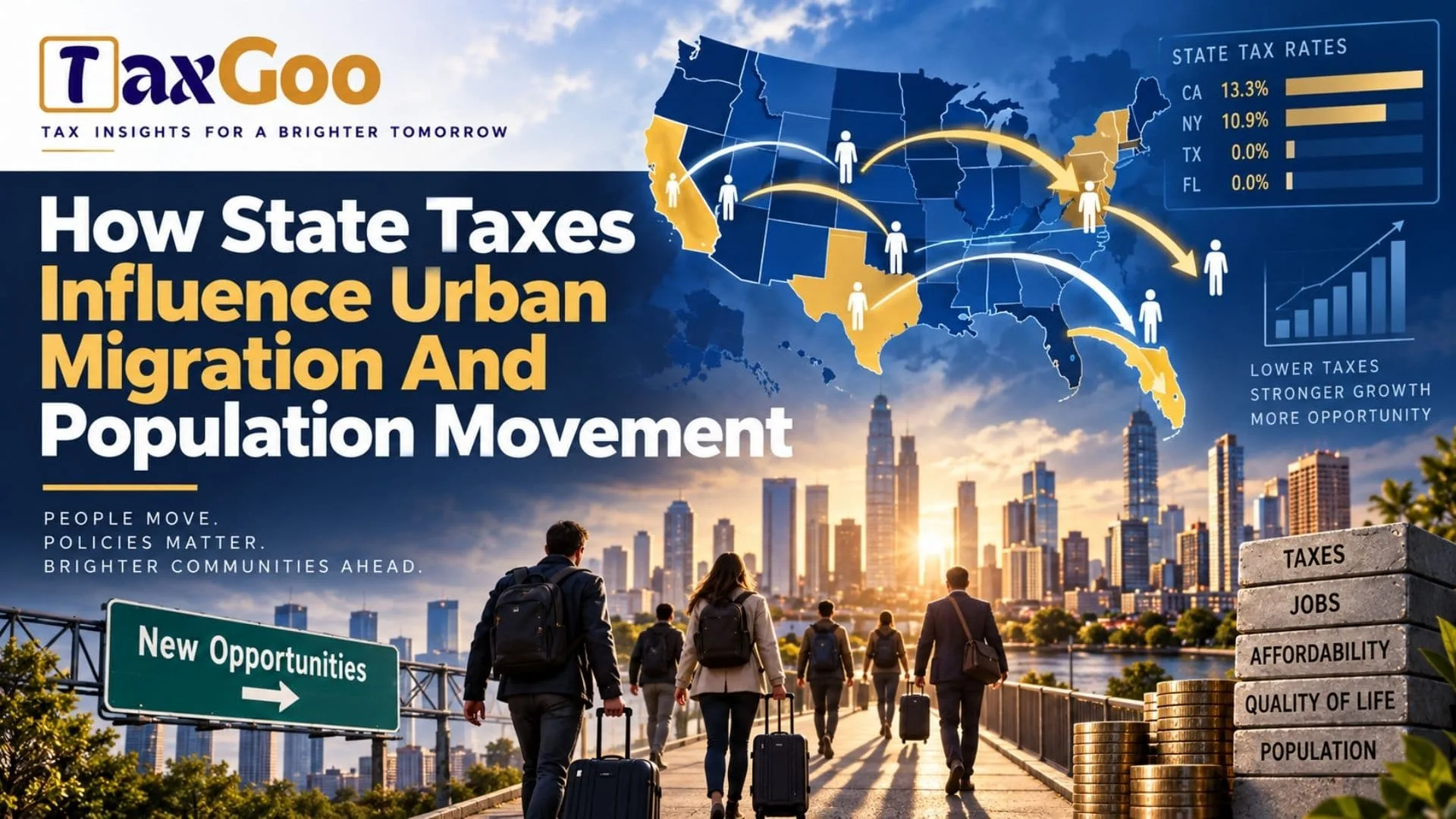
How State Taxes Influence Urban Migration and Population Movement is an important topic when studying why people move between different states and cities. Tax policies can affect household budgets, business decisions, employment opportunities, and the overall cost of living. Some people consider state income taxes, property taxes, sales taxes, and business taxes when deciding where to relocate. Others prioritize factors such as job availability, housing prices, family connections, education, and quality of life. The relationship between state taxes and migration is complex because people rarely move for only one reason. However, differences in state tax systems can influence population movement by changing the financial advantages and challenges of living in certain areas. Understanding how state taxes influence urban migration helps explain why some cities experience population growth while others face population declines.
Understanding Urban Migration In America
Urban migration refers to the movement of people from one city, region, or state to another. People relocate for many reasons, including career opportunities, housing costs, lifestyle preferences, family needs, and economic conditions.
In the United States, population movement often occurs between states with different economic environments. Some residents move toward areas with growing job markets, affordable housing, or lower living costs.
State tax policies are one factor that can influence these decisions. A person comparing two locations may consider how much of their income remains after taxes and how state taxes affect daily expenses.
How State Income Taxes Affect Relocation Decisions
State income taxes are one of the most visible tax differences between states. Some states impose individual income taxes, while others do not have a broad state income tax.
For workers, especially those with higher incomes, differences in state income tax rates may influence relocation decisions. A person moving from a state with higher income taxes to a state with lower taxes may potentially keep more of their earnings.
However, income taxes are only one part of the financial picture. A state with lower income taxes may have higher housing costs, sales taxes, insurance expenses, or other living costs.
Many people evaluate the overall cost of living rather than focusing on one tax category alone.
Property Taxes And Housing Choices
Property taxes can strongly influence where homeowners choose to live. High property taxes can increase the annual cost of owning a home, while lower property taxes may make homeownership more affordable.
Families looking to purchase homes often compare property taxes along with home prices, mortgage rates, school quality, and local services.
Differences in property taxes can also affect businesses. Companies considering new locations may evaluate local taxes, operating costs, and available infrastructure before making decisions.
Sales Taxes And Everyday Expenses
Sales taxes affect consumers through the cost of everyday purchases. Higher sales tax rates can increase expenses for households, especially in areas where residents frequently buy taxable goods and services.
When comparing locations, some people consider the combined effect of state and local sales taxes. A city with higher sales taxes may have a different financial impact compared with a city where sales taxes are lower.
Although sales taxes influence spending, they are usually considered alongside other economic factors rather than as the only reason for migration.
Why Businesses Consider State Taxes
State taxes can also influence business migration and economic development. Companies may compare tax environments when deciding where to open offices, build facilities, or expand operations.
States often compete to attract businesses by offering different tax structures, incentives, workforce opportunities, and infrastructure advantages.
When businesses relocate or expand, they can create employment opportunities that attract new residents. This can contribute to population growth in certain cities and regions.

Low-Tax States And Population Growth Trends
Some states with lower overall tax burdens have experienced population growth as people seek different financial environments. Factors such as housing availability, employment opportunities, climate, and lifestyle preferences also play major roles.
For example, states that attract new residents often combine multiple advantages, such as growing industries, affordable communities, and access to services.
Lower taxes may support relocation decisions, but migration patterns are usually the result of several combined factors.
High-Tax States And Population Changes
States with higher tax burdens may experience population changes when some residents decide that the costs outweigh the benefits they receive.
People may consider moving if they believe another location offers better financial opportunities, lower expenses, or improved lifestyle options.
However, many high-tax states continue to attract residents because they may offer strong job markets, universities, healthcare systems, cultural opportunities, and other benefits.
Tax levels alone do not determine whether a state gains or loses population.
The Role Of Remote Work In Migration
Remote work has changed how many people think about location. Some workers no longer need to live close to their employer, allowing them to consider a wider range of places.
Tax differences have become more noticeable for remote workers because they may have more flexibility in choosing where to live.
States and cities increasingly consider tax policies, housing costs, internet access, and quality of life when competing for new residents.
Do Lower Taxes Always Attract More Residents?
Lower taxes can be attractive, but they are not the only factor affecting migration. People also consider wages, job opportunities, healthcare, education, transportation, safety, and community features.
A state with low taxes but limited employment opportunities may not attract as many residents as a state with higher taxes and stronger economic opportunities.
Migration decisions are personal and often involve balancing financial costs with lifestyle preferences.
The Bigger Picture Of State Taxes And Population Movement
State taxes are an important part of the conversation about urban migration and population changes. They can influence household finances, business decisions, and economic development.
However, population movement is shaped by many interconnected factors. Tax policies interact with employment, housing markets, demographics, and social trends.
Understanding how state taxes influence urban migration provides a clearer view of why people and businesses choose certain locations over others.

FAQs
Do State Taxes Affect Where People Move?
Yes, state taxes can influence relocation decisions, but people also consider jobs, housing, lifestyle, and family needs.
Do Lower Tax States Grow Faster?
Some lower-tax states experience population growth, but many other factors also influence migration patterns.
Which State Taxes Matter Most For Relocation?
Income taxes, property taxes, and sales taxes are commonly considered when comparing different states.
Why Do Businesses Move To Different States?
Businesses may relocate due to tax policies, operating costs, workforce availability, and economic opportunities.