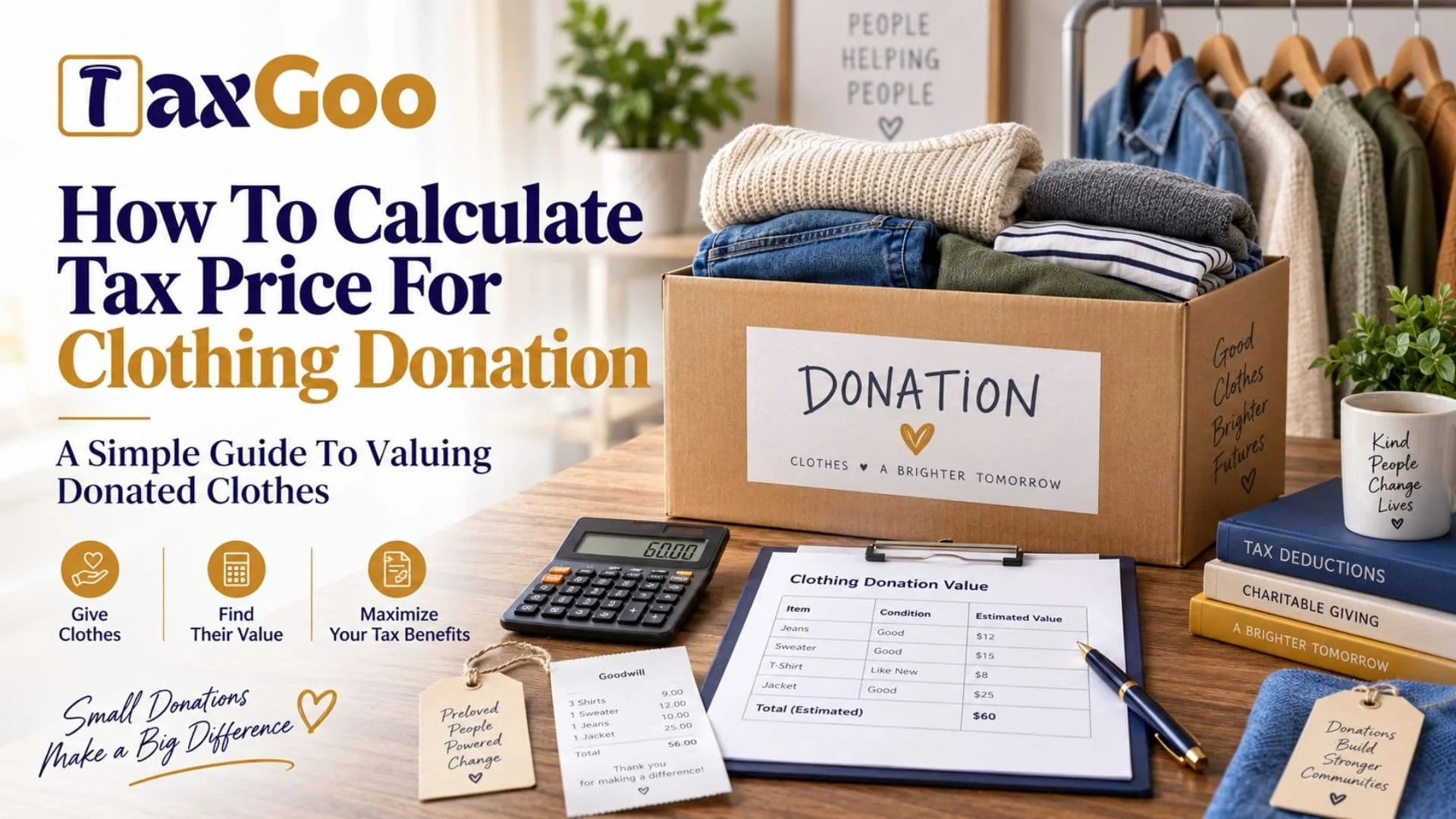
This guide explains How To Calculate Tax Price For Clothing Donation, including clothing donation value calculation, fair market value, IRS donation rules, and ways to estimate the tax deduction for used clothing. Whether you are cleaning out your closet, donating household items, or preparing for tax season, understanding how to calculate clothing donation tax value can help you keep accurate records and make the most of your charitable contributions. When you donate clothing to a qualified charitable organization, you may be able to claim a tax deduction based on the fair market value of the items. The tax value is not the original purchase price of your clothes. Instead, it is the estimated amount the items could sell for in their current condition. For example, a jacket that originally cost $200 may not have a $200 donation value after being worn. Its fair market value depends on factors such as brand, age, condition, and current resale prices. Understanding this difference is important because accurate valuation helps ensure your tax records match donation requirements.
Understanding Fair Market Value For Donated Clothing
The most common method for calculating clothing donation value is using fair market value. This means estimating what a buyer would reasonably pay for the items in their current condition.
Several factors influence the fair market value of donated clothes:
- Brand and quality of the clothing
- Current condition of the item
- Age and style popularity
- Original purchase price
- Demand for similar items
- Local resale prices
A designer coat in excellent condition may have a higher donation value than a basic coat with heavy wear. Similarly, newer clothing items usually receive higher valuations than older styles.
How To Calculate Tax Price For Clothing Donation
Calculating your clothing donation tax value does not have to be complicated. Follow these simple steps:
1. Create A Detailed Clothing List
Before donating, make a list of every item you plan to give away. Include details such as:
- Type of clothing
- Brand name
- Quantity
- Condition
- Estimated value
For example:
- 3 pairs of jeans, good condition, estimated value $15 each
- 2 jackets, excellent condition, estimated value $40 each
- 5 shirts, good condition, estimated value $8 each
Keeping a detailed inventory makes the valuation process easier and provides better documentation.
2. Check Donation Value Guides
Many charitable organizations provide estimated value guides for common donated items. These guides can help donors determine reasonable prices for clothing based on typical resale values.
You can compare your items with similar clothing categories and adjust the value depending on condition.
3. Consider The Condition Of Your Clothing
Condition plays a major role in clothing donation tax calculations.
Common categories include:
- Excellent condition: Like new, rarely used, no visible damage
- Good condition: Gently used, clean, and wearable
- Fair condition: Shows signs of use but still usable
Items that are damaged, stained, or unsuitable for reuse generally have little or no deductible value.
Keep Proper Records For Clothing Donations
Proper documentation is an important part of claiming a clothing donation deduction. Donors should keep records showing:
- Date of donation
- Name of charitable organization
- Description of donated items
- Estimated fair market value
- Donation receipt
For larger donations, additional documentation may be required. Keeping photos of donated items can also be helpful, especially when donating many pieces of clothing.
Can You Deduct Clothing Donations On Your Taxes?
Many taxpayers can claim charitable donation deductions if they donate to eligible nonprofit organizations and meet applicable tax requirements.
However, clothing donations are subject to specific rules. The organization receiving the donation must generally qualify as a charitable organization, and donated items should usually be in good condition.
Tax laws can vary, so consulting a tax professional is recommended when you have valuable donations or large charitable contributions.

Common Mistakes When Calculating Clothing Donation Value
Many donors make mistakes when estimating their clothing donation tax deduction. Some common errors include:
Using The Original Purchase Price
The amount you paid for clothing is usually not the same as its donation value. Used clothing typically has a much lower resale value.
Overestimating Item Values
Assigning unrealistic values to donated clothing can create problems if your deduction is reviewed. Values should be reasonable and supported by market comparisons.
Forgetting Documentation
Without proper records and receipts, proving your donation value can become difficult.
Tips To Maximize Your Clothing Donation Benefits
To make your donation process easier and more accurate:
- Donate clean and wearable clothing
- Organize items before creating your inventory
- Take photos before donating
- Keep receipts from charities
- Research fair market values carefully
- Save donation records with your tax documents
These steps help you stay organized while supporting charitable causes.
Final Thoughts
Learning How To Calculate Tax Price For Clothing Donation helps donors understand the difference between purchase price and actual tax value. By using fair market value, keeping detailed records, and following donation guidelines, you can accurately estimate your clothing donation deduction.
Clothing donations are a great way to support communities while potentially receiving tax benefits. A careful valuation process ensures your contribution is properly documented and helps you feel confident when preparing your tax return.
FAQs
How Do I Calculate Clothing Donation Value?
Estimate the fair market value based on the item’s condition, brand, and resale price.
Can I Deduct Used Clothing Donations?
Yes, eligible donated clothing may qualify for a tax deduction if requirements are met.
Is The Original Price Used For Donation Value?
No, donation value is usually based on current fair market value.
Do I Need A Receipt For Clothing Donations?
Yes, keeping a donation receipt is important for tax records.
Can Damaged Clothes Be Claimed As Donations?
Usually, clothing should be in good condition to qualify for a deduction.