
If you are trying to understand the Idaho Pass-Through Entity Tax, the key idea is that Idaho pass-through entities such as partnerships, S corporations, and certain LLCs usually do not pay income tax at the entity level in the normal way, because income, losses, deductions, and credits generally flow through to the owners, but Idaho also allows an election that lets an affected business entity pay Idaho income tax at the entity level instead, with owners then generally receiving a credit tied to that payment. This topic sits at the intersection of Idaho state income tax, PTE election rules, partnership taxation, S corporation filing, composite returns, nonresident owner withholding, owner tax credits, distributive income, and Idaho business compliance, which is why it can feel more technical than it really is. Once you strip away the jargon, the Idaho Pass-Through Entity Tax is really about deciding whether a qualifying pass-through business should keep the usual owner-level treatment or elect into Idaho’s entity-level tax approach for a given tax year.
What Idaho Pass-Through Entity Tax Means
The Idaho State Tax Commission explains that pass-through entities include partnerships, LLCs taxed as partnerships or S corporations, S corporations, trusts, and estates. Under the standard rule, income, losses, deductions, and credits typically pass through to the owners, who then report their share on their own returns.
Idaho also offers what it calls the affected business entity, or ABE, election. Under that election, a partnership or S corporation can choose to pay its Idaho income tax as a pass-through entity at the corporate rate, and the owners generally receive a credit against Idaho income tax tied to the tax the entity paid.
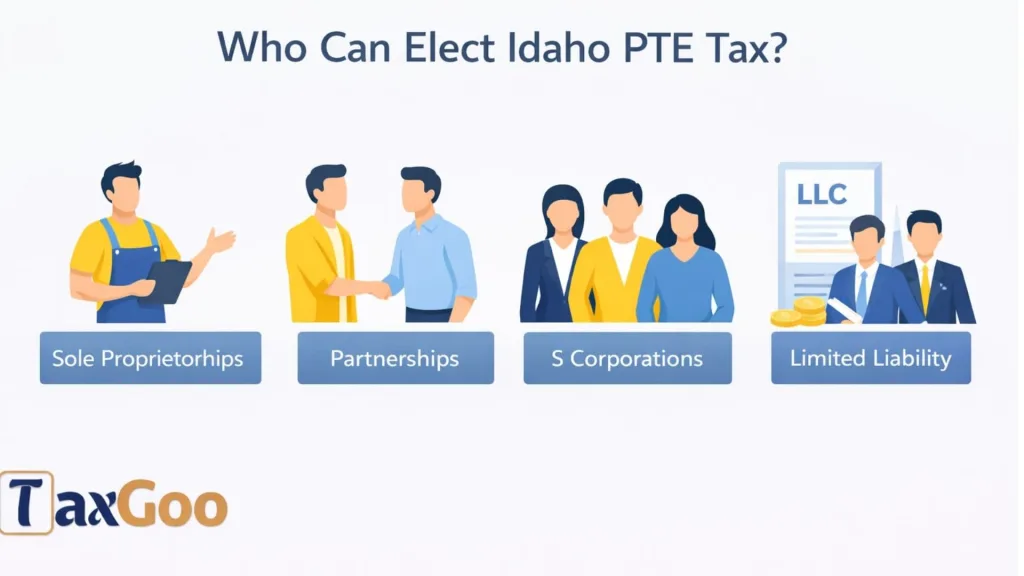
Who Can Elect Idaho PTE Tax
Based on Idaho guidance, the ABE election is available to partnerships and S corporations. CrossLink’s state summary also says Idaho allows partnerships, S corporations, and LLCs taxed as partnerships to elect and pay tax at the entity level, which helps frame how LLCs may fit in when they are taxed as partnerships for federal purposes.
One important point is that this is an election, not the default system. In other words, a qualifying Idaho pass-through business generally chooses whether to use the entity-level approach on a timely filed return rather than being automatically placed into it.
How The Election Works
Idaho’s guidance says the election allows the entity to pay tax at the corporate rate. In the CrossLink summary, Idaho’s pass-through entity election is described as a 6.5% tax on the distributive share of Idaho taxable income, with the election made on the entity’s timely filed return and all partners or shareholders required to agree.
That structure matters because the election changes who remits the Idaho tax first. Instead of every individual owner handling all Idaho tax directly at the owner level, the entity pays under the election and the owners generally claim their share of the resulting Idaho credit.
Owner Reporting And Credit
For pass-through entities generally, Idaho requires the entity to include a completed Form PTE-12 and a Form ID K-1 for each pass-through owner with its business income tax return. Idaho administrative rules also state that pass-through entities are responsible for preparing and distributing information showing each owner’s proportionate share of credits earned and any required recapture.
Resident and part-year resident individual owners must report the income from the PTE on their Idaho income tax returns, and Idaho says the entity cannot include those owners in a composite filing. For the ABE tax paid by the entity, the election creates an Idaho credit that the entity’s members can generally claim against their individual Idaho income tax liability.
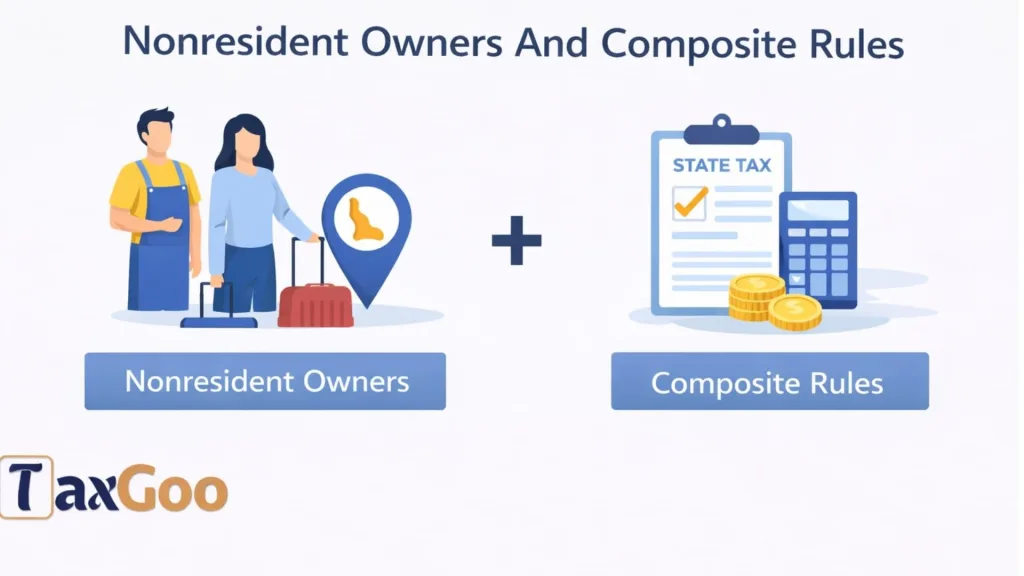
Nonresident Owners And Composite Rules
Idaho’s pass-through entity rules place special emphasis on nonresident individuals. The entity may choose to pay the tax for Idaho nonresident individuals on a composite return, and Idaho also describes withholding and reporting procedures for nonresident owners in certain cases.
The Idaho State Tax Commission says that when a PTE pays withholding for a nonresident individual owner, it uses Form PTE-01 for that owner and must generally pay the withholding by the 15th day of the fourth month following the end of the tax year. Idaho guidance also notes that if a nonresident owner provides Form PTE-NROA and the entity approves it, the entity does not include that owner in a composite filing or pay withholding on that owner’s behalf.
Why Businesses Consider It
Many state PTET regimes were created as a workaround to the federal SALT deduction limitation, and CrossLink specifically describes pass-through entity taxes in that broader context. The practical appeal is that an entity-level state tax payment may create a federal business deduction at the entity level while still providing an Idaho credit to owners under the state system.
That does not automatically mean the election is the best move for every Idaho business. The benefit can depend on owner residency, income mix, agreement among owners, credit usage, and the business’s broader federal and multistate tax profile.
Filing Basics
Idaho says a partnership doing business in Idaho must file Form 65, including LLCs treated as partnerships for federal income tax purposes if they are doing business in Idaho. For pass-through owner reporting, Idaho also requires Form PTE-12 and Form ID K-1 as part of the entity’s filing package.tax.
For nonresident withholding situations, Form PTE-01 comes into play. Because elections, owner classifications, and timing can affect the reporting outcome, businesses typically need to confirm that the election is made on a timely filed return and that all supporting schedules match what is reported to owners.
Practical Takeaways
The Idaho Pass-Through Entity Tax is best understood as an optional entity-level tax regime layered onto Idaho’s normal pass-through rules. In the ordinary setup, income passes through to the owners, but under the ABE election, the entity pays Idaho income tax and the owners generally receive a related credit.
That makes the election potentially useful, but it also means the compliance details matter. If a business has multiple owners, nonresident members, or mixed tax situations, reviewing the election carefully before filing is usually the smart move.

FAQs
What Is Idaho PTET?
It is Idaho’s optional entity-level tax election for certain pass-through businesses, mainly partnerships and S corporations.tax.
Who Can Make The Election?
Idaho guidance says partnerships and S corporations can elect it, and LLCs taxed as partnerships may also fit within the framework described in state summaries.
Do Owners Still Report Income?
Yes, owners generally still report their share of pass-through income, and they may also claim a related Idaho credit if the entity paid tax under the election.
Does Idaho Have Composite Filing?
Yes, Idaho allows pass-through entities to choose composite return treatment for certain nonresident individual owners.