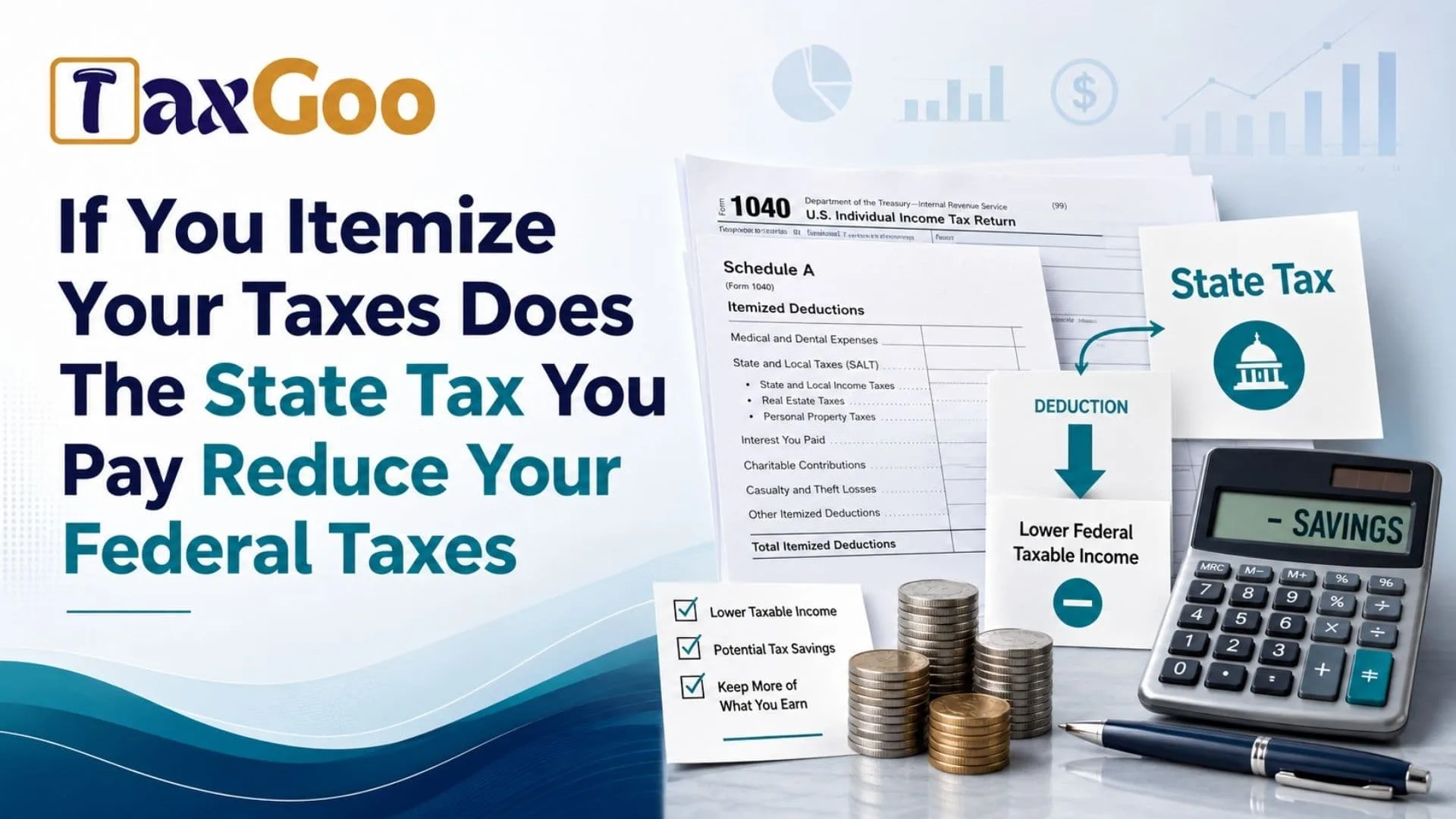
If you itemize your taxes does the state tax you pay reduce your federal taxes? Yes, in many cases, state tax you pay can reduce your federal taxable income when you itemize deductions, but it usually does not reduce your federal tax bill dollar-for-dollar. This deduction is commonly called the state and local tax deduction, or SALT deduction, and it may include state and local income taxes, or state and local general sales taxes, plus certain real estate taxes and personal property taxes. The key point is that you must itemize deductions on Schedule A instead of taking the standard deduction, and your total itemized deductions need to be higher than your standard deduction for itemizing to be useful. For 2025 federal returns, the IRS lists standard deduction amounts of $15,750 for single filers or married filing separately, $31,500 for married filing jointly or qualifying surviving spouse, and $23,625 for head of household. The state and local tax deduction is also subject to a limit. For 2025, the IRS says the combined deduction for state and local income, sales, real property, and personal property taxes is generally limited to $40,000, or $20,000 if married filing separately, with a modified adjusted gross income limitation that can reduce the benefit but not below $10,000, or $5,000 if married filing separately. So the short answer is yes, state taxes can lower your federal taxable income when you itemize, but the real savings depend on your tax bracket, your total deductions, your filing status, and the SALT limit.
What Does It Mean To Itemize Your Taxes?
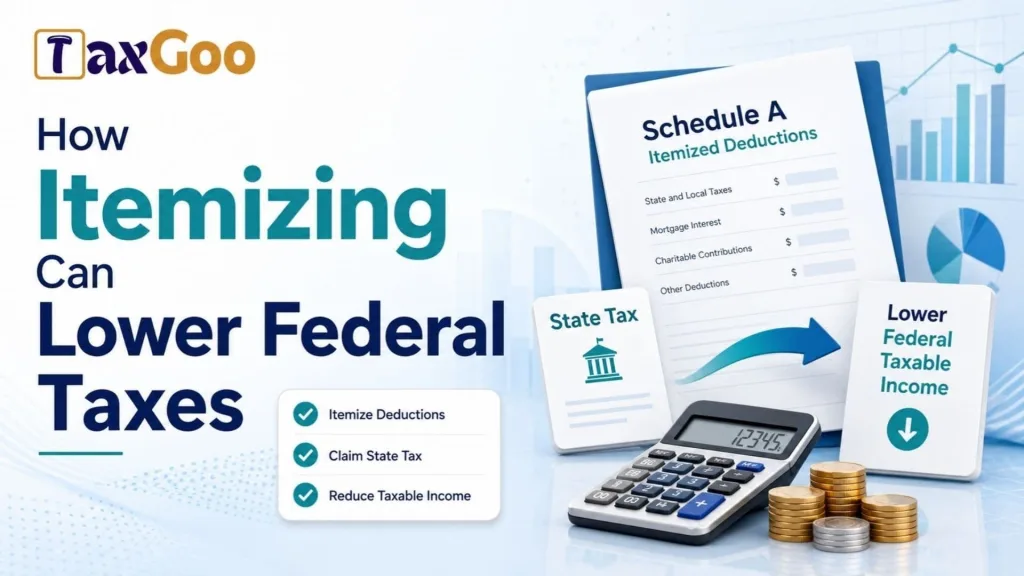
Itemizing means listing specific deductible expenses instead of taking the flat standard deduction. Common itemized deductions include state and local taxes, mortgage interest, charitable contributions, and certain medical expenses.
When you itemize, the total of these deductions is subtracted from your income to help calculate taxable income. This can reduce your federal income tax if your itemized deductions are larger than the standard deduction available for your filing status.
How State Taxes Can Reduce Federal Taxes
State taxes reduce federal taxes indirectly. They lower the amount of income that is subject to federal tax, but they are not the same as a federal tax credit.
A deduction reduces taxable income. A credit reduces tax owed. That difference matters.
For example, if you deduct $5,000 of state taxes and you are in the 22% federal tax bracket, the federal tax savings may be about $1,100. You do not save the full $5,000. Instead, you save based on the portion of federal tax that would have applied to that income.
Which State And Local Taxes Can Count?
The SALT deduction can include several types of taxes, but there are limits and choices. The IRS explains that taxpayers may deduct state and local income taxes or state and local general sales taxes, but not both. The deduction may also include real estate taxes and personal property taxes that qualify.
This means you usually choose the better result between state income tax and state sales tax. If you live in a state with high income tax, the income tax option may be stronger. If you live in a state with no income tax, the sales tax option may matter more.
The SALT Deduction Limit
The SALT deduction is not unlimited. For 2025, the general cap is $40,000 for most filers and $20,000 for married filing separately. The cap can be reduced for taxpayers with higher modified adjusted gross income, but it cannot be reduced below $10,000 for most filers or $5,000 for married filing separately.
This limit is important because paying more state tax does not always mean you get a larger federal deduction. If your state income tax, property tax, and personal property tax already exceed the cap, extra state tax may not create extra federal benefit.
Itemizing Versus Taking The Standard Deduction
You only benefit from deducting state taxes if you itemize and your total itemized deductions exceed your standard deduction. If your standard deduction is higher, taking the standard deduction may lower your federal taxable income more than itemizing.
For example, a single filer with $8,000 in state taxes and $3,000 in other itemized deductions has $11,000 total itemized deductions. If that filer’s standard deduction is higher than $11,000, itemizing would not help. But if the same person has large mortgage interest, charitable gifts, or property taxes, itemizing may become worthwhile.
Does Paying More State Tax Always Help?
No. Paying more state tax just to get a federal deduction is usually not a winning move by itself. A deduction gives back only a portion of what you paid, based on your federal tax rate, and the SALT cap may limit or remove the extra benefit.
It is better to think of the state tax deduction as a way to soften the impact of taxes you already owe, not as a reason to create extra state tax. The goal is to lower federal taxable income where the rules allow it.
What About State Tax Refunds?
State tax refunds can be tricky. If you deducted state income taxes in a prior year and received a federal tax benefit from that deduction, part or all of a later state tax refund may need to be reported as income. If you took the standard deduction, a state tax refund often does not create the same issue.
This is one reason it helps to keep copies of your prior-year return, Schedule A, state tax payment records, and refund notices.
When The State Tax Deduction Is Most Helpful
The deduction is often most helpful for taxpayers who itemize, live in a higher-tax state, own property, pay significant local taxes, or have enough other deductions to exceed the standard deduction. It can also matter for taxpayers with mortgage interest and charitable giving because those deductions may combine with state taxes to make itemizing worthwhile.
However, the benefit depends on the full return. Looking only at state taxes can be misleading. The better question is whether all itemized deductions together beat the standard deduction.

FAQs
Does State Tax Paid Lower Federal Taxes?
Yes, if you itemize and qualify, it can lower federal taxable income.
Is The State Tax Deduction Dollar-For-Dollar?
No. It is a deduction, not a credit.
Can I Deduct Both State Income Tax And Sales Tax?
No. You generally choose either state income tax or state sales tax.
Does The SALT Cap Limit My Deduction?
Yes. The state and local tax deduction is capped, so not all paid taxes may be deductible.
Should I Itemize Just Because I Paid State Tax?
Not always. Itemize only when total itemized deductions are better than the standard deduction.