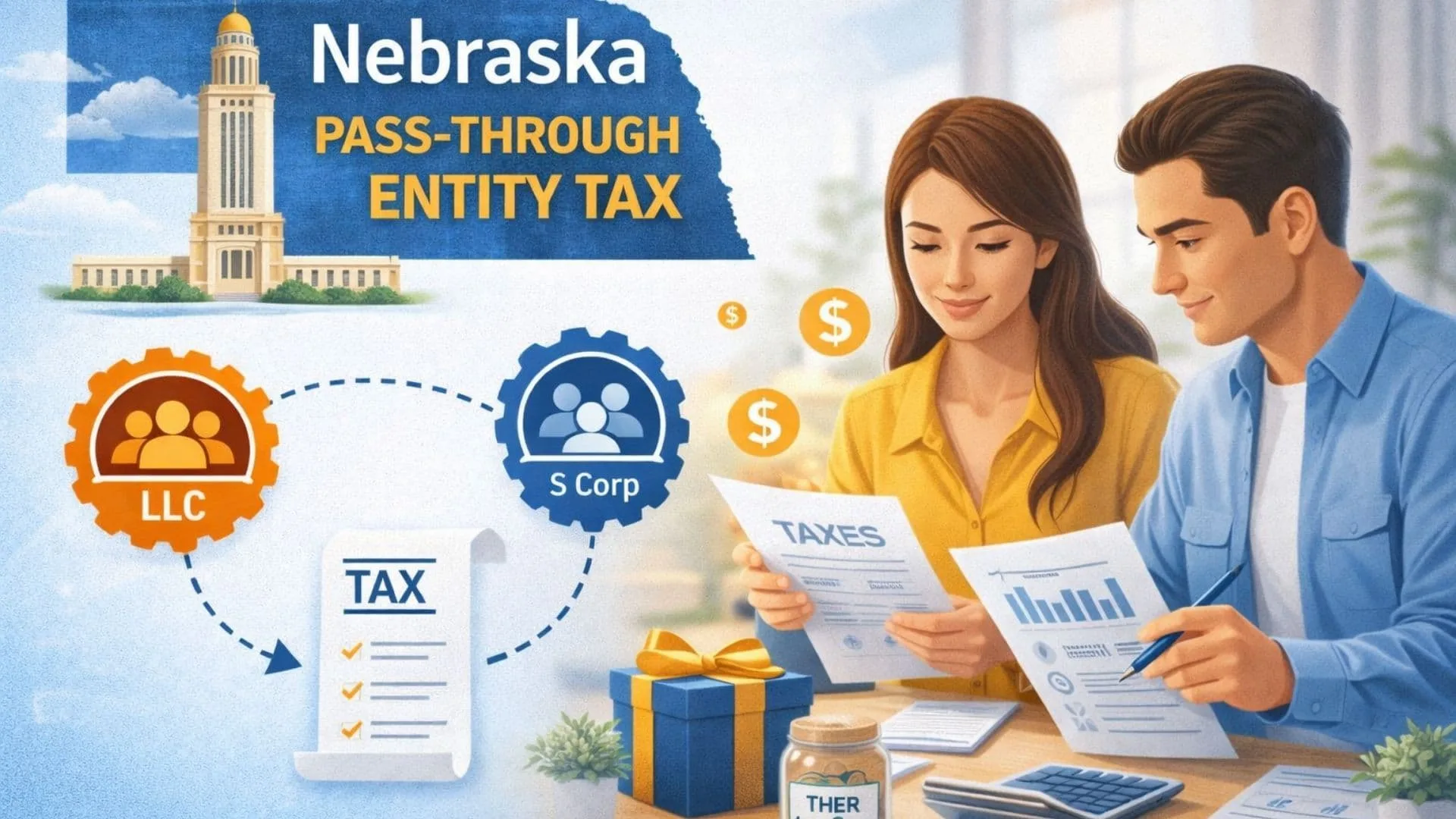
If you are trying to understand Nebraska Pass-Through Entity Tax, this article breaks down the key ideas in a simple, practical way, including how the Nebraska PTET election works, which entities may qualify, why pass-through businesses use it, how the federal SALT deduction cap changed planning, and what owners should consider before making the election. Nebraska enacted its pass-through entity tax law in 2023 through LB754, creating a state-level option for eligible pass-through entities such as partnerships and S corporations to pay Nebraska income tax at the entity level instead of leaving all of the tax burden at the owner level. That matters because the PTET structure was designed as a workaround to the federal state and local tax deduction limitation, which can make the tax paid by the entity more useful from a federal planning perspective for many business owners. In practical terms, Nebraska Pass-Through Entity Tax planning can help eligible businesses improve tax efficiency, simplify some owner-level reporting, and potentially create a federal deduction benefit while still giving owners a credit on their Nebraska return for the tax paid on their behalf. For owners of pass-through entities, the main question is not just whether the tax exists, but whether making the election creates a better result for the business and its members, partners, or shareholders.
What The PTET Is
Nebraska’s PTET is a voluntary election that allows certain pass-through entities to pay Nebraska income tax at the entity level. Instead of all state income tax flowing directly to the owners in the usual way, the entity itself pays the tax and the owners then receive credit treatment on their Nebraska returns.
This setup matters because the federal tax system generally limits how much state and local tax individuals can deduct on their personal returns. Nebraska’s PTET law was created to help eligible businesses work around that limitation in a legitimate state-tax planning framework.
Which Entities May Use It
The Nebraska PTET rules generally focus on pass-through entities, especially partnerships and S corporations. That means the election is aimed at businesses whose income normally passes through to owners rather than being taxed as a traditional C corporation.
This makes the election especially relevant for owners who want to reduce the impact of the federal SALT cap. If the business qualifies, the entity-level tax can create a more favorable deduction structure than simply paying the tax at the individual owner level.
Why Businesses Choose It
The biggest reason businesses consider Nebraska Pass-Through Entity Tax is federal tax savings potential. By shifting the tax payment to the entity, the business may create a deductible expense at the federal level, which can be more efficient than leaving the tax on the owner’s personal return subject to the SALT limitation.
Another benefit is simplicity for some owners. Instead of each partner or shareholder managing the state tax separately, the entity handles the payment and the owners receive a corresponding credit on their Nebraska return.
How The Tax Is Calculated
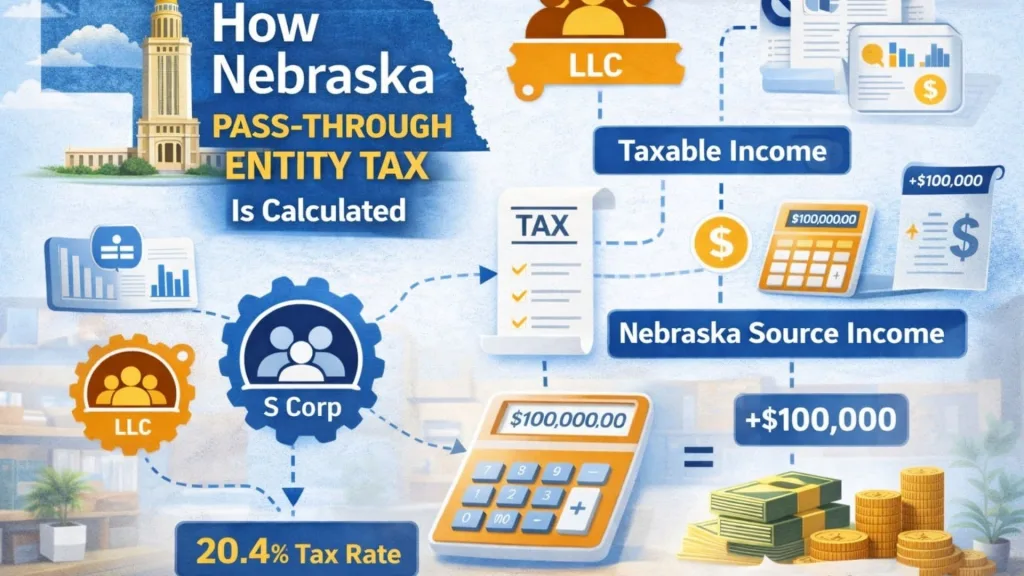
Available Nebraska guidance and practitioner summaries describe the PTET as being based on Nebraska source taxable income or apportioned income. That means the tax is tied to the portion of business income associated with Nebraska rather than every dollar the company earns everywhere.
Some sources also note that the applicable rate is aligned with Nebraska’s top individual rate and has been scheduled to decline over time under the law. In practice, that means the exact effect of the PTET can depend on the tax year and the applicable rate schedule.
Owner Credits And Refundability
One of the most important parts of the Nebraska PTET system is the owner credit. The entity pays the tax, and the owners receive a credit on their individual Nebraska returns for their share of the tax paid.
Several sources also indicate that the owner credit can be refundable if the credit exceeds the owner’s Nebraska tax liability. That makes the system more flexible than a simple nonrefundable offset and increases its usefulness in planning.
Estimated Payments And Compliance
Nebraska guidance and commentary indicate that estimated tax payment rules can apply for electing entities, especially for later tax years under the PTET structure. That means the election does not eliminate compliance, it simply changes how the tax is paid and reported.
Businesses considering the election should also pay attention to filing mechanics, deadlines, and the documentation needed to support the entity-level payment and the owner credits. Good recordkeeping matters because the entity and the owners both need clean reporting for the tax benefit to work properly.
Retroactive Planning
Nebraska’s PTET law has also been described as retroactive to earlier tax years, beginning in 2018. That retroactive feature made the law especially interesting to tax planners because it created possible opportunities for amended filings and planning review.
For many businesses, that means the Nebraska PTET is not just a current-year issue. It can also affect prior-year returns, refund planning, and whether the business should review old filings for possible benefits.
Should Your Business Elect It
Not every pass-through entity will benefit equally from the Nebraska PTET. The right answer depends on the owners’ federal tax situation, Nebraska income exposure, the amount of income allocated to the state, and whether the administrative effort makes sense for the size of the tax benefit.
A simple rule is this, if a business has meaningful Nebraska taxable income and the owners are affected by the federal SALT cap, the PTET election may be worth a serious look. If the Nebraska footprint is small or the tax savings are minimal, the election may offer less value.

FAQs
What Is The Nebraska PTET?
It is a voluntary entity-level tax election for eligible pass-through businesses.
Who Can Usually Use It?
Partnerships and S corporations are the main types of entities commonly discussed.
Why Do Businesses Elect It?
They often elect it for federal tax planning benefits and owner credits.
Do Owners Get Credit For The Tax Paid?
Yes, owners generally receive a Nebraska credit for their share of the entity tax.
Is It Worth Reviewing With A Tax Professional?
Yes, because eligibility and tax savings depend on the business and owner facts.