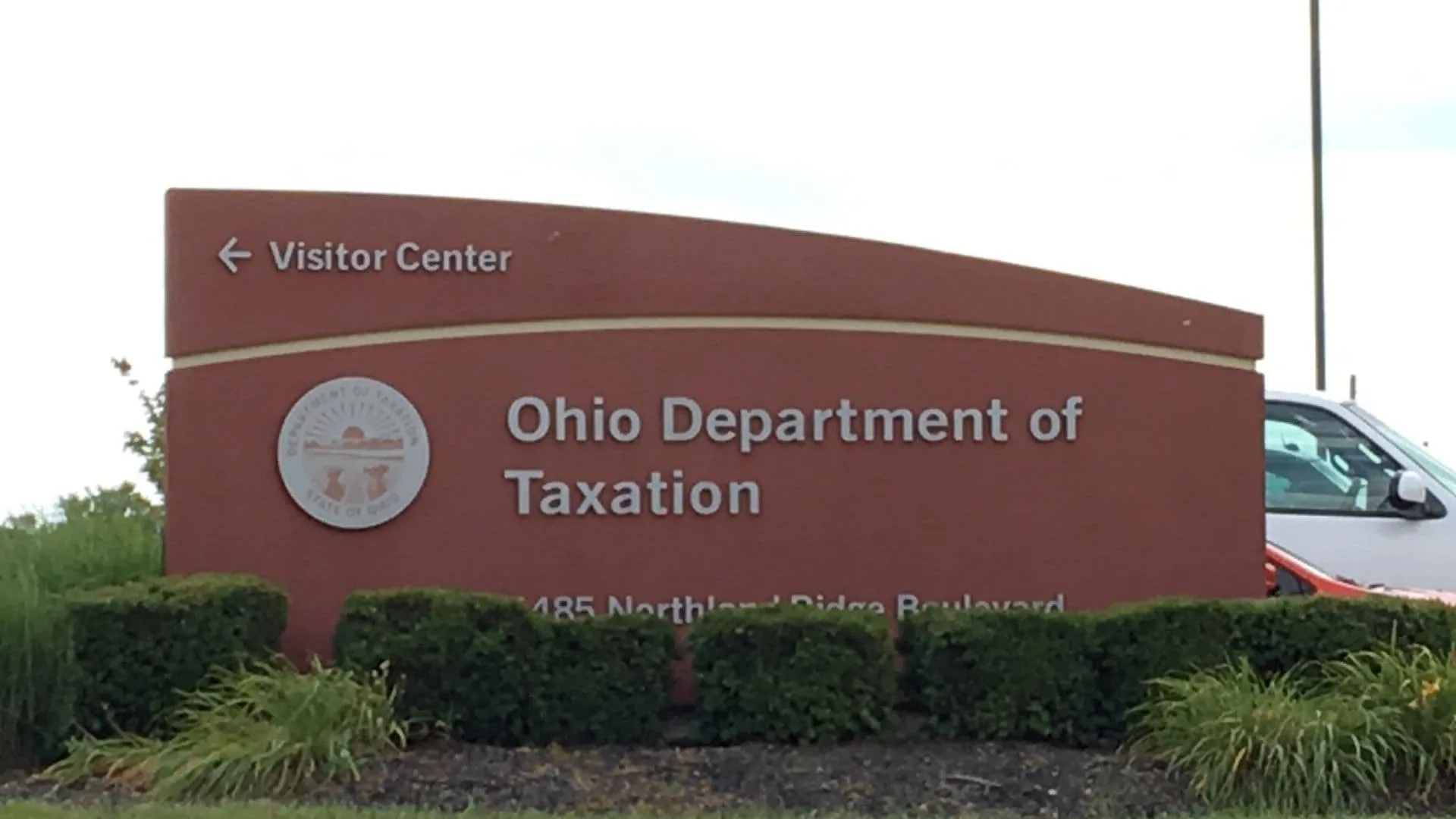
If you are doing business in the Buckeye State, navigating the Ohio Commercial Activity Tax (CAT) has historically been as enjoyable as a pothole on I-71, but recent legislative changes have drastically altered the landscape for small and medium-sized enterprises. Unlike traditional income taxes that look at your profits, the CAT focuses on your “privilege of doing business” by taxing your gross receipts—essentially your top-line revenue before expenses. However, the big news for the 2026 tax year is the massive increase in the exclusion threshold, a game-changer that effectively removes the tax burden for roughly 90% of Ohio businesses. Whether you are a local coffee shop in Columbus or a digital agency in Cincinnati, understanding these new “gross receipts thresholds” and “filing requirements” is critical to ensuring compliance without overpaying. This article will walk you through the new $6 million exclusion, explain why the “Annual Minimum Tax” is a thing of the past, and clarify exactly which business structures—from LLCs to sole proprietorships—still need to file quarterly returns with the Ohio Department of Taxation.
The Massive 2026 Threshold Update
The headline story for 2026 is the dramatic shift in who actually has to pay. As of January 1, 2026, the exclusion amount for taxable gross receipts has doubled from the previous year’s limit.
- The New Rule: Businesses with taxable gross receipts of $6 million or less per calendar year are now exempt from the Commercial Activity Tax.
- The Old Rule: In 2024, the exclusion was $3 million, and prior to that, it was a mere $1 million.
This means if your business generates $5.5 million in revenue in 2026, your CAT liability is effectively zero. You don’t just owe nothing; you typically don’t even need to file a return, provided you have properly canceled your account if you were previously registered. This is a deliberate move by the state to simplify compliance and encourage growth for small-to-mid-sized businesses.
Calculating What You Owe (If You Exceed $6 Million)
For the “big fish” that generate more than $6 million in taxable gross receipts, the math remains relatively straightforward compared to federal taxes.
- The Rate: The tax rate remains at 0.26%.
- The Calculation: You pay 0.26% on the amount of taxable gross receipts in excess of the $6 million exclusion.
For example, if your business pulls in $7 million in 2026:
- You exclude the first $6 million.
- You are taxed only on the remaining $1 million.
- Your tax bill would be roughly $2,600 ($1,000,000 x 0.0026).

Goodbye To The Annual Minimum Tax (AMT)
In the past, even smaller businesses had to pay a tiered “Annual Minimum Tax” just to keep their account active, regardless of how much money they made. As part of the recent legislative overhaul (H.B. 33), the Annual Minimum Tax was completely eliminated starting back in 2024. This change is permanent for 2026 and beyond. There is no longer a “pay-to-play” fee for having a CAT account. If you are under the threshold, you owe nothing.
Quarterly Filing vs. Annual Filing
Another significant operational change is the elimination of the annual return option.
- All remaining taxpayers (those over the $6 million threshold) must file quarterly.
- Deadlines: Returns are generally due on the 10th day of the second month following the end of the tax period (e.g., Q1 returns are due May 10th).
If you previously filed annually and now fall under the new $6 million exemption, you should look into canceling your CAT account through the Ohio Business Gateway to avoid receiving delinquency notices for returns you no longer need to file.
Who Still Needs To Worry About This?
While most small businesses are celebrating, it is crucial to remember that “Taxable Gross Receipts” can be tricky. This includes revenue from:
- Sales of property (inventory) delivered into Ohio.
- Services performed for customers located in Ohio.
- Rents or royalties derived from assets in Ohio.
If you are an out-of-state company (a “remote seller”), you are still subject to the CAT if your taxable gross receipts sourced to Ohio exceed the $6 million mark. The physical location of your headquarters matters less than where your customers are.
FAQs
Q: Do I need to file a return if my receipts are under $6 million in 2026?
A: Generally, no. If your taxable gross receipts are $6 million or less, you are not subject to the CAT and do not need to file, provided you cancel your account if you were previously registered.
Q: Is the Commercial Activity Tax an income tax?
A: No. It is a “privilege of doing business” tax based on gross receipts (revenue), not net profit. You cannot deduct expenses like payroll or rent to lower your CAT liability.
Q: How do I cancel my CAT account if I am now exempt?
A: You can cancel your account electronically via the Ohio Business Gateway or by submitting a Business Account Update Form (BA-UF) to the Ohio Department of Taxation.
Q: Does this tax apply to out-of-state businesses?
A: Yes. If you sell goods or services to customers in Ohio and your Ohio-sourced revenue exceeds $6 million, you must register and pay the CAT, regardless of where your office is located.