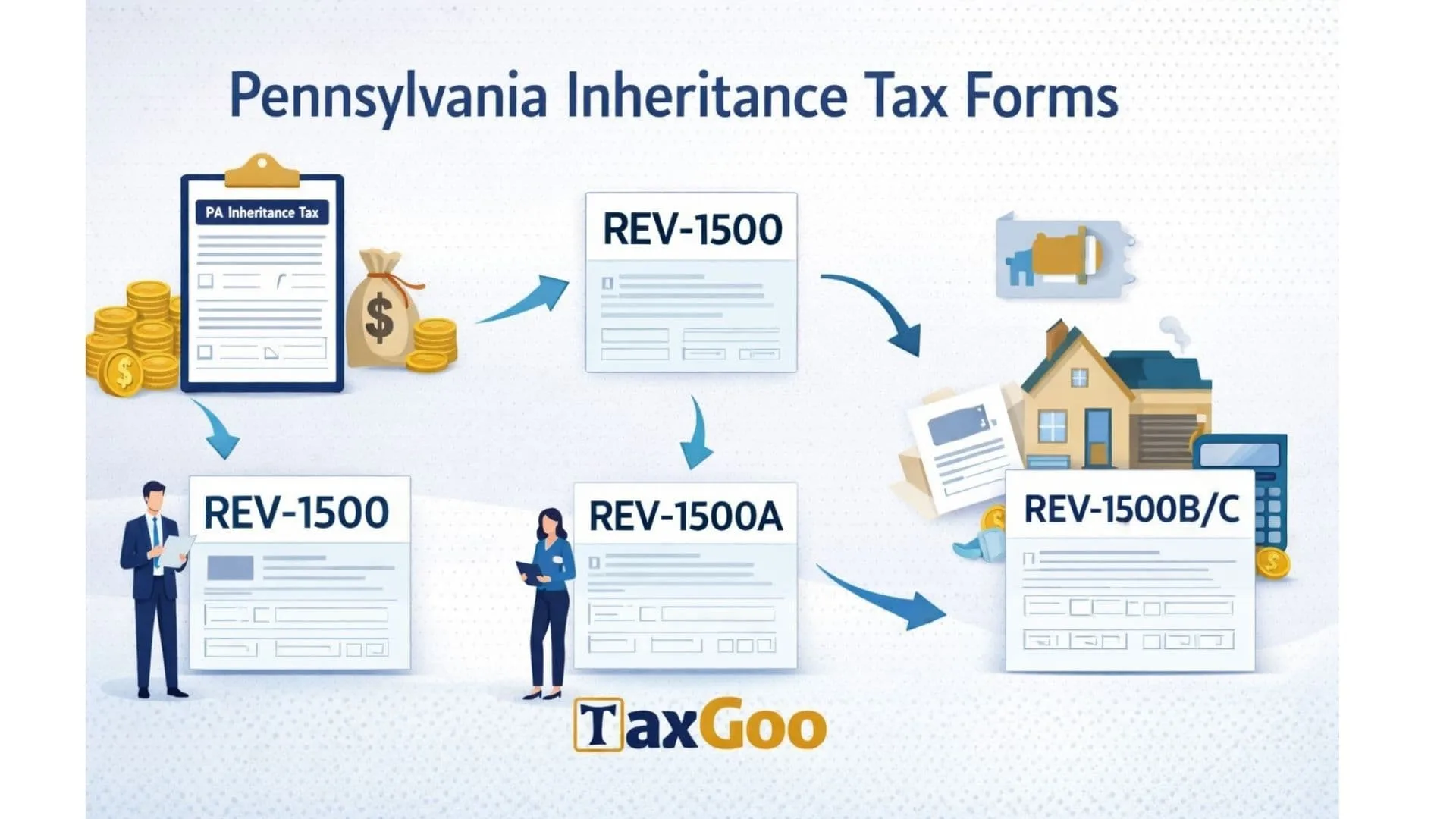
When you inherit property in Pennsylvania, it’s important to understand the required Pennsylvania Inheritance Tax Forms. These forms are necessary for reporting the transfer of property and calculating any taxes owed on the inheritance. The Pennsylvania Inheritance Tax is levied on the transfer of assets from the estate of a decedent to their heirs. It is important to file the right forms to ensure the proper tax rates are applied, and to avoid delays or penalties.
Here’s a breakdown of the most common Pennsylvania Inheritance Tax Forms and what they are used for:

1. Pennsylvania Inheritance Tax Return (REV-1500)
The REV-1500 form is the main document used to report the transfer of property and assets following a person’s death. It’s required for all estates in Pennsylvania, regardless of size. This form will help the state calculate the inheritance tax owed, based on the value of the assets transferred to beneficiaries.
The REV-1500 form includes sections where you report:
- Information about the decedent (name, address, date of death, etc.)
- The beneficiaries and their relationship to the decedent
- A detailed inventory of the decedent’s assets, such as real estate, bank accounts, investments, and personal property
- The value of the estate, and any deductions or exemptions that apply
Once the form is completed, it is filed with the Pennsylvania Department of Revenue.
2. Pennsylvania REV-1500A Form
The REV-1500A form is used when an estate needs to claim certain deductions or exemptions. This form helps reduce the overall taxable value of the estate. The deductions or exemptions might include:
- Debts owed by the decedent
- Funeral expenses
- Certain transfers to surviving spouses or charities
This form allows the estate’s personal representative to ensure that any applicable deductions are accounted for, which can lower the tax burden for beneficiaries.
3. Pennsylvania REV-1500B Form
The REV-1500B form is used in special situations where the decedent passed away outside of Pennsylvania but owned property within the state. If the decedent had real estate, bank accounts, or other assets in Pennsylvania, the REV-1500B must be filed to report those assets and calculate the inheritance tax owed on them.
This form is typically filed by the personal representative of the estate or the individual inheriting the property in Pennsylvania. It is important to include all assets that are part of the estate located within the state.
4. Pennsylvania REV-1500C Form
The REV-1500C form is required for reporting certain special transfers, such as jointly owned property or life insurance policies. If the decedent had property that was jointly owned with others, or if they had life insurance policies that are payable to beneficiaries, the REV-1500C will be used to report the transfer of these items and calculate the tax owed.
This form is especially useful for dealing with assets that don’t typically go through probate but are still subject to Pennsylvania’s inheritance tax.
5. Pennsylvania REV-1500D Form
If the decedent’s estate has no taxable property or the inheritance tax has already been fully paid by the time the return is filed, the REV-1500D form might be used to notify the Pennsylvania Department of Revenue that no taxes are owed. This is a shorter form used in simpler cases where the inheritance tax does not apply.

Filing the Forms
After gathering all the necessary information and completing the forms, they must be submitted to the Pennsylvania Department of Revenue. The forms can be filed online through the Department of Revenue’s website or mailed in paper format.
It is important to note that the Pennsylvania Inheritance Tax must be filed and paid within nine months of the decedent’s death. If taxes are paid within three months of the death, a 5% discount is applied to the amount owed. However, if the taxes are paid later, penalties and interest may be charged.