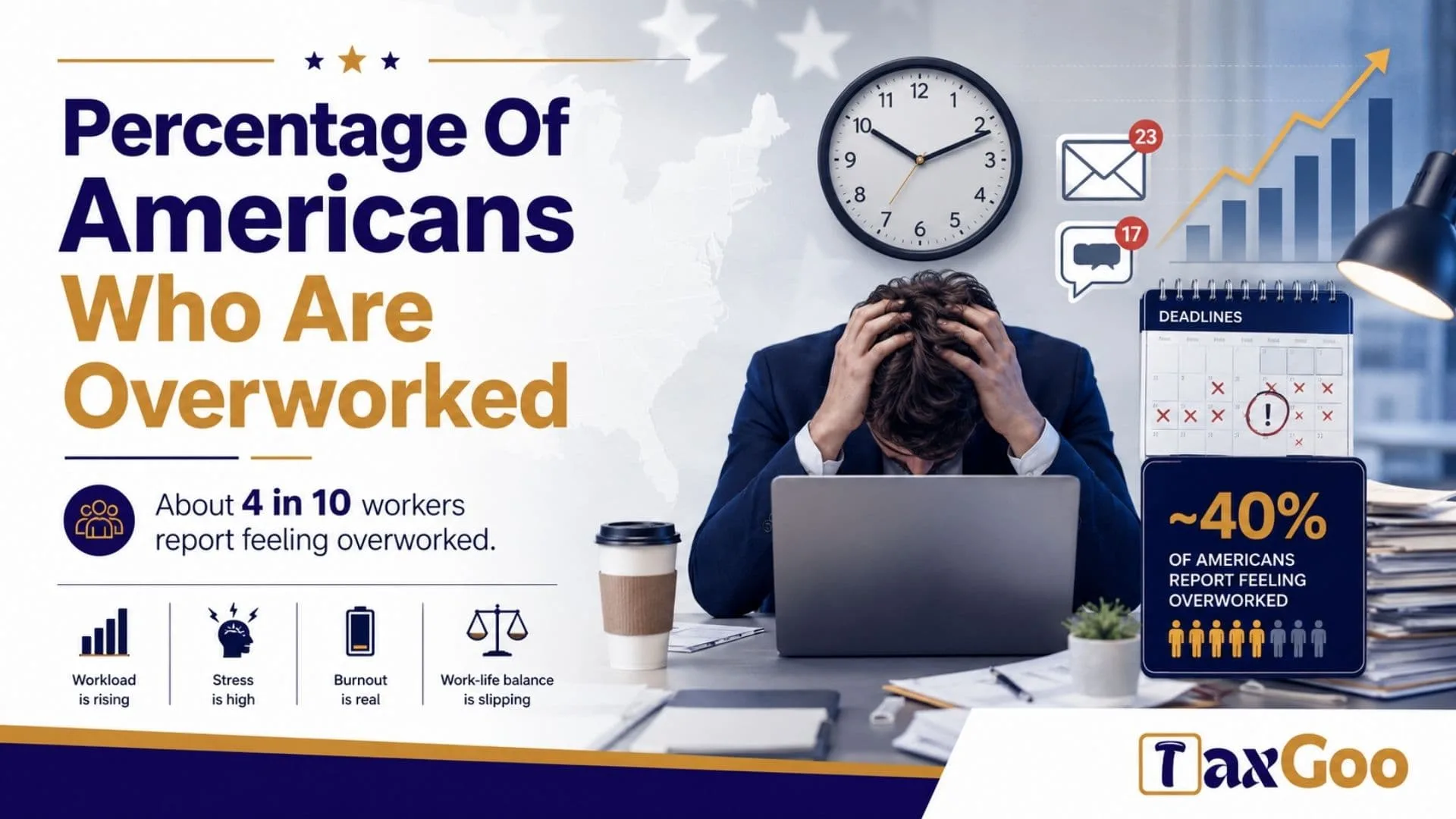
The Percentage Of Americans Who Are Overworked is not a single perfect number, because surveys define “overworked” in different ways, but the best answer is that roughly 38% to 44% of U.S. workers say they feel overworked, while broader measures of work pressure, burnout, excessive workload, job stress, overtime, work-life balance strain, and emotional exhaustion can run much higher. A recent Talker Research survey reported that 38% of employed Americans feel overworked, while an older but direct Families and Work Institute study found that 44% of U.S. employees were overworked often or very often by at least one measure. The same report found that 54% felt overworked at least sometimes in the last month, which shows how common the feeling can become when “sometimes” is included. So, when readers ask how many Americans are overworked, the honest answer is not just a neat percentage. It depends on whether we are measuring long hours, mental overload, pressure to work beyond regular hours, burnout, job insecurity, or lack of time to recover.
What Percentage Of Americans Are Overworked?
A practical estimate is that about 4 in 10 American workers feel overworked. That lines up with the 38% figure from a 2025 survey and the 44% figure from the Families and Work Institute’s overwork research.
But the number rises if the question is softer. For example, the Families and Work Institute found that 54% of employees felt overworked at least sometimes in the last month. It also found that one-third of U.S. employees could be viewed as chronically overworked based on an overall index.
That means there are really three useful ways to read the data. Around one-third may be chronically overworked. Around 4 in 10 may feel overworked often or strongly. More than half may feel it at least sometimes.
Why There Is No One Official Number
The U.S. government tracks work hours, employment, time use, wages, and job patterns, but it does not publish one universal “overworked” percentage. That is because overwork is part objective and part personal.
One person may work 45 hours and feel fine. Another may work 38 hours but feel crushed because of deadlines, lack of support, unpredictable scheduling, commuting, family duties, or job insecurity.
The Bureau of Labor Statistics reported that in 2025, full-time employed people worked an average of 8.1 hours on days they worked, with 8.5 hours on weekdays and 5.5 hours on weekend days. It also found that 30% of employed people worked on an average weekend day. These numbers help show the structure of working life, but they do not fully capture stress or overload.

What Current Data Suggests About Work Pressure
Newer workplace surveys point to a familiar pattern. Many Americans are not only working hours. They are carrying pressure.
A FlexJobs survey of more than 3,000 U.S.-based professionals found that 28% felt daily pressure to work beyond regular hours, while another 30% felt that pressure at least weekly or a few times per month. That means 58% reported some recurring pressure to overwork beyond normal hours.
That is important because being overworked is not always about the clock. It can also come from always being reachable, answering messages after hours, working through breaks, or feeling like the day never really ends.
Overwork Is Not Just About Long Hours
Long hours matter, but they are not the whole story. Gallup has argued that workload experience often matters more than the raw number of hours worked. It notes that how people experience their workload has a stronger influence on burnout than how many hours they work.
That explains why some workers burn out even without extreme overtime. Unclear expectations, poor management, unfair treatment, weak support, and constant time pressure can make normal hours feel heavy.
Gallup also lists unmanageable workload, unclear communication, lack of manager support, and unreasonable time pressure among key causes linked to burnout.
Why Americans Feel Overworked
Several forces can push workers into overload. Staffing shortages can mean fewer people doing more tasks. Inflation and living costs can make people take second jobs, overtime, or side gigs. Remote work can save commute time, but it can also blur the line between home and office. Job insecurity can make people afraid to say no.
The APA’s 2025 Work in America survey reported that job insecurity had a significant impact on stress for 54% of U.S. workers. That kind of fear can make people work longer, answer faster, and avoid setting boundaries.
Overwork also becomes harder to escape when rest does not feel restful. The Families and Work Institute found that 43% of the U.S. workforce returned from vacations feeling overwhelmed by everything they had to do.
What This Means For Workers And Employers
For workers, the key lesson is simple. Feeling overworked is not a personal failure. It is a signal. It may mean your workload, schedule, expectations, or support system needs attention.
For employers, the numbers should be a warning. Overworked employees are more likely to make mistakes, feel resentful, lose energy, and look for other options. The Families and Work Institute found that employees with high overwork levels were more likely to report making a lot of mistakes at work and feeling angry toward employers.
Better staffing, clearer priorities, real time off, manager support, and realistic deadlines can make a real difference.

FAQs
What Percentage Of Americans Are Overworked?
A fair estimate is about 38% to 44%, depending on the survey and definition.
Are More Than Half Of Workers Overworked Sometimes?
Yes. One study found that 54% felt overworked at least sometimes in the last month.
Is Overwork The Same As Burnout?
No. Overwork can lead to burnout, but burnout includes deeper exhaustion, detachment, and reduced effectiveness.
Does Working Long Hours Always Mean Someone Is Overworked?
Not always. Workload quality, support, control, and stress levels matter too.
Why Do Americans Feel Overworked?
Common reasons include heavy workloads, job insecurity, poor boundaries, low staffing, and pressure to stay available.