The title “Research Prompts On The Taxation Changes From The Great Big Beautiful Bill” introduces a practical guide for anyone looking to study, analyze, or write about the major tax updates connected to the One Big Beautiful Bill Act. This legislation created significant discussions around federal tax changes, including new deductions, extensions of previous tax provisions, business tax adjustments, individual income tax changes, and updated rules affecting workers and families. Researching the Great Big Beautiful Bill tax changes requires organized questions that explore how the law affects taxpayers, businesses, investments, and future tax planning. Whether you are a student, researcher, financial writer, business owner, or taxpayer trying to understand the new tax landscape, using detailed research prompts can make the process easier and more focused. The bill includes several tax provisions, such as changes related to tips, overtime income, senior deductions, car loan interest deductions, business investment incentives, and modifications to existing tax rules. This article provides useful research prompt ideas and explains the major areas to investigate when studying the taxation changes from the Great Big Beautiful Bill.
Understanding The Purpose Of The Great Big Beautiful Bill Tax Changes
Before creating research prompts, it is important to understand the overall purpose and structure of the legislation. The One Big Beautiful Bill Act, signed into law in July 2025, included dozens of tax-related provisions that changed parts of the federal tax code. Some provisions extended earlier tax policies, while others introduced new deductions and adjustments for individuals and businesses.
A strong research approach should examine questions about why these changes were introduced, who they affect, and how they may influence financial decisions. Researchers can explore both the technical details of the tax rules and their practical effects on different groups.
Example research prompts:
- What are the main taxation changes introduced by the Great Big Beautiful Bill?
- Which existing tax provisions were extended or modified?
- How do the new deductions affect individual taxpayers?
- What economic goals are connected to the bill’s tax policies?
Research Prompts About Individual Tax Changes
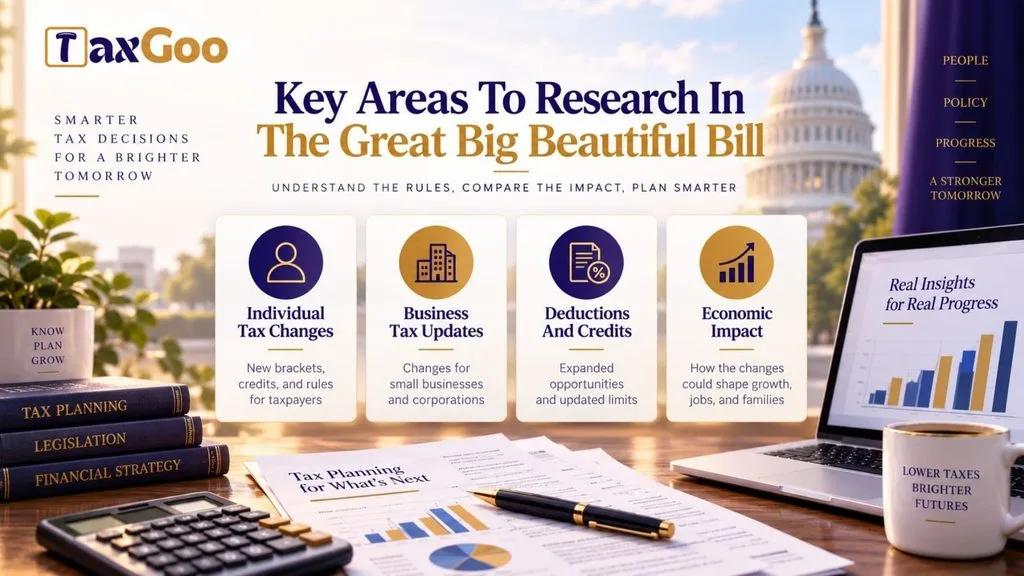
One major area of interest is how the bill changes tax rules for individuals. Several provisions focus on deductions and adjustments that may affect workers and families. These include deductions related to tips, overtime income, senior taxpayers, and qualified vehicle loan interest.
Researchers can examine how these changes work, who qualifies, and what limitations apply.
Useful prompts include:
- How does the “no tax on tips” provision work under the new tax law?
- What workers may benefit from overtime income deductions?
- How will senior taxpayers experience changes in their federal tax obligations?
- What are the income limits and eligibility requirements for new deductions?
- How could the new tax rules change annual tax filing strategies?
These questions help analyze the practical side of the legislation rather than focusing only on political discussions.
Research Prompts About Business Tax Changes
The Great Big Beautiful Bill also includes provisions related to business taxation, investment, and economic activity. Researchers interested in corporate finance can study how these rules influence companies, entrepreneurs, and investment decisions.
Potential research prompts:
- How does the bill affect small business tax planning?
- What changes were made to business investment deductions?
- How do research and development tax rules change under the legislation?
- How could new tax incentives influence business expansion?
- What industries may experience the largest impact from the updated tax provisions?
Business-focused research can also compare how companies may adjust their strategies because of changes in depreciation rules, investment incentives, and deductions.
Research Prompts About Economic Effects
Tax legislation often creates discussions about economic outcomes. A complete research project should examine possible effects on government revenue, consumer behavior, employment, and investment.
Examples include:
- How could the Great Big Beautiful Bill affect federal tax revenue?
- What are the projected costs of the tax provisions?
- How might taxpayers change their financial behavior because of new deductions?
- What are economists saying about the long-term effects of the legislation?
- How do supporters and critics analyze the economic impact of the bill?
When researching economic effects, it is helpful to compare official government information, independent analysis, and financial research reports to understand different perspectives.
Research Prompts For Tax Planning And Compliance
Taxpayers and professionals may also want to explore how the new rules affect tax preparation. Research in this area can focus on practical filing requirements and compliance responsibilities.
Helpful prompts include:
- How should taxpayers prepare for filing under the updated tax rules?
- What new forms or schedules may be required?
- How can individuals determine whether they qualify for new deductions?
- What mistakes should taxpayers avoid when applying the new tax provisions?
- How will accountants adapt their tax planning strategies?
The IRS has provided guidance and resources explaining how taxpayers can apply several provisions from the legislation during tax filing.
Final Thoughts On Researching The Great Big Beautiful Bill Tax Changes
Studying the taxation changes from the Great Big Beautiful Bill requires more than simply listing new rules. Effective research should explore the purpose of each provision, eligibility requirements, financial effects, and practical consequences for taxpayers and businesses. By using targeted research prompts, writers and analysts can create more accurate articles, reports, and educational resources about the changing tax environment.
The best research questions combine legal details with real-world examples, helping readers understand how tax policy connects with everyday financial decisions.
FAQs
What Is The Great Big Beautiful Bill?
The Great Big Beautiful Bill is legislation that introduced multiple federal tax and policy changes, including updates to deductions and tax provisions.
What Tax Changes Should Researchers Study First?
Start with individual deductions, business tax provisions, eligibility rules, and economic effects.
Does The Bill Affect Business Taxes?
Yes, it includes several business-related tax provisions involving investments, deductions, and tax planning.
Where Can I Find Official Information About The Tax Changes?
The IRS provides taxpayer guidance and resources explaining several provisions of the law.