Revenue Ruling 83-33: A Simple Guide To Medical Pool Deductions is about how the IRS treats a specially built exercise or lap swimming pool when it is used to treat a real medical condition. In simple terms, Revenue Ruling 83-33, also known as Rev. Rul. 83-33, deals with the IRS medical expense deduction, swimming pool tax deduction, Section 213 medical expenses, capital expenditures for medical care, home improvement medical deductions, physician prescribed treatment, osteoarthritis therapy, lap pool medical use, fair market value increase, operating and maintenance costs, and the difference between a real medical need and a personal lifestyle upgrade. The ruling is important because it shows that a pool is not automatically a tax write-off just because swimming is healthy. Instead, the facts matter a lot. The pool must be mainly for medical care, not family fun, backyard beauty, or general exercise. It also helps when the pool has special medical features, such as easier entry, a limited design, or therapy equipment. For taxpayers, caregivers, and tax professionals, this ruling is a useful guide because it explains how the IRS looks at expensive medical-related home changes under the medical expense rules.
What Is Revenue Ruling 83-33?
Revenue Ruling 83-33 is an IRS ruling from 1983. It explains whether the cost of building, operating, and maintaining a special exercise swimming pool can qualify as a medical expense.
The ruling involved a taxpayer with severe osteoarthritis. The person’s doctor prescribed swimming several times a day as part of the treatment plan. To follow that advice, the taxpayer built an indoor lap pool attached to the home.
This was not a normal backyard pool. It was narrow, simple, and designed for therapy. It had no diving board. It was not made for general recreation. It also had special stairs and a hydrotherapy device to help the taxpayer use the pool safely.
The IRS concluded that part of the pool cost could qualify as a medical expense. However, the deductible amount had to be reduced by any increase in the value of the taxpayer’s home.
That is the big lesson of the ruling. A medical pool may qualify, but only when the facts show a true medical purpose.
Why This Ruling Matters
Revenue Ruling 83-33 matters because many people ask the same basic question: Can a swimming pool be deducted as a medical expense?
The answer is sometimes yes, but not always.
A pool is usually seen as a personal or recreational item. Most people use pools for fun, exercise, relaxation, or home value. For that reason, the IRS does not treat an ordinary pool as a medical expense by default.
However, Revenue Ruling 83-33 shows that a pool can become different when it is built mainly for medical care. If a doctor prescribes it for a specific condition, and the pool is designed and used mainly for treatment, it may fit under the medical expense rules.
This ruling is helpful because it gives taxpayers a real example. It does not say every medical pool qualifies. Instead, it shows the kind of facts that can support a deduction.

The Main Tax Rule Behind The Ruling
The main tax rule behind Revenue Ruling 83-33 is Section 213 of the Internal Revenue Code. This rule allows a deduction for certain medical expenses that are not paid back by insurance or another source.
Medical care can include amounts paid for the treatment, mitigation, diagnosis, cure, or prevention of disease. It can also include some costs connected to improving the body’s function.
That sounds broad, but there are limits. The expense must be mainly for medical care. A cost that only improves general health is usually not enough.
For example, buying a treadmill because exercise is good for you is not the same as buying special medical equipment that a doctor says is needed for treatment. The difference is purpose, proof, and facts.
Revenue Ruling 83-33 sits right in that space. It asks whether a big home improvement can still be a medical expense when its main reason is treatment.
Capital Expenditures And Medical Expenses
A capital expenditure is a cost that creates or improves a long-term asset. A swimming pool is usually a capital improvement because it becomes part of the home.
Normally, capital improvements are not deducted as medical expenses. But the medical expense rules allow an exception when the main purpose of the improvement is medical care.
Even then, the full cost may not be deductible. If the improvement increases the value of the home, the increase in home value must be subtracted from the cost. The remaining amount may qualify as a medical expense.
Here is a simple example.
If a medically required pool costs $80,000 and it increases the home’s value by $30,000, the possible medical expense portion would be $50,000. That does not automatically mean the full $50,000 becomes a final tax benefit. The taxpayer must still meet the normal rules for medical deductions.
This is why valuation matters. A taxpayer may need a real estate appraisal or other support to show how much the pool increased the property value.
What Made The Pool Different In Revenue Ruling 83-33?
The pool in Revenue Ruling 83-33 had several facts that helped the taxpayer.
First, the taxpayer had a serious medical condition. Severe osteoarthritis affected the knees and legs. This made normal movement difficult.
Second, a doctor prescribed swimming several times a day. The pool was not built just because the taxpayer liked swimming. It was connected to a treatment plan.
Third, the pool was designed for therapy. It was an indoor lap pool, not a party pool. It had no diving board. It was not suited for normal recreational use.
Fourth, the pool had special features. The stairs had wider steps and smaller risers so the taxpayer could enter and exit safely. It also had a hydrotherapy device to support treatment.
These details mattered. Together, they showed that the pool was mainly for medical care.
What Costs May Qualify?
Revenue Ruling 83-33 focused on construction, operation, and maintenance of the pool. Under the medical expense rules, costs may qualify when they are directly tied to medical care.
Possible qualifying costs may include:
Construction costs that exceed the increase in property value.
Operation costs when the main reason is medical treatment.
Maintenance costs connected to keeping the medical asset usable.
Water, electricity, chemicals, cleaning, and repairs may also be relevant if they are needed for the medical use of the pool. However, these costs must be tied to the medical purpose. If the pool is mostly used by family and friends for fun, the deduction becomes much harder to support.
The key question is simple: Is the main purpose medical care?
If the honest answer is yes, the taxpayer has a better argument. If the answer is mixed or mostly personal, the deduction is weaker.
What Costs May Not Qualify?
Not every pool-related cost is likely to qualify.
A taxpayer should be careful with costs connected to luxury, style, entertainment, or general recreation. These may include decorative landscaping, poolside patios, fancy lighting, pool bars, slides, diving boards, or other features that do not support medical care.
A large resort-style pool is harder to defend than a simple therapy pool. A pool built for the whole family is harder to defend than a pool built around a patient’s specific medical needs.
Also, a doctor saying “swimming is good exercise” may not be enough. The stronger support is a clear medical recommendation that connects the pool or regular aquatic therapy to a specific condition.
The more the pool looks like a normal lifestyle upgrade, the more risk there is.

The Role Of A Doctor’s Prescription
A doctor’s prescription or letter is very important. It helps show that the pool was built for medical care, not personal comfort.
A strong medical letter should explain the patient’s condition, why swimming or aquatic therapy is needed, how often the therapy should happen, and why access to a suitable pool is important.
The letter should be written before the pool is built, if possible. A letter created after the fact may still help, but it can look weaker.
The best records tell a clear story. The taxpayer had a medical problem. The doctor recommended a treatment. The pool was designed to follow that treatment. The pool was used mainly for that treatment.
That kind of record is much easier to understand than a vague claim made after tax season arrives.
The Importance Of Primary Medical Purpose
The phrase “primary purpose” is the heart of this topic.
The pool must be mainly for medical care. It does not have to be impossible for others to use, but personal or recreational use can create problems.
If the taxpayer uses the pool several times a day for prescribed therapy, and the design is clearly medical, the primary purpose is easier to show.
If the pool is used mostly for parties, weekend fun, or general exercise, the medical purpose becomes weaker.
This does not mean every family member must be banned from the pool. It means the facts should support the claim that the pool exists mainly because of the medical condition and treatment need.
Revenue Ruling 83-33 And Osteoarthritis
The taxpayer in the ruling had severe osteoarthritis. Osteoarthritis is a degenerative joint condition that can cause pain, stiffness, and reduced movement.
Swimming and aquatic exercise may be useful because water can reduce stress on joints. For some people, pool therapy allows movement that may be difficult on land.
That context made the ruling stronger. The pool was not just a convenience. It helped the taxpayer follow a specific treatment routine.
However, this does not mean the ruling only applies to osteoarthritis. A taxpayer with another condition may still look to the ruling for guidance if the facts are similar. The medical need, doctor support, pool design, and actual use will matter.
Revenue Ruling 83-33 Vs. A Private Letter Ruling
Many people confuse revenue rulings with private letter rulings.
A revenue ruling is published IRS guidance. It explains how the IRS applies tax law to a specific set of facts. Tax professionals often use revenue rulings when analyzing similar situations.
A private letter ruling is different. It is issued to one taxpayer based on that taxpayer’s specific facts. Other taxpayers may read it to understand IRS thinking, but they generally cannot rely on it as precedent.
That difference matters here. If someone finds a private letter ruling about a medical pool, it may be helpful background. But Revenue Ruling 83-33 is usually more useful because it is published guidance on the issue.
Still, no ruling replaces the facts. The taxpayer must show that their situation is close enough to the ruling to support the position.
How To Apply Revenue Ruling 83-33 In Real Life
To apply Revenue Ruling 83-33, start with the medical need.
Ask these questions:
What medical condition is being treated?
Did a doctor recommend swimming or aquatic therapy?
Was the pool built mainly to follow that medical advice?
Does the pool design support medical use?
Is recreational use limited?
Did the pool increase the home’s value?
Are construction and maintenance records available?
These questions help organize the tax analysis. They also help avoid wishful thinking.
A taxpayer should not start with the pool and then search for a deduction. The better order is medical need first, doctor support second, design and use third, tax treatment fourth.
That order makes the claim stronger and more honest.
Documentation To Keep
Good documentation can make or break this type of deduction.
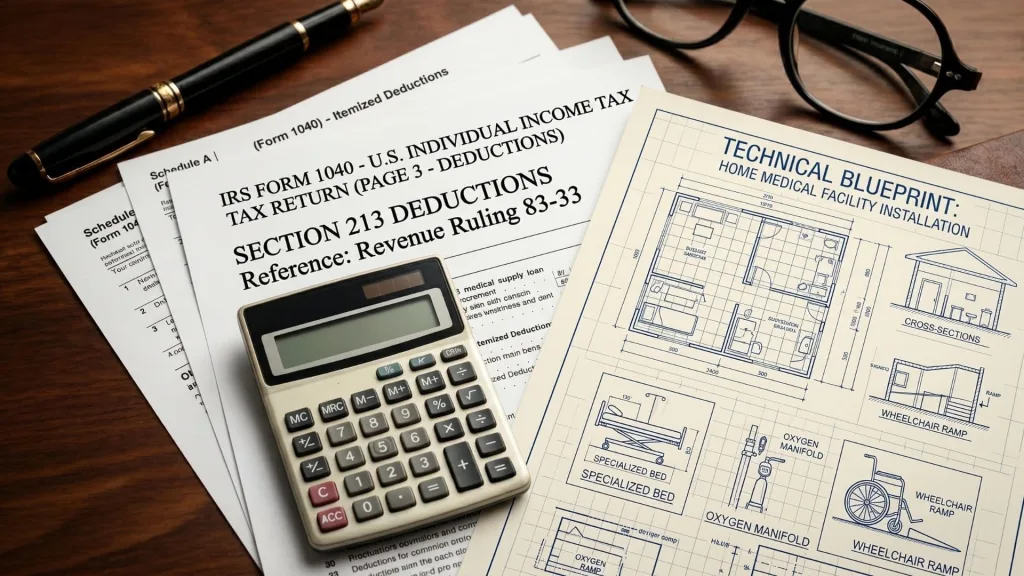
A taxpayer should keep the doctor’s prescription or medical letter, medical records that support the condition, pool construction invoices, design plans, proof of special medical features, payment records, maintenance bills, and records showing how the pool is used.
A home appraisal may also be important. Since the deductible construction amount may depend on the increase in home value, the taxpayer needs support for that number.
Photos can help too. If the pool has special stairs, therapy equipment, limited design, or other medical features, photos can support the story.
The goal is to create a clean file that explains the facts without confusion.
Common Mistakes To Avoid
One common mistake is assuming that a pool is deductible just because swimming is healthy. General health is not enough.
Another mistake is building a luxury pool and then trying to call it medical. A pool with entertainment features may be harder to defend.
A third mistake is getting a doctor’s note after the pool is built. It is better to have medical support before spending the money.
A fourth mistake is ignoring home value. If the pool increases the value of the home, that increase must be considered.
A fifth mistake is forgetting the normal medical deduction limits. Even when a cost qualifies as a medical expense, the taxpayer still needs to apply the broader rules for claiming medical expenses.
Does Revenue Ruling 83-33 Make Pools Easy To Deduct?
No, it does not make pool deductions easy.
It makes them possible in the right facts.
That is an important difference. Revenue Ruling 83-33 is not a free pass for anyone who wants a pool. It is a guide for cases where the pool is truly medical in purpose.
The strongest cases usually involve a serious medical condition, written doctor support, a therapy-focused design, limited recreational features, clear records, and a reasonable calculation of the deductible amount.
The weakest cases usually involve ordinary pools, general fitness goals, little medical documentation, and heavy recreational use.
Simple Example Of How The Rule May Work
Imagine a taxpayer has a severe joint condition. A physician recommends aquatic therapy every day. The taxpayer lives far from a therapy pool and builds a small indoor lap pool with special entry steps and therapy equipment.
The pool costs $70,000. An appraisal shows the home value increased by $25,000 because of the pool. The possible medical expense portion of the construction cost is $45,000.
The taxpayer also pays yearly costs for chemicals, water, electricity, and cleaning. If those costs are mainly for the medical use of the pool, they may also be considered medical expenses.
This example is simplified. Real tax results depend on all facts, current law, records, and the taxpayer’s full tax situation.
Why Facts Matter So Much
Tax law often turns on details. Revenue Ruling 83-33 is a perfect example.
A pool can be personal. A pool can also be medical. The difference depends on why it was built, how it was designed, how it is used, and what records support the claim.
Small facts can change the answer. A diving board may suggest recreation. A hydrotherapy device may suggest treatment. A vague doctor comment may be weak. A detailed prescription may be strong.
This is why taxpayers should not rely on a simple yes or no answer. The better question is: Do my facts match the medical purpose shown in Revenue Ruling 83-33?
When To Talk To A Tax Professional
A medical pool deduction can involve large numbers. That means it can also attract attention.
A taxpayer should consider talking to a qualified tax professional before building the pool, not after. A tax professional can help review the medical support, records, design, valuation, and reporting method.
This is especially important if the cost is high or the facts are mixed. Getting advice early may help avoid problems later.
Revenue Ruling 83-33 can be helpful, but it should be applied with care.

FAQs
What Is Revenue Ruling 83-33?
Revenue Ruling 83-33 is IRS guidance about when a specially built exercise or lap pool may qualify as a medical expense.
Can A Swimming Pool Be A Medical Expense?
Yes, but only in certain facts. The pool must be mainly for medical care, not recreation or general fitness.
Does A Doctor’s Note Help?
Yes. A clear doctor’s prescription or letter can help show that the pool is needed for treatment.
Is The Full Pool Cost Deductible?
Not always. If the pool increases the home’s value, that increase is subtracted from the cost.
Are Pool Maintenance Costs Deductible?
They may be if the main reason for the pool is medical care and the costs support that medical use.
Does Revenue Ruling 83-33 Apply To Every Pool?
No. It applies only when the facts are similar enough, especially medical need, special design, and primary medical use.