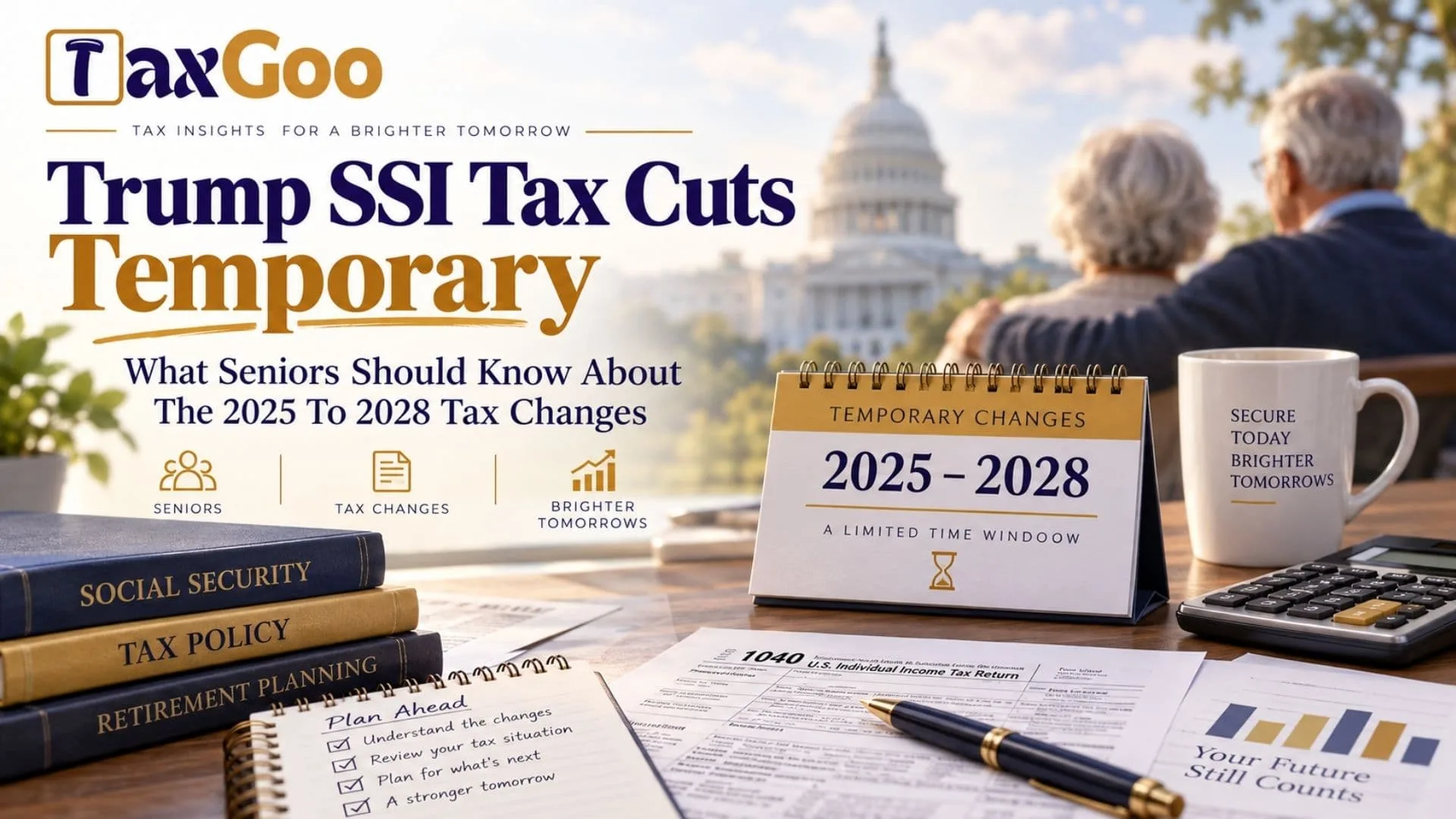
The topic Trump’s SSI Tax Cuts Temporary has gained attention as taxpayers and retirees look for answers about changes connected to Social Security benefits, senior deductions, and federal tax rules. Many people are searching for information about Trump SSI tax cuts, Social Security tax relief, temporary tax deductions, senior citizen tax benefits, and how the One Big Beautiful Bill Act affects retirement income. While discussions often describe the changes as a “tax cut on Social Security,” the actual provision works through changes to tax deductions rather than directly removing Social Security benefit taxes for every recipient. The law created an additional deduction for eligible seniors, which can reduce taxable income and may lower federal income taxes for many Social Security beneficiaries. The IRS states that the senior deduction is available for tax years 2025 through 2028, making it a temporary provision unless future legislation changes the rules. Understanding whether Trump SSI tax cuts are temporary requires looking at how the legislation works, who qualifies, how long the benefits last, and what taxpayers may need to consider when planning for future tax years.
What Are The Trump SSI Tax Cuts?
The phrase “Trump SSI tax cuts” is commonly used online when discussing tax relief connected to Social Security recipients and older Americans. However, SSI, or Supplemental Security Income, is different from Social Security retirement benefits. SSI is a needs-based federal program, while Social Security retirement benefits are based on work history and payroll contributions.
The tax changes discussed under the One Big Beautiful Bill Act mainly focus on federal income tax reductions for older taxpayers. The legislation introduced an additional deduction for individuals age 65 and older, which may reduce taxable income for eligible seniors. According to IRS guidance, qualifying individuals can claim an additional $6,000 deduction, while eligible married couples may receive up to $12,000 if both spouses qualify.
Because this deduction reduces taxable income, some Social Security recipients may pay less federal income tax on their benefits and other income sources.
Are Trump Social Security Tax Cuts Temporary?
Yes, the senior tax deduction connected to these changes is temporary under the current law. The IRS states that the additional senior deduction applies from 2025 through 2028.
This means eligible taxpayers may receive the benefit during those tax years, but the provision is scheduled to end after 2028 unless lawmakers extend, modify, or replace it.
Temporary tax changes are common in federal legislation. They are often created with specific expiration dates so lawmakers can review their financial effects and decide whether future action is needed.
How Does The Temporary Senior Tax Deduction Work?
The new deduction does not mean every Social Security recipient automatically stops paying taxes on benefits. Instead, eligible taxpayers receive an additional deduction that lowers their taxable income.
For example, a qualifying senior taxpayer may combine this new deduction with other available deductions when filing a federal tax return. If the deductions reduce taxable income enough, the taxpayer may owe less federal income tax.
The IRS explains that the deduction applies to taxpayers who meet age and income requirements. The benefit begins phasing out for taxpayers with modified adjusted gross income above certain limits.
Who May Benefit From The Tax Changes?
The temporary Social Security-related tax relief mainly affects older taxpayers who qualify under the new deduction rules. Potential beneficiaries include:
- Retirees receiving Social Security benefits
- Individuals age 65 or older
- Married couples where both spouses meet eligibility requirements
- Seniors with taxable income affected by federal tax rules

However, the actual financial impact depends on each person’s income, filing status, deductions, and other tax circumstances.
Why Are The Tax Cuts Called Temporary?
Temporary tax provisions are usually designed to provide short-term financial changes while allowing lawmakers to evaluate their impact on taxpayers and government revenue.
Supporters of the policy have described the provision as a way to provide additional tax relief for seniors. The White House and Social Security Administration have highlighted the law as providing significant tax relief for many older Americans.
Some tax policy analysts have noted that the structure of the provision is an additional deduction rather than a complete elimination of Social Security benefit taxation. This distinction is important because individual outcomes can vary depending on personal tax situations.
What Happens After 2028?
Since the current senior deduction is scheduled to expire after 2028, taxpayers should pay attention to future legislative updates. Congress could allow the provision to expire, extend it, or make changes before the deadline.
For retirees and people planning for retirement, understanding temporary tax benefits is an important part of long-term financial planning. A tax benefit available today may not continue forever, so future retirement income strategies may need adjustments.
How Should Seniors Prepare?
Seniors can take several steps to better understand how these temporary tax changes may affect them:
- Review annual income and tax documents
- Check eligibility requirements each tax year
- Follow official IRS updates
- Discuss tax planning with qualified professionals when needed
- Consider how future changes could affect retirement income
The best approach is to focus on accurate information and understand the difference between temporary deductions, permanent tax rules, and proposed changes.
Final Thoughts On Trump SSI Tax Cuts Temporary Rules
The discussion around Trump SSI tax cuts temporary reflects broader interest in how new federal tax policies affect retirees and Social Security recipients. The current law provides a temporary additional deduction for eligible seniors from 2025 through 2028, which may reduce taxable income for many qualifying taxpayers.
Understanding these changes requires looking beyond headlines and examining eligibility rules, expiration dates, and individual financial circumstances. As tax laws continue to evolve, staying informed can help taxpayers better prepare for future filing seasons.
FAQs
Are Trump SSI Tax Cuts Permanent?
No. The senior deduction is currently scheduled to apply from 2025 through 2028.
Does The Law Eliminate All Social Security Taxes?
No. The change mainly works through an additional deduction that can reduce taxable income.
Who Qualifies For The Senior Tax Deduction?
Eligible taxpayers age 65 or older who meet income requirements may qualify.
When Does The Temporary Tax Benefit End?
Under current rules, the deduction applies through the 2028 tax year.