
What Are Deductible Business Subscriptions? They are recurring payments a business makes for tools, platforms, services, memberships, and digital products that are ordinary, necessary, and directly related to running the business, such as software subscriptions, cloud storage, design tools, accounting platforms, email marketing services, industry publications, professional memberships, and streaming or research services used for work. If you are a freelancer, small business owner, agency, consultant, creator, or online seller, understanding deductible business subscriptions can help you lower taxable income, organize your bookkeeping, track business expenses more accurately, and make smarter decisions about which recurring costs actually support growth. In simple terms, if a subscription helps you operate, market, manage, deliver, research, or improve your business, there is a good chance it may qualify as a business expense, but the key is whether the cost is genuinely connected to your work and properly documented. That means the real question is not just whether you pay monthly or yearly for a service, but whether the subscription has a clear business purpose, whether it is used mainly for work, and whether you can back up the deduction with records that make sense if your books are ever reviewed.
Why Business Subscriptions Matter
Subscriptions are easy to forget because they often look small on their own. Yet over a year, software fees, hosting plans, AI tools, stock libraries, CRM platforms, and education memberships can add up to a meaningful business expense total.
For many modern businesses, subscriptions are part of daily operations. A designer may need Adobe tools, a marketer may rely on SEO platforms and email software, and a consultant may use project management apps, cloud storage, and video meeting tools to serve clients.
What Makes A Subscription Deductible
A business subscription is generally deductible when it is ordinary and necessary for your type of work. Ordinary means it is common or accepted in your industry, and necessary means it is helpful and appropriate for running your business.
The subscription should also have a clear business connection. If you use a platform to communicate with clients, create deliverables, manage finances, conduct research, or support operations, that business link is much easier to show.
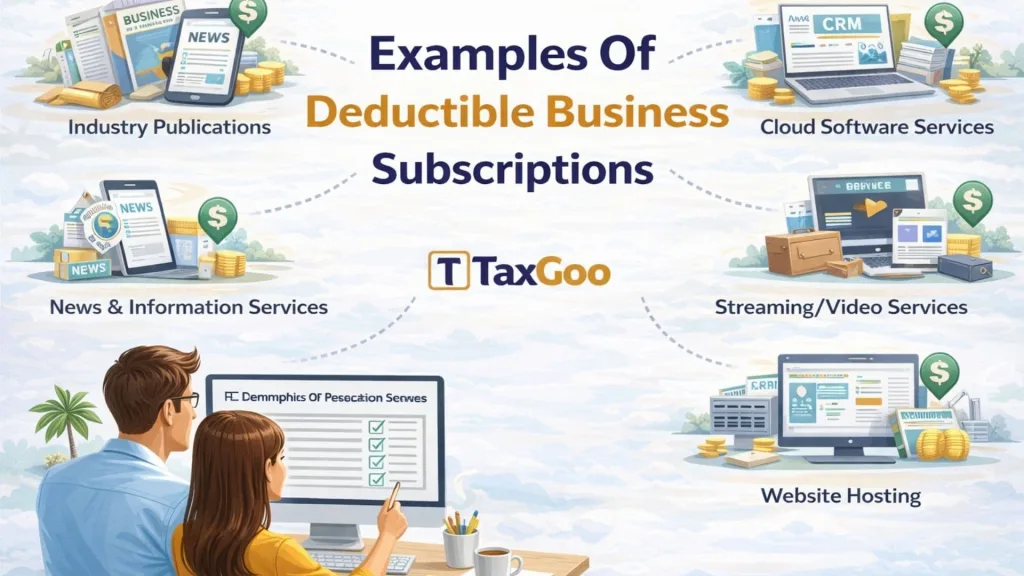
Common Examples Of Deductible Business Subscriptions
Here are some subscriptions that often qualify when they are used for business purposes:
- Accounting software
- Payroll platforms
- Website hosting services
- Domain renewal services
- Email marketing tools
- CRM subscriptions
- SEO tools
- Graphic design software
- Video editing software
- Cloud storage plans
- Team communication platforms
- Project management tools
- Stock photo or stock music memberships
- Online course platforms used for professional development
- Trade journals and industry publications
- Professional association memberships
- Scheduling software
- E-commerce app subscriptions
- Security and backup services
A photographer, for example, may deduct editing software, gallery delivery platforms, cloud backup storage, and portfolio hosting if those subscriptions are used to run the business. A consultant may deduct Zoom, bookkeeping software, proposal tools, and industry research subscriptions if they are tied to client work and business management.
Subscriptions That May Not Qualify
Not every recurring payment counts as a business deduction. A subscription is less likely to qualify if it is mainly personal, only loosely related to the business, or impossible to separate from personal entertainment.
Examples that may raise questions include:
- General streaming services used mostly for personal watching
- News or lifestyle subscriptions with no clear business purpose
- Personal wellness apps with no direct business link
- Family cloud plans that mix heavy personal use with limited work use
- Bundled memberships where the business portion is unclear
Some subscriptions live in the gray area. If a writer uses a newspaper subscription for research, or a video creator uses a streaming platform to study trends in their niche, the business purpose may be stronger, but it still helps to document how the service supports revenue-generating work.
Personal Use Vs Business Use
Mixed-use subscriptions need extra care. If part of the subscription is personal and part is business, you may need to deduct only the business portion rather than the full amount.
This comes up often with phone storage, internet-based tools, family software plans, and general platforms that serve both work and personal life. A good rule is simple, be honest, be consistent, and only claim the portion you can reasonably justify.
How To Know If Your Subscription Passes The Test
Ask yourself a few practical questions:
- Does this subscription help me run, market, manage, or deliver my business services?
- Would another business in my field reasonably pay for something similar?
- Do I use it primarily for work rather than personal convenience?
- Can I show invoices, receipts, or account records for the payments?
- Would the reason for the expense make sense to an accountant or tax reviewer?
If the answer is yes to most of these questions, the subscription is more likely to be deductible. If the purpose sounds vague, personal, or hard to explain, it may be better not to claim the full cost.
Best Recordkeeping Tips

Good records make a big difference. Even legitimate deductions can become stressful if your documentation is messy or incomplete.
Try to keep:
- Monthly or annual invoices
- Payment confirmations
- Bank or card statements
- A note about the business purpose
- Usage records when the subscription has mixed use
- Separate business accounts when possible
Using a dedicated business card or bank account makes recurring charges easier to track. It also helps you review whether each subscription still earns its place in your budget.
Popular Subscription Categories For Different Businesses
For Freelancers
Freelancers often deduct writing tools, invoicing software, design platforms, cloud storage, and communication apps. The exact list depends on whether they work in writing, design, coding, consulting, marketing, or another field.
For Agencies
Agencies usually carry more team-based subscriptions, such as CRM systems, project management tools, SEO software, reporting dashboards, collaboration apps, and client communication platforms. These costs can be essential to service delivery and internal workflow.
For Creators
Content creators may have deductible subscriptions for video editing, music licensing, thumbnail design, scheduling tools, analytics tools, online learning, and website hosting. The stronger the connection between the tool and content production or monetization, the easier it is to treat it as a business expense.
For E-Commerce Businesses
Online sellers often pay for store apps, email marketing platforms, inventory systems, product research tools, customer support tools, shipping software, and marketplace services. These recurring costs are often deeply tied to daily operations.
Can You Deduct Annual And Monthly Plans?
Yes, in many cases both monthly and annual subscriptions can qualify if they are legitimate business expenses. The billing frequency usually matters less than the business purpose and the quality of your records.
Some businesses prefer annual plans because they lower the total cost. Others prefer monthly billing for flexibility, especially when testing new tools or managing cash flow.
Are Professional Memberships Deductible?
They often can be, especially when the membership supports your profession, industry standing, education, networking, or access to business resources. Examples may include trade groups, chambers of commerce, or niche professional associations related to your work.
Still, the same logic applies. The membership should have a real business reason, not just a weak or personal connection.

Are Learning Platforms And Courses Deductible?
They may be deductible when they help maintain or improve skills you already use in your business. That can include subscriptions to training libraries, industry education platforms, and software learning portals tied to your current work.
The business case is usually stronger when the learning improves your existing professional services. If the subscription is more personal, hobby-based, or unrelated to your current business activity, the deduction may be harder to support.
Mistakes To Avoid
A few common mistakes can create problems:
- Deducting a personal subscription just because you occasionally use it for work
- Claiming 100 percent business use without a reasonable basis
- Forgetting small recurring charges that add up over time
- Keeping poor records
- Mixing personal and business payments in one account
- Paying for unused software for years and still treating it like a necessary expense
A simple subscription audit once every few months can help. Review what you pay for, why you use it, whether it still supports the business, and whether the expense classification still makes sense.
How To Write Off Subscriptions More Confidently
Start by grouping subscriptions into clear categories such as marketing, operations, finance, design, education, and admin. Then review each item with one goal in mind, can you clearly explain how it helps your business earn income or function efficiently?
That one habit can make bookkeeping cleaner and tax season less confusing. It also helps you cut waste, because some of the best tax decisions start with better expense discipline, not just bigger deductions.
FAQs
Can Netflix Be A Business Expense?
Sometimes, but only if there is a real and documentable business purpose. Personal entertainment use usually does not qualify.
Is Adobe A Deductible Subscription?
Often yes, if you use it for design, editing, marketing, publishing, or other business work. Business use should be clear and supportable.
Are AI Tools Tax Deductible For Business?
They can be, if they are used for business tasks such as writing, research, coding, image generation, support, or workflow improvement. Keep records that show work-related use.
Can I Deduct A Mixed-Use Subscription?
Usually only the business portion should be deducted. The more mixed the use, the more important your records become.