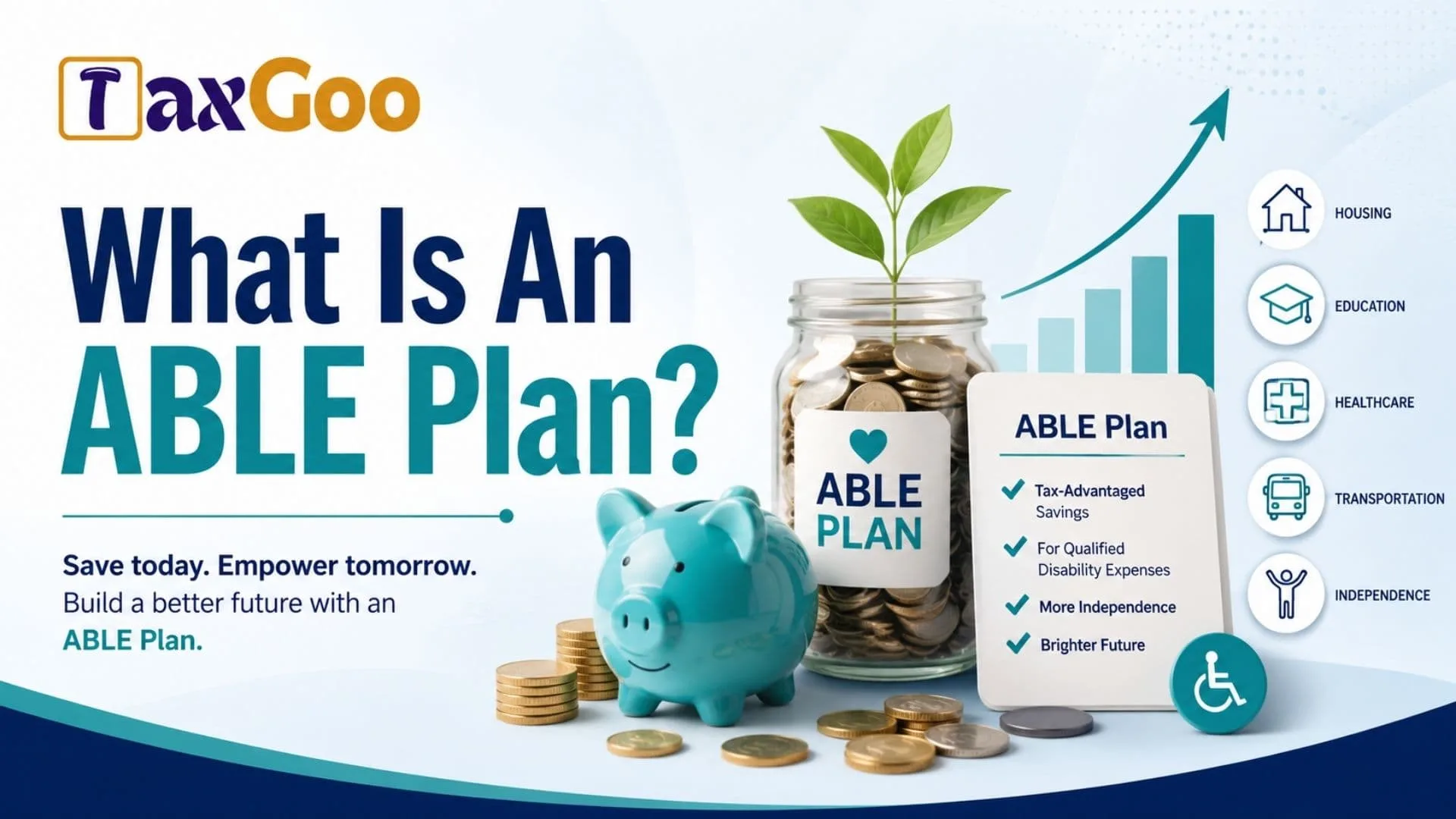
What Is An ABLE Plan? An ABLE plan, also called an ABLE account or 529A account, is a tax-advantaged savings and investment account designed for eligible people with disabilities. ABLE stands for Achieving a Better Life Experience, and the main goal is to help a person with a qualifying disability save money for qualified disability expenses without automatically losing access to important means-tested benefits. In plain English, an ABLE plan gives the account owner a safer place to save for health care, housing, transportation, education, assistive technology, employment support, personal support services, financial management, and other disability-related needs. The money contributed to the account is not deductible on a federal income tax return, but the account can grow tax-free, and withdrawals are tax-free when used for qualified disability expenses. This makes ABLE plans especially helpful for individuals who receive Supplemental Security Income, Medicaid, or other need-based assistance, because regular savings outside an ABLE account can create benefit problems much faster. For 2026, eligible individuals may generally contribute up to $20,000 to an ABLE account, and some working account owners may be able to add more under ABLE to Work rules. Eligibility also expanded in 2026 to include people whose disability began before age 46, which means many more individuals and families can now consider this planning tool.
How An ABLE Plan Works
An ABLE plan is opened through a state ABLE program. The account belongs to the eligible individual with a disability, often called the designated beneficiary or account owner. Family members, friends, trusts, employers, and the account owner may be able to contribute, but the annual contribution limit must still be respected.
The account can usually hold cash, investments, or a mix of options depending on the state program. Some plans also offer debit cards or checking-style access, which can make the account useful for regular expenses. Since ABLE programs vary by state, it is smart to compare fees, investment choices, account limits, residency rules, state tax benefits, and Medicaid payback rules before choosing a plan.
Who Qualifies For An ABLE Plan?
To qualify for an ABLE plan, the person must have a qualifying disability or blindness that began before the required age threshold. Effective January 1, 2026, eligibility expanded to include individuals whose disability began before age 46. An eligible individual may have only one ABLE account.
Some people qualify because they already receive SSI or Social Security Disability Insurance based on disability. Others may qualify through a disability certification process. The key is not the person’s current age, but when the disability began and whether the disability meets the program’s requirements.
What Can ABLE Money Be Used For?
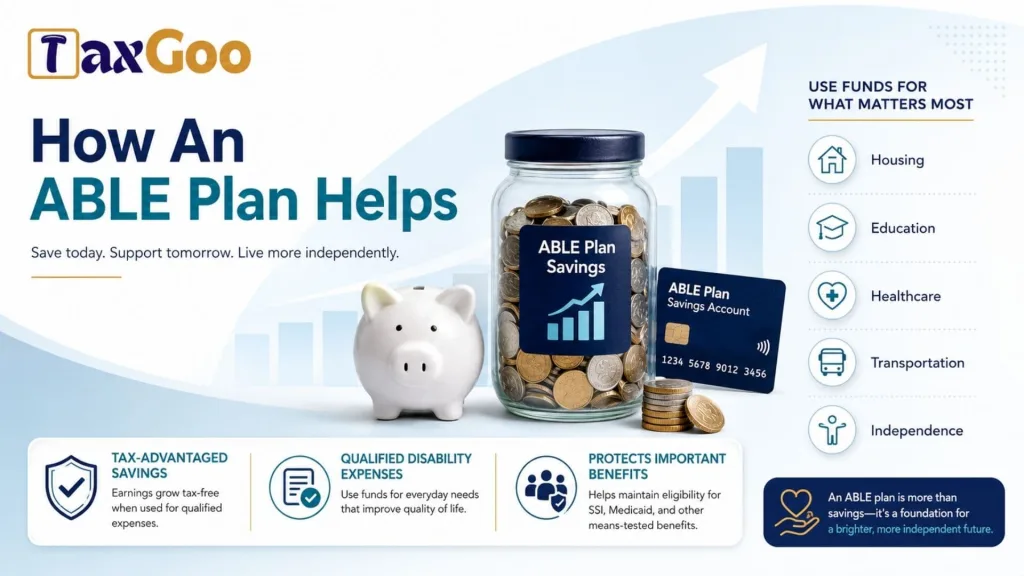
ABLE funds can be used for qualified disability expenses. These are expenses related to the account owner’s disability and connected to maintaining or improving health, independence, or quality of life. The IRS lists examples such as education, housing, transportation, employment training and support, assistive technology, personal support services, health, prevention and wellness, financial management, administrative services, legal fees, oversight and monitoring, funeral, and burial expenses.
This broad use is one reason ABLE plans are so practical. The money can help with everyday needs, not just medical bills. Still, account owners should keep receipts and records because withdrawals may need to be supported if questions come up later.
Tax Benefits Of An ABLE Plan
The tax benefit is simple but valuable. Contributions are not deductible for federal income tax purposes, but earnings can grow tax-free. Withdrawals, including earnings, are tax-free when the money is used for qualified disability expenses.
If money is withdrawn and not used for qualified disability expenses, part of the withdrawal may become taxable, and penalties may apply to the earnings portion. That is why ABLE funds should be used carefully and tracked clearly.
ABLE Plans And SSI Benefits
ABLE accounts are especially important for people who receive SSI because SSI has strict resource limits. The Social Security Administration says up to and including $100,000 in an ABLE account is disregarded for SSI purposes. Only the amount above $100,000 counts as a resource for SSI. If the extra amount causes the person to exceed the SSI resource limit, SSI payments can be suspended until the balance no longer causes the issue.
This does not mean every ABLE account should stay under $100,000 for every person. It means SSI recipients need to watch the $100,000 threshold carefully. People who do not receive SSI may have different planning concerns, including the state plan’s total account balance limit.
ABLE Contribution Limits
For 2026, the annual ABLE contribution limit is $20,000. This limit applies to total direct deposits from all sources, such as the account owner, family, friends, a special needs trust, or a 529 qualified tuition plan rollover.
Some working ABLE account owners may contribute more through ABLE to Work rules. In 2026, certain employed account owners may be able to contribute additional earned income above the standard $20,000 limit, subject to specific limits and retirement plan participation rules.
ABLE Plan Vs. Special Needs Trust
An ABLE plan and a special needs trust can both support a person with a disability, but they are not the same tool. An ABLE account is usually easier and less expensive to open, and it can be very useful for day-to-day spending. A special needs trust may be better for larger assets, inheritances, lawsuit settlements, or long-term planning that needs trustee control.
Many families use both. The trust may hold larger funds, while the ABLE account handles flexible spending for qualified disability expenses.
Possible Drawbacks To Know
ABLE plans have limits. There is only one account per eligible person, annual contributions are capped, investment options may be limited, and state plan rules can differ. Another important issue is Medicaid payback. After the account owner dies, qualified disability expenses, including funeral and burial expenses, are paid first, but Medicaid may seek reimbursement if the account owner received Medicaid services after opening the ABLE account. Some states handle this differently, so reviewing state rules matters.

FAQs
What Does ABLE Stand For?
ABLE stands for Achieving a Better Life Experience.
Is An ABLE Plan Tax-Free?
Withdrawals are tax-free when used for qualified disability expenses.
Who Can Contribute To An ABLE Account?
The account owner, family, friends, trusts, employers, and others may contribute within the annual limit.
Can An ABLE Account Affect SSI?
Yes. SSI generally disregards up to $100,000 in an ABLE account, but amounts above that can matter.
Can Someone Have More Than One ABLE Account?
No. An eligible individual may have only one ABLE account.