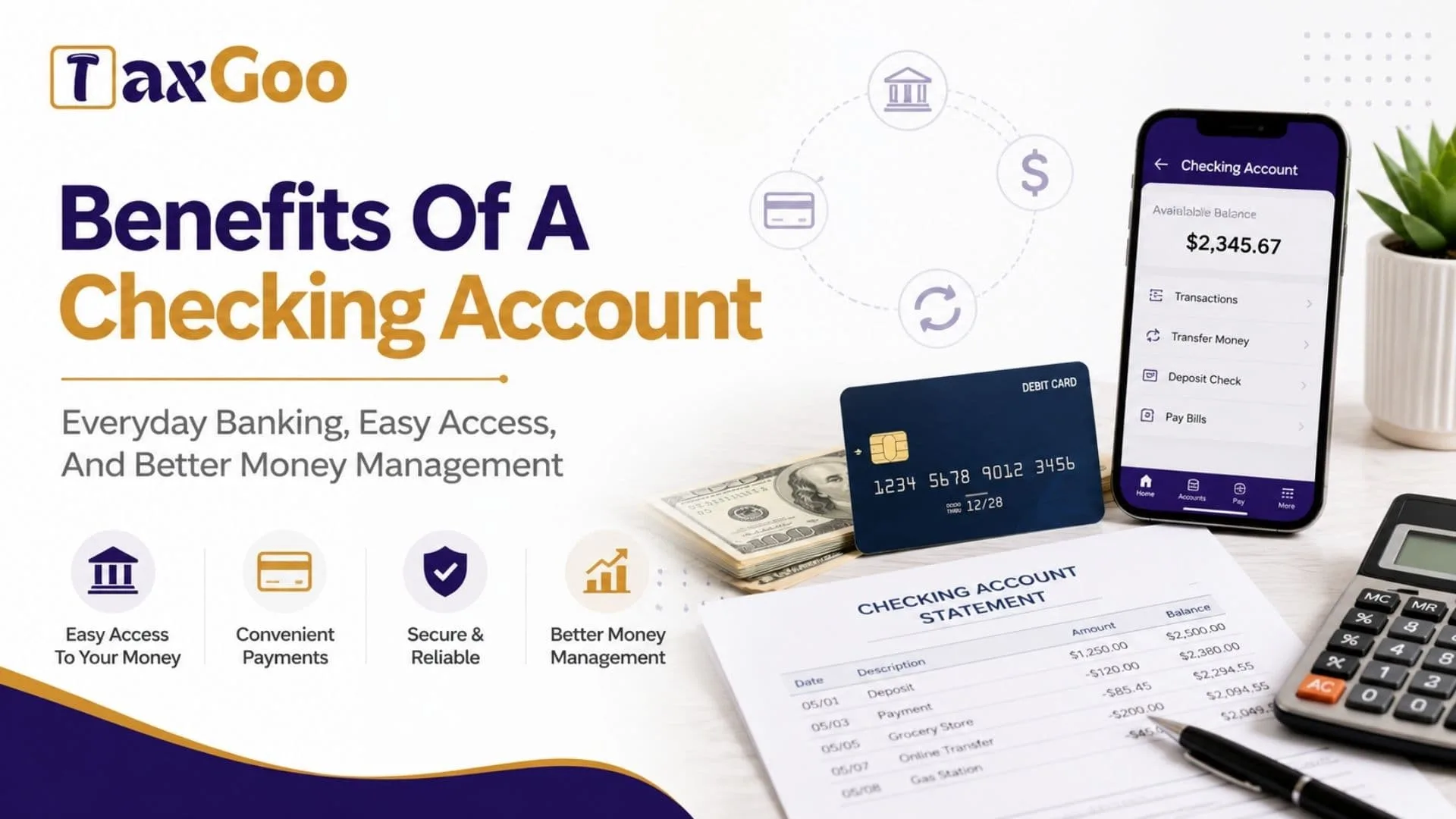
If you have ever wondered what is the benefit of a checking account, the simple answer is convenience, accessibility, and easier money management. A checking account gives you a central place to receive income, store money for everyday expenses, pay bills, make purchases with a debit card, withdraw cash from ATMs, transfer funds, and track your spending. Instead of carrying cash or dealing with paper checks for every purchase, you can manage much of your financial life through online banking or a mobile banking app. Checking accounts can also support direct deposit, automatic bill payments, debit card purchases, ATM withdrawals, and person-to-person transfers, depending on your financial institution. Consumer.gov notes that people commonly use checking accounts to keep money secure, pay with debit cards or checks, withdraw cash, and pay bills online. For many people, a checking account becomes the financial hub that connects their paycheck, monthly expenses, subscriptions, transfers, and daily purchases.
Easy Access To Your Money
One of the biggest benefits of a checking account is easy access to your money.
Unlike accounts designed mainly for long-term saving, checking accounts are generally built for regular transactions. You can usually access available funds using a debit card, ATM, online banking system, mobile app, check, or electronic payment.
A debit card allows you to spend money that is already available in your checking account instead of borrowing money as you would with a credit card.
That makes checking accounts useful for groceries, transportation, utilities, subscriptions, dining, shopping, and other everyday expenses.
Convenient Direct Deposit
A checking account can make receiving your paycheck much easier through direct deposit.
With direct deposit, an employer or another payment source electronically deposits money into your account. This eliminates the need to receive a paper paycheck and manually deposit or cash it.
Consumer.gov explains that some employers can deposit paychecks directly into a bank or credit union account.
Direct deposit can be especially helpful for people who want their income and everyday expenses managed through one account.
Simple Bill Payments
Checking accounts make it easier to pay recurring and one-time bills.
You may be able to pay rent, utilities, insurance, credit cards, phone bills, streaming subscriptions, and other expenses directly from your account.
Many companies also allow customers to authorize recurring electronic withdrawals from their checking accounts. The Consumer Financial Protection Bureau explains that automatic payments can be arranged by giving a company account or debit card information and authorizing recurring withdrawals.
Automatic payments can reduce the amount of time you spend manually paying the same bills each month.
Debit Card Convenience
A debit card connected to a checking account can replace cash for many everyday purchases.
You can typically use a debit card at stores, restaurants, gas stations, online retailers, and other businesses that accept the card network.
The purchase amount generally comes from money already held in your checking account.
This can make everyday spending convenient while allowing you to avoid carrying large amounts of cash.
Better Money Organization
A checking account can help you see where your money is going.
Instead of relying only on cash, your account creates a transaction history showing deposits, withdrawals, purchases, transfers, and payments.
Online and mobile banking tools can make it easier to review recent transactions and account balances. This record can be useful when creating a monthly budget, reviewing recurring subscriptions, or checking whether an expected payment has cleared.
Keeping income and expenses visible in one place can make financial planning easier.
Access To ATMs
Checking accounts commonly provide ATM access through a debit or ATM card.
Consumer.gov lists ATM withdrawals as one of the common reasons people open checking accounts.
This means you can access cash when you need it without visiting a physical bank branch.
However, ATM fees can vary depending on your bank and the machine you use, so reviewing your bank’s ATM network and fee policy can help you avoid unnecessary charges.
Protection For Eligible Deposits
Money held at an FDIC-insured bank can receive federal deposit insurance protection within applicable limits.
The FDIC states that checking accounts are among the deposit products covered by FDIC insurance. Standard coverage is generally $250,000 per depositor, per FDIC-insured bank, for each account ownership category.
Coverage rules can become more complicated when someone has multiple accounts, joint accounts, trusts, or other ownership arrangements.
Credit unions may have different federal insurance arrangements, so checking your institution’s coverage is important.
Easy Money Transfers
Checking accounts can make sending and receiving money more convenient.
Depending on your bank, you may be able to transfer money between your checking and savings accounts, send payments electronically, or use person-to-person payment services.
The CFPB notes that person-to-person payments can sometimes be initiated through online banking portals or mobile applications.
This can be useful when splitting bills, paying family members, moving money into savings, or managing accounts at different institutions.
Are There Any Disadvantages?
Checking accounts are convenient, but fees and overdrafts can reduce their value if you are not careful.
Some accounts may charge monthly maintenance fees, ATM fees, overdraft charges, or other costs. Fee structures vary between banks and account types.
An overdraft happens when you do not have enough money available to cover a transaction but the financial institution pays it anyway. Overdrafts can result from debit card purchases, checks, ATM transactions, automatic payments, and other withdrawals.
Before opening an account, review its fees, minimum balance requirements, ATM policies, and overdraft options.
Checking Account Vs Savings Account
A checking account is usually better suited for everyday spending, while a savings account is designed primarily for saving money.
Checking accounts commonly handle frequent purchases, bills, withdrawals, and deposits. Savings accounts are generally used for emergency funds, financial goals, or money you do not expect to spend every day.
Many people use both accounts together.
Income can enter the checking account, monthly expenses can leave from it, and extra money can be transferred into savings.

Frequently Asked Questions
What Is The Main Benefit Of A Checking Account?
The main benefit is convenient access to your money for everyday spending, payments, deposits, transfers, and withdrawals.
Is It Good To Keep Money In A Checking Account?
Yes, checking accounts are useful for money needed for regular expenses. Extra money intended for longer-term goals may be better suited to a savings account or another appropriate financial product.
Can I Get A Debit Card With A Checking Account?
Many checking accounts include a debit card that lets you spend money directly from your available account balance.
Is A Checking Account Safe?
Eligible checking deposits at an FDIC-insured bank are generally protected by federal deposit insurance within applicable coverage limits.