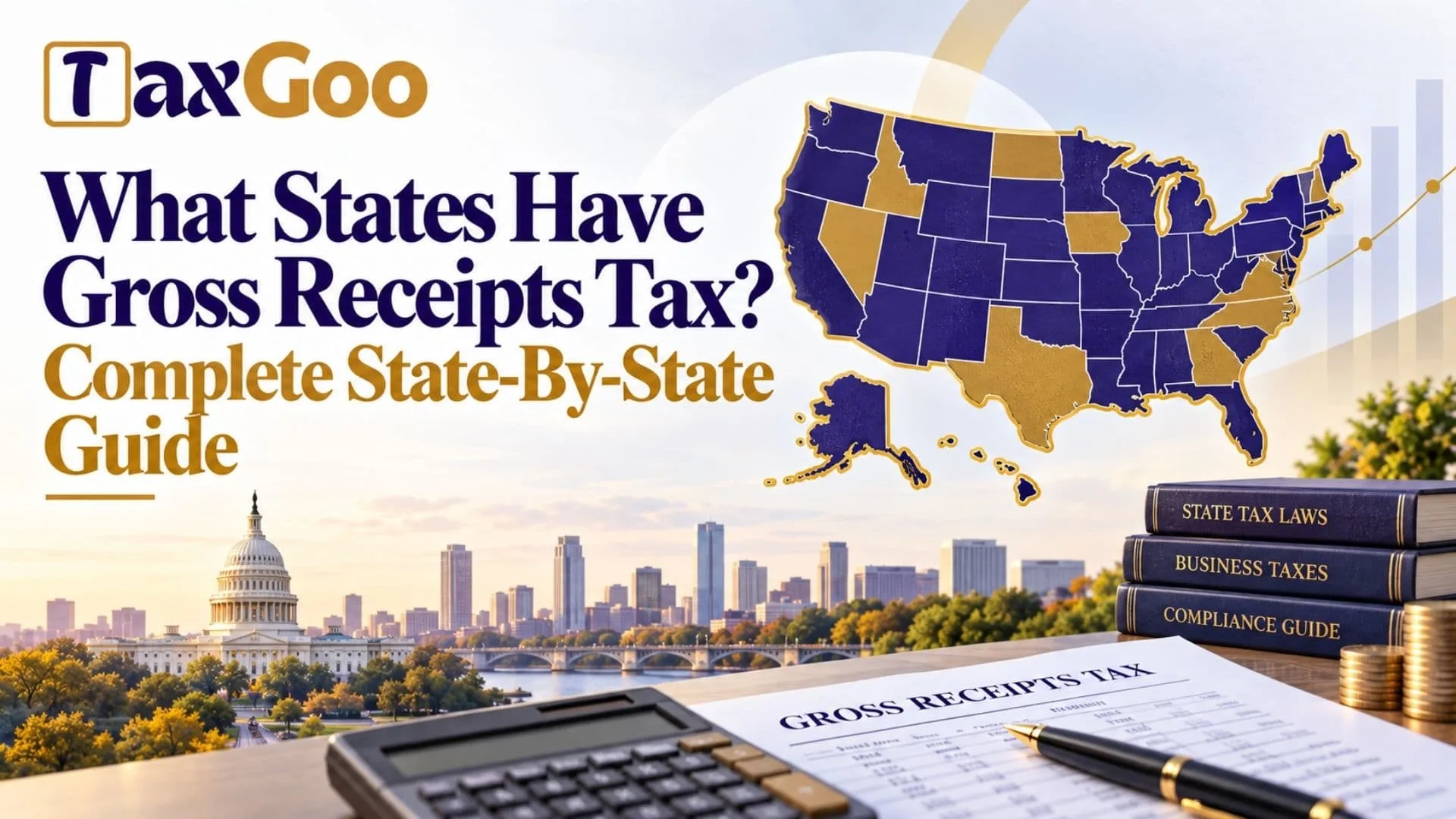
What States Have Gross Receipts Tax? Complete State-By-State Guide is a common question among business owners, investors, and taxpayers who want to understand state tax systems. A gross receipts tax is a type of business tax based on a company’s total revenue before expenses are deducted. Unlike traditional income taxes that apply to profits after costs are removed, gross receipts taxes are calculated on the full amount of money a business receives from sales or services. Several states use gross receipts taxes or similar business activity taxes as a source of government revenue. These taxes can affect businesses across industries, including retail, manufacturing, professional services, and technology. Understanding what states have gross receipts tax, how these systems work, and how they compare with other state taxes can help businesses plan expenses and understand their overall tax obligations.
What Is A Gross Receipts Tax?
A gross receipts tax is a tax placed on the total revenue a business earns from its activities. The tax applies before subtracting expenses such as employee wages, rent, supplies, or operating costs.
For example, if a company earns $1 million in sales but spends $800,000 on expenses, a gross receipts tax may apply to the full $1 million rather than the remaining profit.
This makes gross receipts taxes different from corporate income taxes, which generally apply to taxable profits after allowable deductions.
Because gross receipts taxes are based on total sales, businesses with lower profit margins may feel a greater impact compared with companies that have higher margins.
States That Have Gross Receipts Tax
Several states use gross receipts taxes or similar tax structures to generate revenue. The exact rules, tax rates, and industries covered vary by state.
New Mexico
New Mexico uses a gross receipts tax system that applies to many business activities, including sales of goods and services. The tax is an important source of state and local government revenue.
Businesses operating in New Mexico may need to collect and report gross receipts tax depending on their activities and location. Local governments can also add additional gross receipts tax rates.
Delaware
Delaware has a gross receipts tax that applies to businesses based on the total value of goods sold or services provided. The tax applies even when a business does not generate a profit.
Different industries may have different tax rates, depending on the type of business activity.
Washington
Washington State does not have a traditional corporate income tax, but it uses the Business and Occupation (B&O) tax, which works similarly to a gross receipts tax.
The B&O tax applies to business revenue rather than net income. Different classifications, such as retailing, wholesaling, and services, may have different rates.
Ohio
Ohio previously used a commercial activity tax (CAT), which is based on taxable gross receipts from business activities. The tax applies to businesses that meet certain revenue thresholds.
The system was designed as a business tax based on commercial activity rather than company profits.
Nevada
Nevada uses the Commerce Tax, which is based on a business’s gross revenue. The tax applies to businesses with revenue above certain levels.
Nevada does not have a traditional individual income tax, making business-related taxes an important source of state revenue.
States With Similar Business Revenue Taxes
Some states may not officially call their system a gross receipts tax but use similar approaches where businesses are taxed based on revenue rather than profit.
These taxes are sometimes designed as alternatives to corporate income taxes. They can provide more stable revenue because businesses may owe taxes even during periods of low profit.
Examples of business revenue-based taxes include:
- Washington’s Business and Occupation Tax
- Nevada’s Commerce Tax
- Ohio’s Commercial Activity Tax
- Texas Margin Tax, which has elements based on business revenue calculations
The rules for each tax vary, so businesses should review state-specific requirements.
Gross Receipts Tax Vs Sales Tax
Gross receipts taxes and sales taxes are often confused because both are connected to business transactions. However, they work differently.
A sales tax is usually collected from customers when they purchase goods or services. The business collects the tax and sends it to the government.
A gross receipts tax is generally paid by the business based on its revenue. It applies regardless of whether the company collects money separately from customers.
Because gross receipts taxes apply throughout the business process, they may sometimes create a “tax on a tax” effect when goods move through multiple stages of production.
How Gross Receipts Taxes Affect Businesses
Gross receipts taxes can have different effects depending on the industry. Businesses with high sales volume and low profit margins may experience a larger impact.
For example, wholesalers and retailers often operate with smaller profit margins compared with some service businesses. A tax based on revenue can influence pricing decisions and business strategies.
Companies may consider gross receipts taxes when deciding where to operate, how to structure transactions, and how to estimate operating costs.
Why States Use Gross Receipts Taxes
States use gross receipts taxes because they can provide reliable revenue. Since the tax is based on revenue rather than profit, collections may remain more consistent even when businesses experience changes in profitability.
These taxes can also allow states to generate revenue without relying only on individual income taxes or traditional corporate taxes.
However, policymakers often debate the economic effects of gross receipts taxes, including how they influence business costs, investment decisions, and consumer prices.
Understanding State Tax Differences
State tax systems vary widely across the United States. Some states rely heavily on income taxes, while others use sales taxes, property taxes, or business activity taxes.
For businesses, understanding state tax rules is important when evaluating operating costs and financial planning.
Knowing what states have gross receipts tax and how these taxes work can help companies make informed decisions about locations, pricing, and compliance requirements.
FAQs
What States Have Gross Receipts Tax?
States including New Mexico, Delaware, Washington, Ohio, and Nevada use gross receipts taxes or similar business revenue-based taxes.
How Is Gross Receipts Tax Different From Income Tax?
Gross receipts tax applies to total business revenue, while income tax generally applies to profit after deductions.
Do Gross Receipts Taxes Apply To All Businesses?
The rules vary by state. Some businesses may qualify for exemptions or different tax rates depending on their industry and revenue.
Is Gross Receipts Tax Paid By Customers?
Generally, gross receipts tax is paid by businesses, although companies may adjust prices to account for tax costs.