Wisconsin Income Tax Brackets are how the state calculates what portion of your income gets taxed — and it’s not nearly as scary as it sounds. If you’ve ever Googled “Wisconsin income tax rates,” “Wisconsin state tax calculator,” or “how Wisconsin taxes your income,” you’re looking at the backbone of how your paycheck, refund, or yearly bill is determined. Unlike a flat tax, Wisconsin uses a progressive income tax system, meaning your income is taxed in layers based on set income ranges. It’s not one big hit — think of it as climbing a staircase, where each step has a slightly higher rate but only applies to the dollars on that specific step. In this article, you’ll learn exactly how these brackets work, see the current Wisconsin tax bracket table for 2026, and understand how deductions, credits, and filing statuses can shift where you land. Whether you’re planning next year’s withholding, estimating your Wisconsin tax refund, or comparing your total tax rate to last year’s, this guide will help you confidently decode the brackets that shape your financial picture.
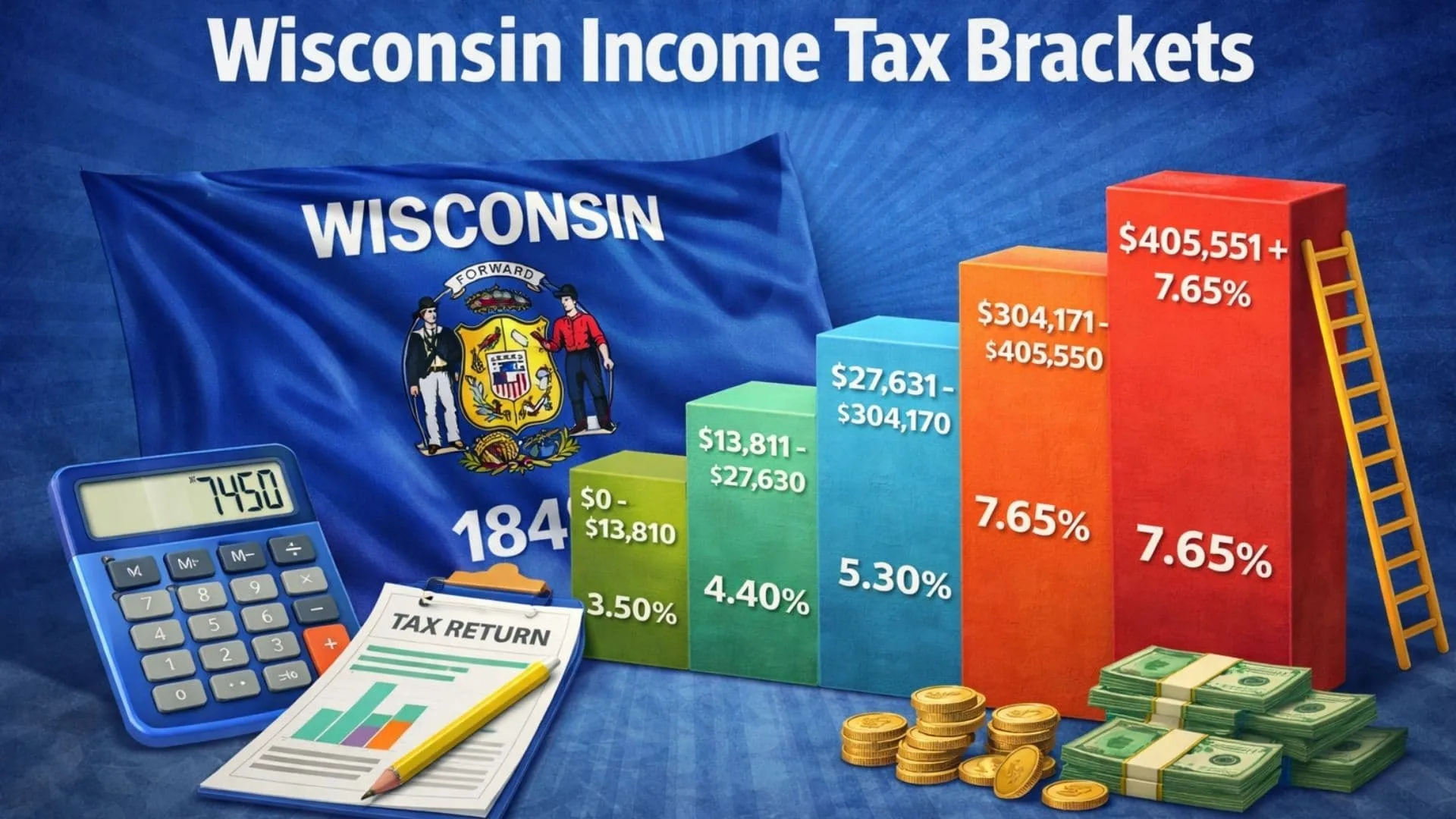
Wisconsin Income Tax Brackets Table 2026
These are the Wisconsin state income tax brackets for 2026, applied to taxable income after deductions:
| Filing Status | Income Range | Tax Rate |
|---|---|---|
| Single | Up to $13,810 | 3.50% |
| $13,811 – $27,630 | 4.40% | |
| $27,631 – $304,170 | 5.30% | |
| Over $304,170 | 7.65% | |
| Married Filing Jointly | Up to $18,420 | 3.50% |
| $18,421 – $36,840 | 4.40% | |
| $36,841 – $405,550 | 5.30% | |
| Over $405,550 | 7.65% | |
| Married Filing Separately | Up to $9,210 | 3.50% |
| $9,211 – $18,420 | 4.40% | |
| $18,421 – $202,775 | 5.30% | |
| Over $202,775 | 7.65% | |
| Head of Household | Up to $13,810 | 3.50% |
| $13,811 – $27,630 | 4.40% | |
| $27,631 – $304,170 | 5.30% | |
| Over $304,170 | 7.65% |
(Source: Wisconsin Department of Revenue, 2025 tax year)

How Wisconsin’s Progressive Tax System Works
Wisconsin’s state income tax uses marginal rates, meaning each portion (“bracket slice”) of your income is taxed at its corresponding rate, rather than one flat percentage for your entire salary. Only the income that falls into each bracket range is taxed at that rate — not your total income.
Example:
If you’re a single filer earning $30,000:
- The first $13,810 is taxed at 3.5%
- The next $13,820 is taxed at 4.4%
- The remaining $2,370 is taxed at 5.3%
Your marginal rate (top rate your income reaches) is 5.3%, but your effective rate (average tax rate) is lower since much of your income is taxed at the smaller rates.
Filing Status Matters — Here’s Why
Your filing status determines which income ranges apply to you. A married couple filing jointly can earn more before hitting each higher bracket, whereas someone filing single moves up the bracket steps more quickly. This adjustment helps Wisconsin account for combined household income levels in its progressive system.
Marginal Rate Vs Effective Rate
Many taxpayers confuse their marginal rate with their overall tax percentage. Here’s the difference in a nutshell:
- Marginal Rate = the rate that applies to your last dollar of income.
- Effective Rate = the overall average rate you pay on your total income.
Think of it this way: if Wisconsin’s tax system were a set of steps, the marginal rate is the last step you stand on, and your effective rate is the slope of the whole staircase.
What Counts As Wisconsin Taxable Income
Wisconsin starts with your federal adjusted gross income (AGI) and then applies state-specific adjustments. You’ll include income from wages, self-employment, certain retirement plans, and investments, but there are modifications for things like Social Security, military pay, and municipal bond income.
Key inclusions:
- Wages and salaries (W‑2)
- Interest, dividends, and capital gains
- Self-employment or business income
- Some pension and retirement income
Common adjustments:
- Federal-to-state income add-backs or subtractions
- Wisconsin-specific credits or exemptions
Standard Deduction Vs Itemized Deductions
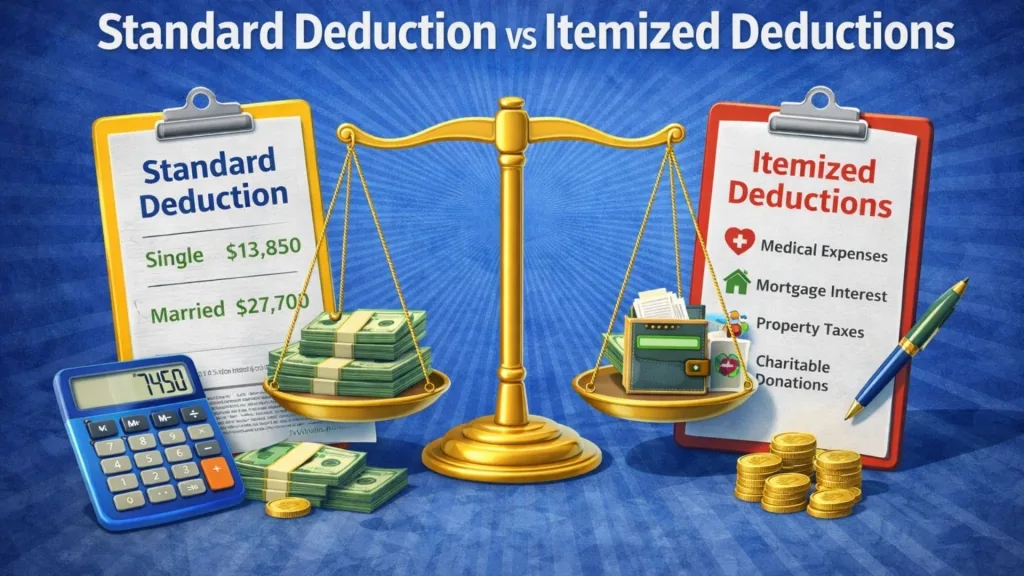
Deductions lower your taxable income, which can bump part of your income into lower brackets. Wisconsin lets you choose between the standard deduction (a fixed amount based on income and filing status) or itemized deductions if your total eligible expenses exceed that standard amount.
For most filers, the standard deduction is simpler — and Wisconsin automatically phases it out for higher-income levels.
Wisconsin Tax Credits — The Real Game-Changer
Tax credits directly reduce the amount of tax you owe, sometimes even resulting in a refund beyond what you paid in.
Common Wisconsin credits include:
- Homestead credit
- Earned income credit (EIC)
- School property tax or rent credits
- Child and dependent care credit
While brackets handle how much tax gets calculated, credits are where your real savings often appear.
How To Estimate Your Wisconsin Income Tax
Here’s a simplified approach:
- Choose your filing status
- Estimate your total income
- Subtract deductions → get taxable income
- Apply the Wisconsin tax rates using the table
- Subtract any applicable credits
- Compare your final tax with your Wisconsin paycheck withholding
If you’re self-employed, remember to send estimated quarterly payments to avoid penalties.
Wisconsin Withholding: Aligning Paychecks and Reality
Your paycheck withholding isn’t always a perfect match for your actual tax bill. Changes in your income, job, or personal situation (like marriage or dependents) can throw off your balance. If you consistently owe at tax time, consider filing an updated WT‑4 form with your employer to adjust your Wisconsin withholding.
Simple Ways To Lower Your Wisconsin Taxable Income
- Contribute to eligible retirement accounts or HSAs
- Track legitimate self-employment expenses
- Plan large deductions (like charitable donations) in higher-tax years
- Verify withholding accuracy at least once a year
These small steps can help you stay comfortably within lower Wisconsin income tax brackets — and reduce surprises come April.
Stay Updated Each Year
Tax brackets and deduction amounts shift annually due to inflation adjustments and legislative changes. Make sure to check the Wisconsin Department of Revenue’s latest tables early each year before making financial or withholding decisions.

FAQs
What Are Wisconsin Income Tax Brackets?
They’re the income ranges that determine how much of your taxable income is taxed at each Wisconsin state rate.
What’s The Top Wisconsin Income Tax Rate For 2025?
7.65%, which applies only to income above the highest bracket threshold for your filing status.
Do Wisconsin Tax Brackets Change Every Year?
Yes, the income ranges are adjusted periodically, often for inflation. Always verify the latest brackets before filing.