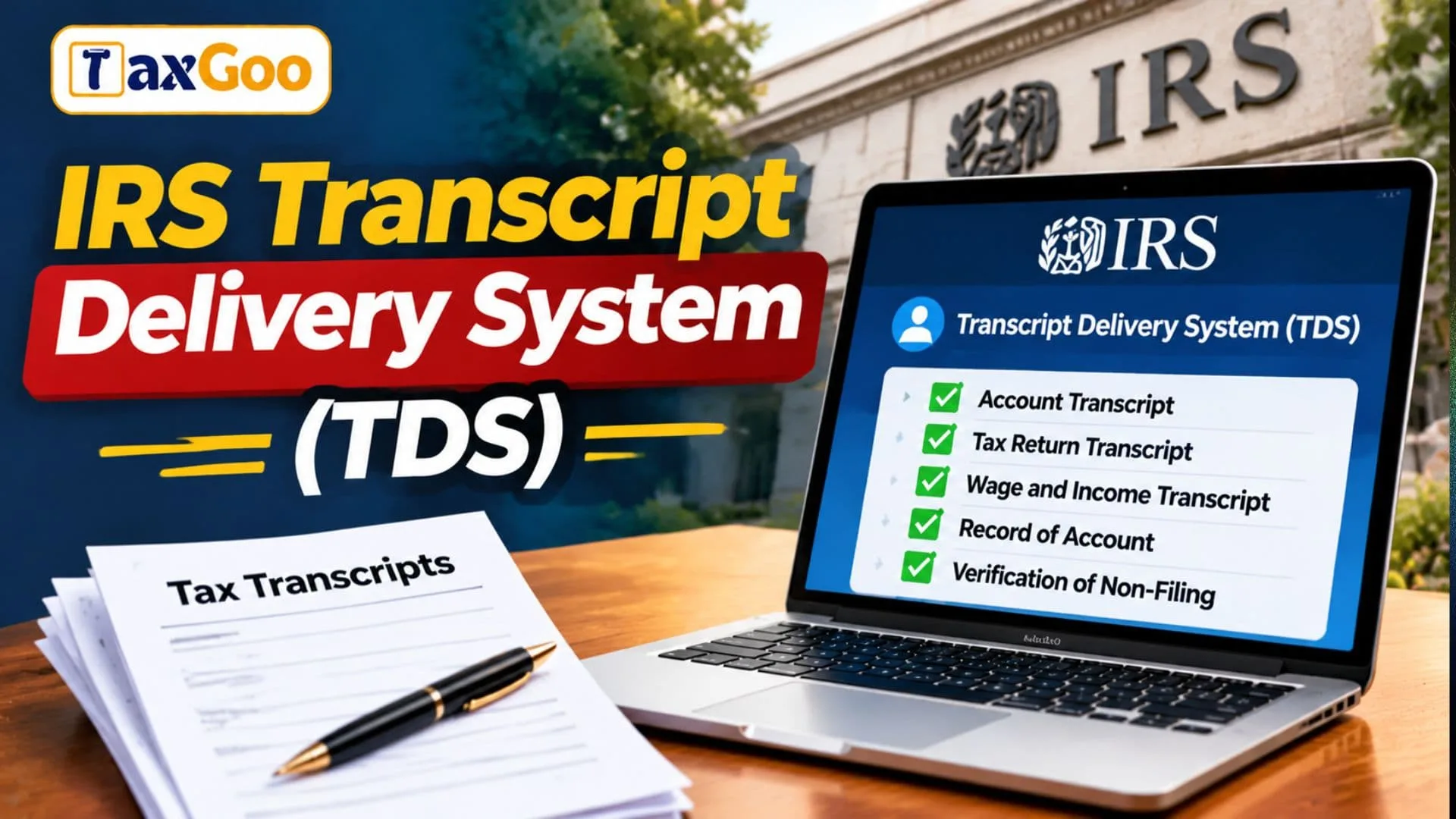
The IRS Transcript Delivery System (TDS) is an online service designed to help eligible tax professionals and authorized representatives retrieve taxpayer information directly from the Internal Revenue Service. It provides access to important tax records, including account transcripts, tax return transcripts, wage and income documents, and verification of non-filing letters. Whether you are a certified public accountant, enrolled agent, electronic return originator, or reporting agent, understanding how the IRS Transcript Delivery System works can make managing client tax information much easier. The platform is part of the IRS e-Services system and allows approved users to request specific taxpayer records through a secure online environment. However, TDS is not a public service that every taxpayer can access. Users must meet IRS eligibility requirements, complete the appropriate registration process, and have valid taxpayer authorization on file before retrieving client information. Depending on the user’s professional status, access may require an approved IRS e-file application, a valid Form 2848 Power of Attorney, or Form 8821 Tax Information Authorization. Understanding these requirements, available transcript types, and access procedures can help tax professionals retrieve the information they need while maintaining taxpayer privacy and complying with IRS authorization rules.
Who Can Use The IRS Transcript Delivery System?
The IRS Transcript Delivery System is primarily intended for approved tax professionals and other authorized organizations.
Eligible users generally include:
- Electronic Return Originators (EROs): Approved tax professionals who participate in the IRS electronic filing program.
- Circular 230 Practitioners: Attorneys, certified public accountants, and enrolled agents who meet IRS application and approval requirements.
- Reporting Agents: Authorized professionals who manage certain tax reporting responsibilities for clients.
- Certain Government Agencies: Approved state and local government agencies with access to applicable transcript services.
Each category has different eligibility and authorization requirements. For example, EROs generally must have successfully submitted at least five accepted electronic tax returns during the current or previous filing year. Circular 230 practitioners must complete the required application and suitability process.
TDS is not available to the general public. Individual taxpayers can use the IRS Individual Online Account or Get Transcript service instead. <Cite refs={[“turn515471search0″,”turn515471search5″,”turn515471search13”]}/>
What Information Can You Get Through TDS?
The IRS TDS platform provides access to several types of taxpayer records.
| Transcript Type | What It Shows |
|---|---|
| Account Transcript | Payments, adjustments, penalties, and account activity |
| Tax Return Transcript | Most line items from an originally filed tax return |
| Wage And Income Transcript | Information reported on forms such as W-2s and 1099s |
| Record Of Account | Combines return and account transcript information |
| Verification Of Non-Filing Letter | Confirms that the IRS has no processed tax return on record for the requested year |
These documents can help tax professionals investigate account discrepancies, verify reported income, prepare amended returns, and assist clients with tax-related questions. <Cite refs={[“turn515471search0″,”turn515471search11”]}/>
How To Access The IRS Transcript Delivery System
Tax professionals who meet the eligibility requirements can access TDS through the IRS e-Services portal.
Follow these steps:
- Visit the IRS e-Services website.
- Sign in using your registered Login.gov or ID.me credentials.
- Open the Transcript Delivery System (TDS) section.
- Select the option to access TDS.
- Choose the appropriate organization associated with your approved application.
- Enter the required taxpayer identification and tax information.
- Select the transcript type you need.
- Submit your request.
- Review the available transcript information or select an appropriate delivery option.
The available features depend on your authorization, user role, and the type of transcript requested. The IRS has also introduced an updated TDS interface with improved sorting functionality. <Cite refs={[“turn515471search0″,”turn515471search3”]}/>
IRS Authorization Requirements: Form 2848 And Form 8821
Having an approved TDS account does not automatically give you permission to view every client’s tax records.
The IRS requires appropriate taxpayer authorization before releasing confidential information.
Two important forms are:
Form 2848, Power Of Attorney And Declaration Of Representative
This form allows an eligible representative to communicate with the IRS and perform authorized activities on behalf of a taxpayer for specified tax matters and periods.
Form 8821, Tax Information Authorization
This form allows an authorized individual or organization to inspect or receive confidential tax information. It does not provide the same representation authority as Form 2848.
The authorization must cover the relevant taxpayer, tax matters, forms, and tax periods. <Cite refs={[“turn515471search6″,”turn515471search12”]}/>
What Is The IRS Secure Object Repository (SOR)?
The Secure Object Repository (SOR) is an electronic mailbox available through IRS e-Services.
Authorized tax professionals can use it to retrieve certain requested transcripts and other IRS documents securely.
This is particularly useful when transcripts need to be delivered electronically rather than through traditional mail.
Reporting agents can also use TDS to request client transcripts and retrieve available reports through their secure mailbox. <Cite refs={[“turn515471search0″,”turn515471search10”]}/>
Common IRS TDS Access Problems And Solutions
Tax professionals may occasionally encounter problems when trying to access TDS or retrieve client information.
Here are some common issues:
- Login Problems: Verify your Login.gov or ID.me credentials and complete any required identity verification.
- Missing Transcript Information: Confirm that the correct taxpayer, tax form, and tax period have been selected.
- Authorization Not Found: Check whether Form 2848 or Form 8821 has been properly submitted and recorded.
- Access Denied: Review your e-file application, organization permissions, and delegated user access.
- Transcript Request Rejected: Verify that the requested transcript is available and that the authorization covers the requested information.
For additional assistance, contact the IRS e-Services Help Desk at 866-255-0654. <Cite refs={[“turn515471search3″,”turn515471search5″,”turn515471search12”]}/>
IRS Transcript Delivery System Vs. Get Transcript
Although both services provide access to IRS tax records, they serve different users.
| Feature | IRS TDS | Get Transcript |
|---|---|---|
| Primary Users | Eligible tax professionals | Individual taxpayers |
| Login | IRS e-Services | IRS Individual Online Account |
| Client Authorization | Required | Not applicable when accessing your own records |
| Business Tax Records | Available for authorized clients | Limited business access through Business Tax Account |
| Main Purpose | Professional transcript retrieval | Personal tax record access |
If you simply want to check your own tax return information, the IRS Get Transcript service is generally the more appropriate option.
Final Thoughts
The IRS Transcript Delivery System is an important tool for tax professionals who need secure access to client tax information. It provides several transcript options, supports authorized client record retrieval, and integrates with the IRS e-Services platform. However, successful access depends on meeting eligibility requirements, completing registration, and maintaining valid taxpayer authorization. By understanding how TDS works and how to resolve common access problems, tax professionals can manage transcript requests more efficiently and provide better support to their clients.
Frequently Asked Questions
What Does IRS TDS Stand For?
IRS TDS stands for Transcript Delivery System, an online service for eligible users to retrieve taxpayer transcripts.
Is The IRS Transcript Delivery System Free?
The IRS does not charge a separate fee for eligible tax professionals to access TDS. Standard internet and related service costs may apply.
Can Individuals Access IRS TDS?
No. TDS is not available to the general public. Individuals can use the IRS Individual Online Account or Get Transcript service.
Which Forms Are Required For IRS TDS?
Generally, Form 2848 or Form 8821 must be properly executed and on file for authorized client transcript requests.
What Is The Difference Between Form 2848 And Form 8821?
Form 2848 grants eligible representatives authority to represent taxpayers before the IRS. Form 8821 authorizes access to specified confidential tax information without granting representation authority.
How Do I Contact IRS TDS Support?
Contact the IRS e-Services Help Desk at 866-255-0654 for assistance with registration and access problems.