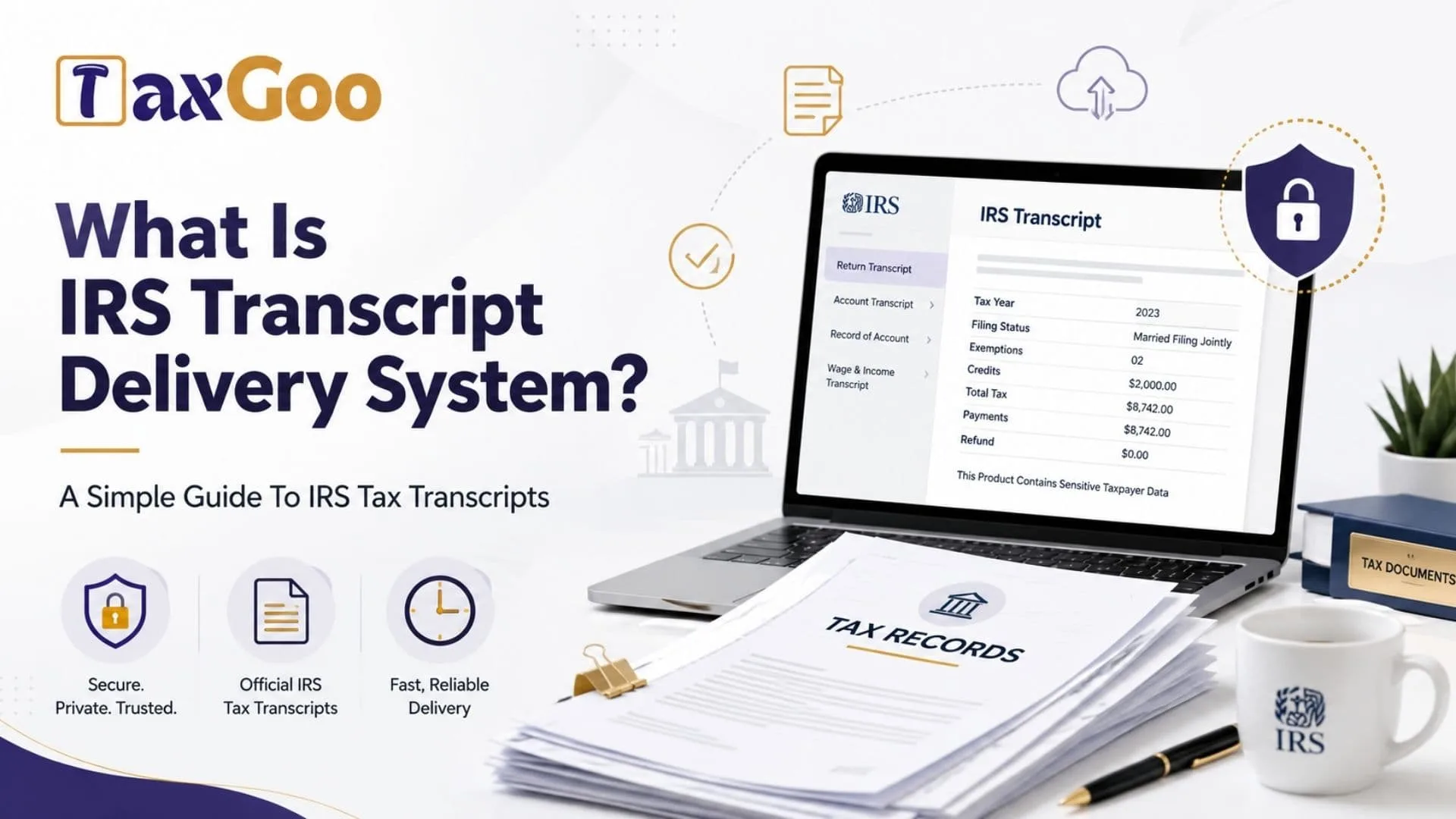
What Is IRS Transcript Delivery System? The IRS Transcript Delivery System, commonly called TDS, is a secure online service within IRS e-Services that allows eligible tax professionals to request and review tax information for authorized clients. Through this IRS transcript service, approved users can access tax return transcripts, tax account transcripts, wage and income transcripts, records of account, and verification of non-filing letters. These records can help with tax preparation, prior-year filings, income verification, IRS notice responses, account research, and tax resolution. TDS is especially useful when a client has lost documents or has an incomplete tax file because it shows information recorded in IRS systems. However, access is controlled. The practitioner must meet IRS eligibility requirements, use secure login credentials, and usually have a valid taxpayer authorization covering the correct tax form, matter, and period.
What Does The System Do?
TDS gives qualified professionals a quicker way to view a client’s return and account information during a secure online session. It is a professional service, not the regular transcript portal for taxpayers. People seeking their own records generally use an IRS Online Account, Get Transcript Online, or Get Transcript by Mail.
A practitioner may use TDS to confirm whether a return was processed, review payments, identify penalties or adjustments, check reported income documents, research a balance, or verify that the IRS has no record of a filed return.
Who Can Use TDS?
Access is generally available to eligible Electronic Return Originators, Circular 230 practitioners, and qualifying reporting agents through IRS e-Services. Circular 230 practitioners include attorneys, certified public accountants, enrolled agents, enrolled actuaries, and enrolled retirement plan agents.
Professional credentials alone do not permit access to any taxpayer’s records. A completed Form 2848, Power of Attorney and Declaration of Representative, or Form 8821, Tax Information Authorization, must generally be on file. Reporting agents normally use Form 8655, Reporting Agent Authorization.
Which Transcripts Are Available?
An account transcript shows payments, adjustments, penalties, interest, and processing transactions.
A tax return transcript shows most line items from the originally filed return.
A record of account combines information from the return transcript and account transcript.
A wage and income transcript contains information reported on forms such as W-2, 1099, and 1098.
A verification of non-filing letter states that the IRS has no record of a processed return for the requested year as of the request date.
A transcript is not a photocopy of the original return. It is a formatted record of information held by the IRS. This matters when a lender, court, or agency requests an exact copy of the filed return.
How Does The Request Process Work?
An eligible user signs in through IRS e-Services, opens TDS, selects the proper organization, enters the taxpayer and tax-period details, chooses a transcript type, and submits the request. When the information and authorization match IRS records, the transcript can often be retrieved through the secure system.
If the request fails, the practitioner should confirm that the authorization covers the correct taxpayer, form, year, and tax matter. A newly submitted Form 2848 or Form 8821 may also need to be processed first. Tax Pro Account offers real-time processing for certain eligible authorization requests involving individual taxpayers.
Why Is TDS Useful?
The main benefits are speed, accuracy, and convenience. A tax professional does not have to rely entirely on a client’s memory or incomplete records. TDS can help when preparing an unfiled return, answering an IRS letter, checking estimated payments, reviewing reported income, or investigating an unexpected balance.
It can also reveal differences between the client’s documents and IRS records, such as a missing information return, a payment applied to another period, an adjustment made after filing, or a return that has not posted.
Is TDS Secure?
TDS uses controlled access, identity verification, professional eligibility, secure sign-in, and taxpayer authorization. Some transcript data is masked to reduce exposure, while unmasked Wage and Income transcripts may be available in limited situations when needed to prepare and file a federal tax return.
Tax professionals should still store downloaded files securely and avoid sending transcripts through unprotected communication channels.
TDS Compared With Get Transcript
TDS is mainly designed for authorized tax professionals requesting records for clients. Get Transcript and IRS Online Account services are designed for taxpayers accessing their own information.
A client’s verbal permission is not enough for professional access. The required authorization must be submitted and recorded before protected account information can be retrieved.
Final Thoughts
The IRS Transcript Delivery System is a valuable tool for qualified professionals who need timely access to client tax records. With the correct authorization in place, it can support tax preparation, account research, income verification, notice response, and tax resolution.
The key is choosing the right transcript. An account transcript explains account activity, a return transcript shows filed return details, and a wage and income transcript helps identify information reported by employers and other payers.

Frequently Asked Questions
Can Taxpayers Use TDS Directly?
No. TDS is mainly for eligible tax professionals and reporting agents. Taxpayers can use IRS Online Account or Get Transcript for their own records.
Is Form 2848 Always Required?
No. Form 2848 grants representation authority. Form 8821 can authorize access to tax information without granting representation authority.
Is A Transcript The Same As A Tax Return Copy?
No. A transcript summarizes information in IRS records. An exact return copy must be requested through a separate process.