
Phone Accessories Tax Deductions can help eligible U.S. freelancers, independent contractors, and business owners lower their taxable business income when accessories are purchased for legitimate work needs. If you use a phone to schedule clients, answer customer questions, create content, manage deliveries, record expenses, or run your business on the go, items such as chargers, protective cases, wireless earbuds, car mounts, tripods, microphones, and power banks may qualify as business expenses. The key is whether the cost is ordinary and necessary for your work, how much it is used for business, and whether you can document the purchase. Here is how to approach phone accessory tax deductions without turning tax season into a tangled charging cable.
Which Phone Accessories May Be Deductible?
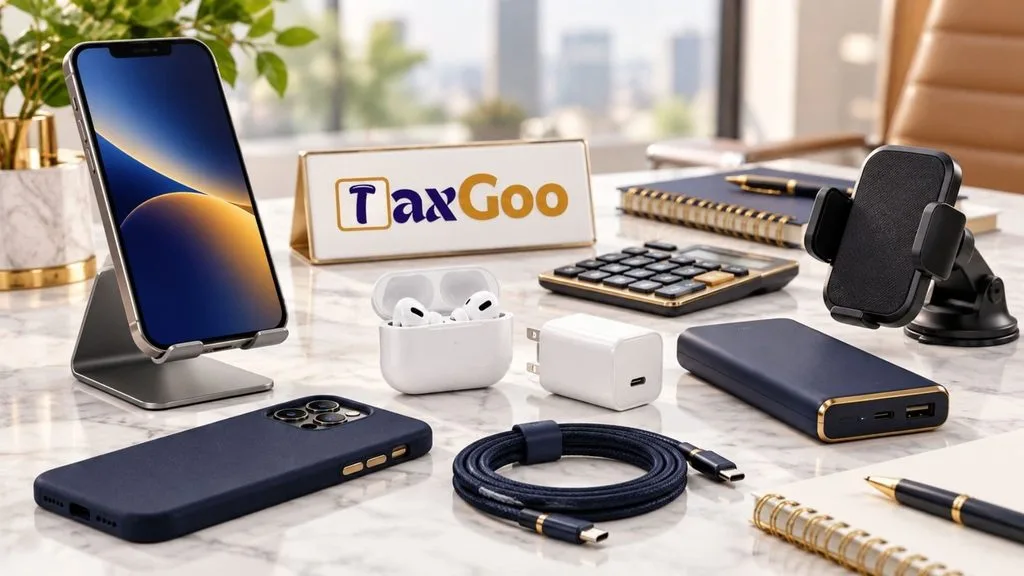
A phone accessory may be deductible when it is common and helpful for your type of business. A freelance photographer might use a phone tripod and external microphone to film client content, while a real estate agent may need a car mount and reliable charging equipment to navigate between showings and respond to leads. A consultant who spends hours on client calls could have a business reason to buy a headset or wireless earbuds. Other examples include charging cables, wall adapters, portable batteries, phone stands, screen protectors, and work-related docking accessories.
These are examples, not automatic write-offs. The IRS generally requires a business expense to be ordinary and necessary, meaning common and accepted in your field and helpful for your work. An accessory bought mainly for personal entertainment or family use does not become deductible simply because you sometimes check work messages on your phone. See the IRS guide to small-business expenses for more information.
Business Use Matters More Than The Receipt
If you use an accessory for both business and personal activities, generally deduct only the business portion. Say you buy an $80 power bank and reasonably estimate that 75% of its use supports your freelance work. If the expense otherwise qualifies, the business portion would be $60, not the full $80. Use a reasonable, consistent method for estimating business use and be prepared to explain it.
Accessories used only for business may qualify for a full deduction, subject to applicable tax rules. For items that last beyond the year of purchase, such as higher-cost recording or mounting equipment, the tax treatment may depend on whether the item is treated as a current expense or equipment that must be depreciated. Some property may qualify for an immediate-expensing option, depending on the facts and the rules for that tax year.
Who Can Claim Phone Accessory Tax Deductions?
Self-employed people, sole proprietors, and independent contractors can generally deduct qualifying ordinary and necessary expenses connected to their business. A freelancer who buys a microphone for paid video work or a delivery contractor who buys a phone mount for work routes may be able to report the business cost with other eligible expenses, often on Schedule C for a sole proprietorship.
W-2 employees face different federal rules. Most employees cannot deduct unreimbursed job expenses on their federal income tax return under current law, even when an accessory is required for work. Limited exceptions apply to certain eligible worker categories. If you are an employee, check your employer’s reimbursement policy and ask a qualified tax professional whether an exception applies. State tax treatment can differ from federal treatment. The IRS instructions for Form 2106 explain the rules for eligible employee business expenses.
Keep Receipts And A Clear Paper Trail
Good records make a deduction easier to support. Save the receipt or invoice, purchase date, item description, amount paid, and a short note explaining the business purpose. For mixed-use accessories, record how you calculated the business-use percentage. A note such as “wireless microphone used to record paid client videos” is more useful than “phone stuff.”
A dedicated business card or account can help separate work purchases from personal spending, but it does not replace the need to document each expense. Store digital receipts in a folder by tax year and update your bookkeeping regularly instead of trying to reconstruct every purchase in April. The IRS recommends keeping supporting documents that substantiate business expenses and the amounts reported on a return. Its recordkeeping guide for small businesses offers additional details.
How To Report The Expense
If you are self-employed, record eligible accessory purchases in your bookkeeping and report them in the appropriate expense category on your business tax return. The right category can depend on the item and how it is treated for tax purposes. Do not deduct the same cost twice, and do not claim an amount that your employer or another party has already reimbursed.
When an item may count as equipment rather than a small current expense, confirm whether depreciation or an available expensing rule applies. If the purchase is expensive, used across multiple activities, or part of a larger equipment setup, professional tax advice can help you classify it correctly. The goal is to claim the deduction you are entitled to, not to stretch a personal purchase into a business expense.
Common Mistakes To Avoid
The biggest mistake is assuming every accessory used near a work phone is deductible. Personal-use costs are generally not deductible, and only the eligible business share of a mixed-use item should be claimed. Another mistake is throwing away receipts or failing to explain why the item supports the business. Finally, do not confuse a tax deduction with a dollar-for-dollar refund. A deduction reduces taxable income, so its value depends on your tax situation.
A Simple Rule Of Thumb
Before claiming phone accessory tax deductions, ask three questions: Is the item helpful and appropriate for my business? Can I show how much of its use is business-related? Do I have records to support the amount and purpose? If the answer is yes, the purchase may qualify, subject to the rules that apply to your business and tax year. When in doubt, check current IRS guidance or consult a tax professional.
Frequently Asked Questions
Can I Deduct A Phone Case Used For Work?
Possibly. If you are self-employed, the case must qualify as an ordinary and necessary business expense. Generally, only the business-use portion is deductible.
Can W-2 Employees Deduct Phone Accessories?
Usually not for unreimbursed job expenses on a federal return. Limited exceptions may apply, so check your eligibility and employer reimbursement options.