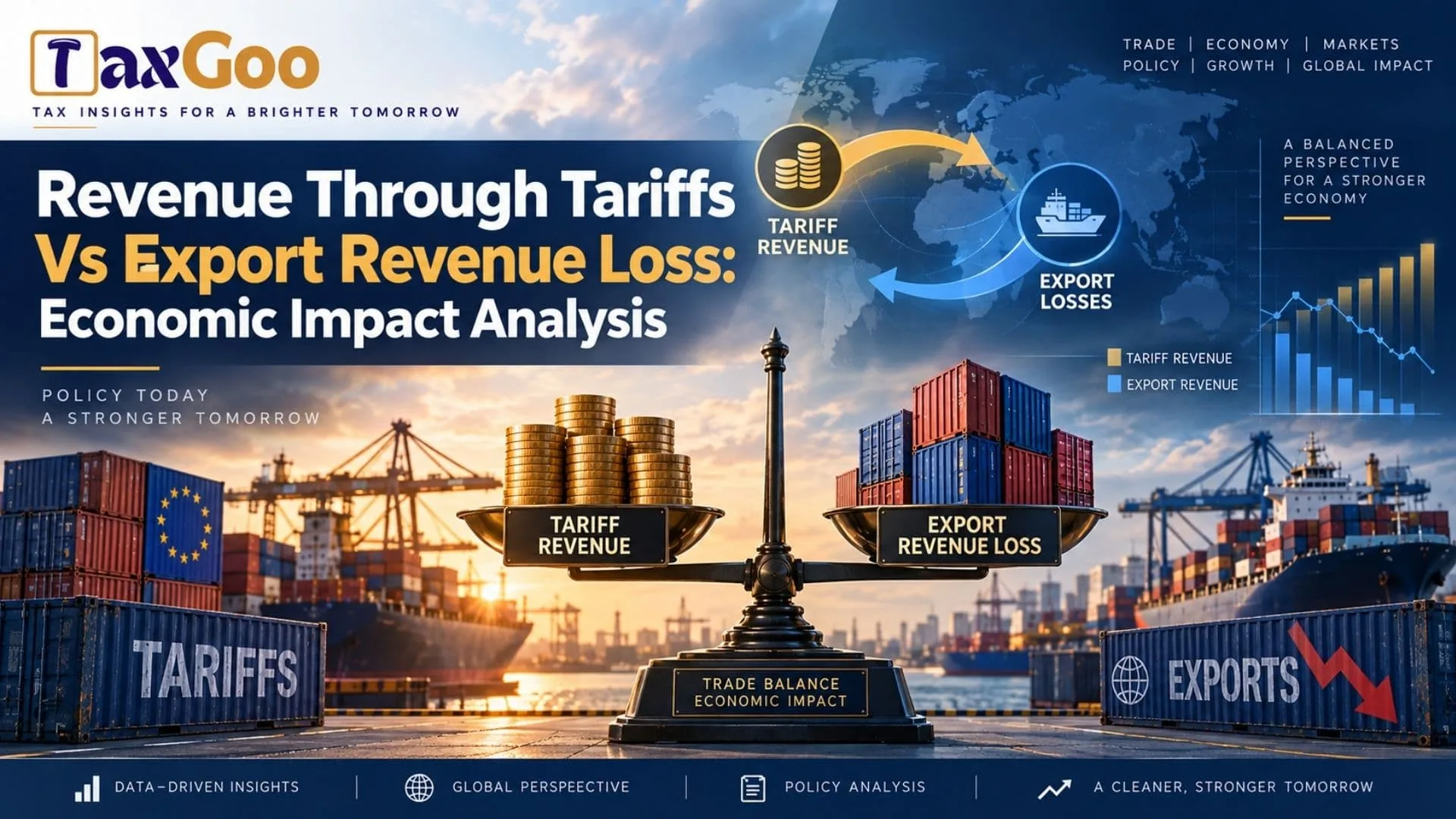
Revenue Through Tariffs Vs Export Revenue Loss: Economic Impact Analysis explores the complex relationship between tariff income, international trade, and the economic consequences of changing trade policies. Tariffs are taxes placed on imported goods, and governments often use them to generate revenue, protect domestic industries, or influence trade relationships. However, tariffs can also affect exporters, consumers, businesses, and global supply chains. When one country increases tariffs, trading partners may respond with their own measures, potentially reducing demand for exported products and creating export revenue losses. Understanding revenue through tariffs vs export revenue loss requires looking at multiple factors, including government income, business costs, trade balances, consumer prices, market competition, and long-term economic effects. While tariff revenue provides direct income for governments, export losses may affect companies, workers, and industries that depend on international markets. This economic impact analysis examines how tariffs work, how they generate revenue, and why the overall effect on an economy depends on the balance between benefits and costs.
What Are Tariffs And How Do They Generate Revenue?
Tariffs are taxes imposed on imported goods and services. When companies bring foreign products into a country, they pay tariff charges based on the value or quantity of those imports.
Governments collect this money as tariff revenue, which becomes part of public funds. Historically, tariffs have been used as a source of government income before modern income taxes became common.
Today, tariffs are often used for additional purposes, including protecting domestic industries and influencing international trade negotiations.
However, tariff revenue does not represent free income without economic consequences. The way businesses and consumers respond can influence the overall impact.
How Tariff Revenue Benefits Governments
One direct benefit of tariffs is increased government revenue. When imports continue despite higher costs, governments collect additional funds from businesses bringing products into the country.
This revenue can support government programs, reduce budget pressures, or contribute to other public spending priorities.
For example, if a country places tariffs on imported steel, companies importing steel products may pay additional charges. The government receives revenue from those payments.
However, the amount of revenue collected depends on several factors, including import levels, tariff rates, and changes in trade behavior.
How Tariffs Can Affect Export Revenue
While tariffs focus on imports, they can also influence exports. When one country increases tariffs, other countries may respond by placing their own tariffs on exported goods.
This can make exported products more expensive in foreign markets, reducing demand for those goods.
For businesses that rely on international customers, lower export demand can lead to reduced sales, decreased production, and possible job impacts.
Industries that depend heavily on global trade, such as agriculture, manufacturing, and technology, may be especially affected by trade restrictions.
Tariff Revenue Vs Export Loss: Understanding The Trade-Off
The main economic question is whether tariff revenue gained by the government is larger than the economic value lost through reduced trade.
Tariff revenue is usually measured directly because governments can calculate the amount collected from imports.
Export revenue losses can be harder to measure because they involve broader economic effects, including:
- Lower international sales
- Reduced business profits
- Changes in employment
- Supply chain disruptions
- Reduced investment
A country may collect billions in tariff revenue while businesses may experience financial losses from weaker export opportunities.
The overall economic impact depends on the size of both effects.
How Tariffs Affect Businesses And Consumers
Tariffs can influence companies in different ways. Domestic producers competing with imported goods may benefit because foreign products become more expensive.
For example, a local manufacturer may gain a stronger position if imported competitors face higher costs.
However, businesses that rely on imported materials may face increased expenses. Companies may respond by raising prices, changing suppliers, or reducing production costs.
Consumers may also experience higher prices when businesses pass increased costs through the supply chain.
The Impact On International Trade Relationships
Trade policies can influence relationships between countries. Tariff increases may lead to negotiations, trade agreements, or retaliatory actions.
When countries impose tariffs against each other, businesses operating internationally may face uncertainty.
Companies often prefer stable trade conditions because predictable rules make it easier to plan investments, production, and expansion.
Changes in trade policies can influence decisions about where businesses build factories or source materials.
Examples Of Industries Affected By Tariffs
Different industries experience tariff effects in different ways.
Agriculture
Farmers and agricultural exporters may face challenges when foreign markets respond to tariffs with restrictions on agricultural products.
Reduced exports can affect farm income and related industries.
Manufacturing
Manufacturers may benefit from protection against foreign competition but may also face higher costs for imported parts and materials.
Technology
Technology companies often depend on global supply chains. Tariffs on components can affect production costs and pricing.
Do Tariffs Always Hurt Exports?
Not necessarily. The effect of tariffs on exports depends on the situation, including market conditions, trade agreements, and how businesses adapt.
Some industries may become more competitive if domestic production increases. Others may face challenges if foreign markets become less accessible.
The outcome depends on how countries, companies, and consumers respond over time.
The Long-Term Economic Effects Of Tariffs
The long-term impact of tariffs depends on whether they encourage sustainable economic growth or create ongoing trade barriers.
Supporters of tariffs often argue that they can protect important industries, encourage domestic manufacturing, and reduce dependence on foreign suppliers.
Critics often highlight potential risks, including higher prices, reduced trade, and lower economic efficiency.
Economic research typically examines multiple factors, including productivity, investment, consumer prices, and trade patterns.
Understanding The Bigger Economic Picture
Revenue through tariffs vs export revenue loss is not simply a comparison between government income and business losses. It involves a wider evaluation of how trade policies affect the entire economy.
Tariffs can provide immediate government revenue, but their broader effects depend on changes in production, consumption, exports, and international relationships.
A complete economic analysis considers both the benefits and costs of tariff policies. By understanding these different factors, businesses, policymakers, and consumers can better understand how trade decisions influence economic outcomes.
Related Keywords
- revenue through tariffs vs export revenue loss
- economic impact of tariffs
- tariff revenue explained
- export losses from tariffs
- tariffs and international trade
- trade war economic effects
- how tariffs affect exports
- import taxes and government revenue
- tariffs impact on consumers
- tariffs impact on businesses
- global trade policy analysis
- economic effects of trade restrictions
- tariff benefits and disadvantages
- trade barriers explained
- U.S. tariff policy impact

FAQs
Do Tariffs Increase Government Revenue?
Yes, tariffs generate government revenue by taxing imported goods, but the overall economic impact depends on trade responses.
Can Tariffs Reduce Export Revenue?
Yes, tariffs can contribute to export losses if other countries respond with trade restrictions or if global demand decreases.
Who Pays Tariffs?
Tariffs are paid by importers, but businesses may pass some costs to consumers through higher prices.
Are Tariffs Good Or Bad For The Economy?
The effects of tariffs vary depending on the industry, trade conditions, government goals, and how businesses and consumers respond.