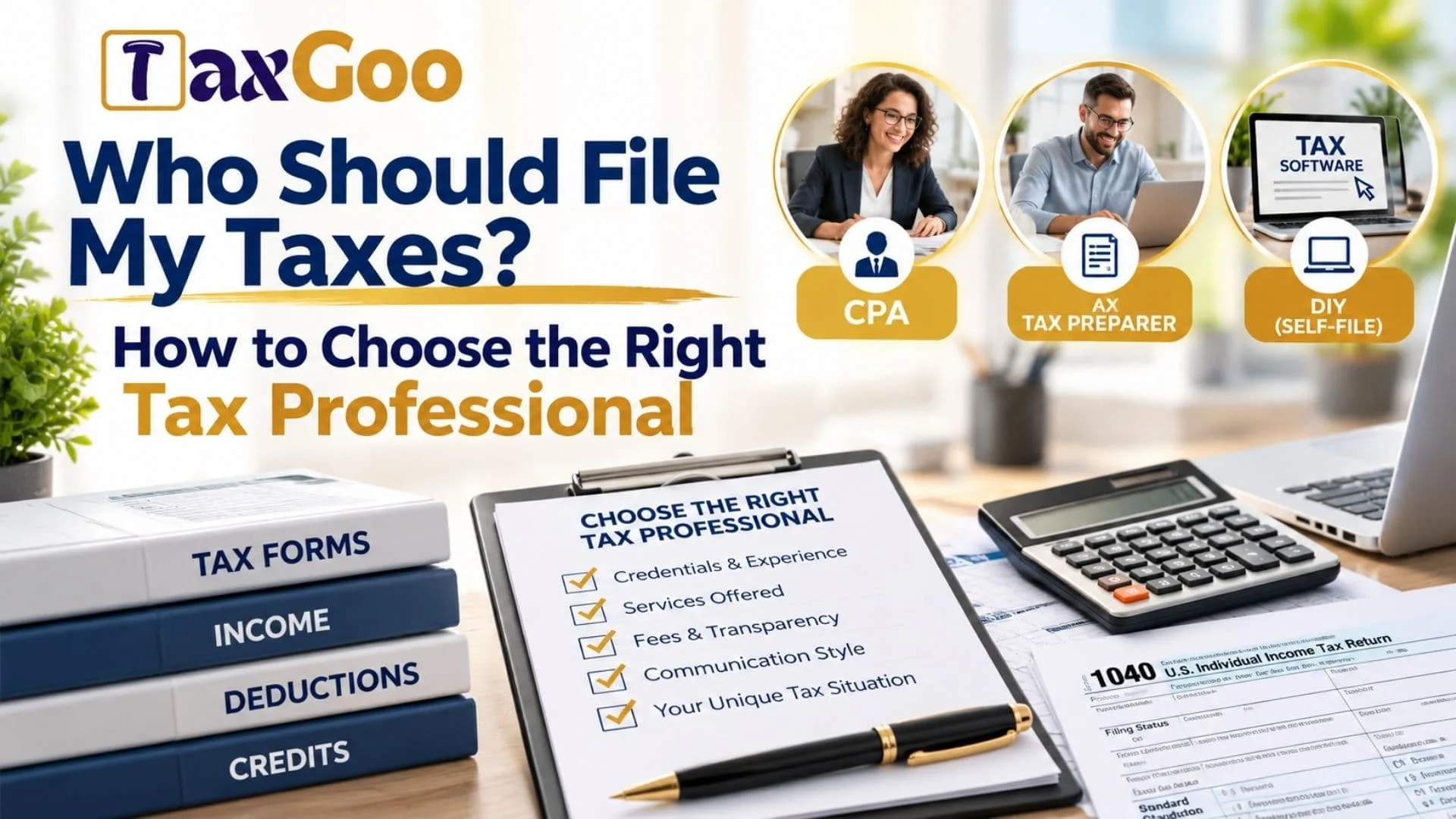
“Who Should File My Taxes? How to Choose the Right Tax Professional” is a useful starting point if you are comparing tax preparers, certified public accountants (CPAs), enrolled agents (EAs), or tax attorneys in the United States. The right choice depends on how complicated your finances are, whether you own a small business, and whether you need simple tax return preparation or year-round tax planning. A W-2 employee with a straightforward return may be comfortable working with a qualified preparer, while freelancers, landlords, investors, and business owners may need someone experienced with self-employment income, deductions, estimated payments, payroll, or business tax returns. Credentials, experience, clear fees, and reliable communication matter more than a promise of a huge refund. Before sharing sensitive financial information, learn what each professional can do, how to check their qualifications, and which questions to ask so you can choose a tax expert with confidence.
Which Tax Professional Is Right for You?
Start with your financial situation, not the title on a business card. If you have one employer, a few standard tax documents, and no unusual deductions, a reputable tax preparer may be enough. If you have freelance income, rental properties, stock sales, multiple income sources, or a major life change, look for a professional who regularly handles similar returns.
Small business owners should seek someone familiar with their business structure and industry. A sole proprietor may need help reporting business income and expenses, while an LLC, partnership, or corporation can involve additional forms, payroll questions, and deadlines. Ask whether the professional offers tax planning as well as filing, because preparing a return after the year ends is different from helping you make informed decisions throughout the year.
Understand the Main Credentials
A Certified Public Accountant (CPA) is licensed by a state board and may provide tax preparation, accounting, and broader financial services. Choose a CPA who actively works with individual or business taxes similar to yours.
An Enrolled Agent (EA) is federally licensed by the IRS and specializes in tax matters. EAs can be a strong fit for tax preparation, planning, and resolving issues with the IRS.
A tax attorney is a lawyer who may specialize in tax law. Legal advice can be especially valuable for complicated disputes, business transactions, estate matters, or other situations with significant legal consequences.
Paid preparers who do not hold one of these credentials may still prepare federal returns if they have a valid Preparer Tax Identification Number (PTIN). However, a PTIN alone does not grant the same IRS representation rights as a CPA, EA, or attorney. The IRS explains these differences in its guide to tax preparer credentials and qualifications.

Check Experience, Fees, and Availability
Ask how many clients the professional serves with circumstances like yours. For example, a preparer who mostly handles wage earners may not be the best match for a business with contractors, inventory, or multistate activity. Ask what services are included, whether tax planning costs extra, and how questions are handled after filing season.
Get the fee structure in writing before work begins. Fees can vary with the complexity of a return, so compare the scope of service rather than choosing on price alone. Be cautious if a preparer bases the fee on a percentage of your refund or guarantees an unusually large refund before reviewing your records. Check credentials and disciplinary history through the relevant state licensing board or professional authority, and use the IRS directory of tax preparers to research many credentialed professionals.
Watch for Tax Preparer Red Flags
A trustworthy professional asks questions, reviews records, explains recommendations, and provides a copy of your completed return. Be wary of anyone who asks you to sign a blank return, refuses to sign a return they prepared, discourages you from reviewing it, or wants your refund deposited into their own account. Avoid anyone who suggests inventing deductions or hiding income.
Even when you hire an expert, you remain responsible for the information on your tax return. Review names, Social Security numbers, income, deductions, bank details, and the final tax calculation before signing. Keep a copy of the filed return and supporting records. The IRS shares more tips for choosing a tax professional.
Questions to Ask Before Hiring
Before you commit, ask:
- Do you have a valid PTIN, and what professional credentials do you hold?
- Have you prepared returns for people or businesses with situations like mine?
- Do you offer year-round tax advice, or only seasonal filing?
- What is included in your fee, and could extra charges apply?
- Will you e-file my return, sign it, and provide me with a complete copy?
- If the IRS contacts me, what support can you provide?
Clear answers help you compare professionals and set expectations from the start.
FAQs
Should I Hire a CPA to File My Taxes?
Not always. A qualified preparer may suit a simple return, while a CPA can be helpful for more complex finances or business needs.
What Credentials Should a Tax Preparer Have?
Paid federal tax return preparers generally need a valid PTIN. CPAs, enrolled agents, and attorneys also have professional credentials and unlimited IRS representation rights.
Am I Responsible if My Tax Preparer Makes a Mistake?
Yes. You are responsible for the information on your return, so review it carefully before signing.